Exiled Iranian Kurds in Iraq Hold Hope for Regime Change
Iranian Kurdish families living in a refugee camp in northern Iraq maintain a singular aspiration: that the ongoing U.S.–Israeli military conflict with Iran will sufficiently weaken Iran's theocratic government, enabling their long-awaited return to their homeland. These individuals, who fled Iran as children and now reside as adults in Iraq, express cautious optimism that the war might ultimately dismantle the clerical regime that forced them into exile decades ago.
Decades of Displacement and Longing
Behind this hope lies the profound yearning of Iranian Kurds in Iraq to someday return to homes they remember only through paintings on their walls and faded photographs. However, the thousands of Kurds acknowledge that their historical pursuit of political autonomy and opposition to Iran's clerical rule make this prospect unlikely under the current government. They assert they will only consider returning if a new Iranian administration is established, one that guarantees their safety and supports their cultural and political goals.
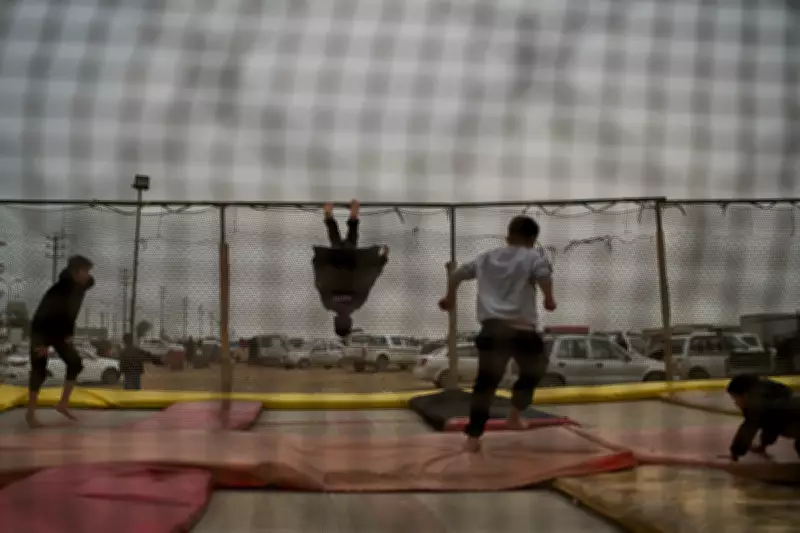
Among these exiles are more than 300 families residing in Kawa Camp, located in the Qushtapa district of Irbil within northern Iraq's autonomous Kurdish region. Their displacement traces back to Iran's 1979 Islamic Revolution, which ignited a decades-long conflict with Kurdish separatists. Many are descendants of those fighters, having fled as children with their families from the northern Iranian province of Kermanshah. Some joined resistance efforts in exile, conducting attacks against Iranian security forces, while most struggle to make a living on the margins of Iraqi Kurdish society, lacking citizenship, full civil rights, access to services, or the ability to own property.

Mistrust of Foreign Powers and Geopolitical Exploitation
In Kawa Camp, the hope of returning is tempered by deep-seated mistrust of foreign powers that have historically exploited their cause for geopolitical ends. Many view recent reports that the Trump administration considered mobilizing them to support ground operations in Iran as the latest example of such manipulation. "From 1979 until now, this has been our only hope — that the regime will fall. I'm watching the clock; if it falls now, I'll return home the next second," said a 57-year-old member of an Iranian Kurdish opposition party living in Kawa, who fled Iran at age 11.
This individual, like most interviewed for this report, spoke on condition of anonymity due to fears of reprisal from Iran-backed Iraqi militias that have intensified attacks on Iranian Kurdish bases. They also cite surveillance by Iranian intelligence, as many still have relatives in Iran. The life of displacement for Iranian Kurds in Iraq is complex, with Iraqi Kurds governing a semiautonomous area in northern Iraq and many waging insurgency campaigns to establish their own state, Kurdistan. Iranian Kurds harbor a long history of grievances against both the Islamic Republic and the monarchy that preceded it.
Historical Grievances and Skepticism
In the home of community leader Jehangir Ahmadi in Kawa hangs a painting of an alley in his native village in Iran's Kurdish-majority Kermanshah province, which borders Iraq. He hasn't seen the alley in nearly 50 years, and his childhood memories play like an old film: playing among sandy walls while village elders chatted beneath poplar trees. Ahmadi recalls the frantic escape from home and the days spent waiting to cross the border. His family first lived in a camp near the border before being relocated to another in the deserts of western Anbar province. Security deteriorated rapidly after the fall of Saddam Hussein following the 2003 U.S.-led invasion, prompting the United Nations to rehouse them.
Over the years, tents were replaced by permanent homes, markets emerged, and Iranian Kurds gained the right to work as merchants, taxi drivers, and factory workers. However, buying a house or car requires finding an Iraqi sponsor who assumes legal responsibility, effectively tying their fate to that sponsor. "For all our lives in Iraq we were paying the price of leaving. Until now people look at us like we are slaves," Ahmadi said. "Until now we don't have good work, no good place to live."

Ahmadi views Kurds, especially Iran's Kurds, as historical victims, citing examples like the short-lived Republic of Mahabad in northwestern Iran, backed briefly by the Soviet Union before its fall in 1976; Iran's withdrawal of support for a failed Kurdish uprising against Iraq in 1975; Iraq's use of chemical weapons against Kurds in 1988; and territorial losses in northeast Syria after the fall of President Bashar Assad in December 2024. Consequently, he expressed skepticism about reported U.S. requests to back an Iranian Kurdish force in the current war. "We didn't trust that they will support us because we are a wounded nation, we have been betrayed many times," he said.
Military Vulnerabilities and Security Concerns
Armed Iranian Kurdish opposition groups based in Iraq have faced attacks from Iran's proxies since the war began. Commanders and Iraqi Kurdish political leaders admit they lack the capacity to mount a genuine ground offensive without U.S. air cover, noting that the idea floated by the United States was never seriously discussed with Washington. A senior Iraqi Kurdish official revealed that some Iranian Kurdish groups initially hoped for a swift collapse of Iran's theocracy and envisioned storming into Iranian Kurdish territory to declare victory. Other Iraqi Kurdish leaders, viewing the Tehran administration as more resilient, warned them bluntly: "You will be massacred."
Unit commander Rebaz Sharifi of the Kurdistan Freedom Party (PAK) described hiding in a mountainside crevice during a drone strike by Iran-backed militias, awaiting further attacks. He estimated there are roughly 8,000 to 10,000 Iranian Kurdish fighters, a figure corroborated by two other Iraqi Kurdish officials. Beyond basic assault rifles, they lack sophisticated modern weaponry and drones, a crucial capability in modern warfare. Sharifi stated that Iranian-Kurdish groups are requesting security guarantees, particularly air cover, to counter Iranian missiles and drones. "We don't want to go now because we know we will die because of Iranian airstrikes and missiles," he said. "It's not the right time for this because Iranian forces still have power to control the skies."
At the mere possibility of mobilization, Iran-backed groups in Iraq launched near-daily air attacks. "So, imagine what they will do if we move there now," Sharifi added.
Ongoing Threats to Civilians
The threat of continued attacks has driven Kurdish fighters to relocate their families from military camps to nearby communities for safety. In Kawa, a local resident affiliated with the Democratic Party of Iranian Kurdistan is sheltering the wife and children of a fighter from the party's armed wing, who moved from the party's camp in Koya near the border due to constant attacks in the war's early days. While militia drone attacks haven't targeted civilian communities so far, the party member fears this might change as the war progresses. "Every day we are afraid of the militias," he said. "We are nervous at night because we think they might hit here also." He also fears Iran's intelligence operations in the area, noting, "My relatives in Iran told me that they know where I work, what I do, and where I live."