Iranian Exile Factions Jockey for US Endorsement in Post-Regime Power Vacuum
In a scene reminiscent of historical geopolitical maneuvers, Iranian exile factions are actively courting American officials, seeking the White House's blessing to assume leadership in a potential post-regime Iran. This development follows Donald Trump's significant military operations, drawing parallels to the 2002 Iraqi exile competition ahead of the US-led invasion.
Maga World Backs Competing Figures
One prominent camp within the Maga sphere has rallied behind Maryam Rajavi, the Paris-based leader of the Mujahedin-e Khalq (MEK). Described by some as a cult-like organization, the MEK has historically aligned with Saddam Hussein but has since cultivated strong ties in Washington through its political arm, the National Council of Resistance of Iran. High-profile supporters include Rudy Giuliani, Trump's former personal attorney, and Mike Pompeo, ex-CIA director, who have publicly endorsed Rajavi's readiness to replace the current regime.
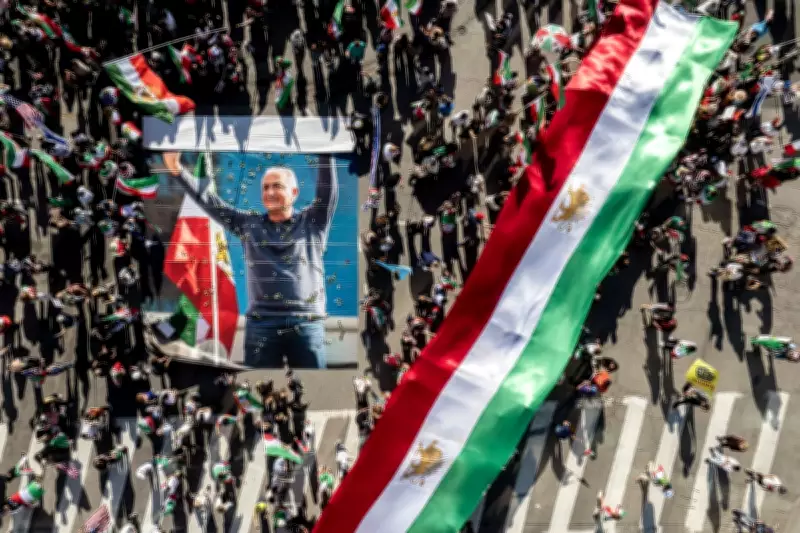
In contrast, Reza Pahlavi, son of the last Shah of Iran, has emerged as a rival contender. Proclaiming himself the heir to the throne after his father's death in 1980, Pahlavi has garnered support from factions viewing him as a unifying figure due to his royal lineage. He has actively sought White House alliances, recently praising Trump on Fox News and receiving backing from Washington insiders, though his efforts have yet to yield official US endorsement.

Historical Context and Current Challenges
The current dynamic echoes the 2002 scenario where Iraqi exiles, such as Ahmad Chalabi and Ayad Allawi, vied for US support before the fall of Saddam Hussein. However, unlike those figures, neither Rajavi nor Pahlavi possesses deep ties to Washington's security establishment, limiting their political leverage. Former CIA official Mark Fowler notes the lack of viable options, stating, "There really is no good option," and highlighting the ineffectiveness of Pahlavi's ground game in Iran.
Rajavi's MEK faces additional scrutiny due to its controversial past. Designated a terrorist organization by the US State Department in 1997 for attacks on American personnel, the group has invested heavily in lobbying to rehabilitate its image. Despite securing the removal of its terrorist designation in 2012 through efforts involving figures like John Bolton, skepticism persists. Fowler asserts, "The MEK I would reject out of hand," citing their history of violence against Americans.
Internal and External Perceptions
Both factions tout grassroots support, but evidence suggests limited popularity within Iran. Pahlavi's alignment with Israel and advocacy for LGBTQ+ rights, while breaking from Iran's leadership, may not resonate with the broader population. Meanwhile, the MEK's claims of mobilization inside Iran are met with skepticism from analysts who question their actual influence.
Trump's administration has remained ambiguous, with the president commenting that Pahlavi is a "very nice person" but indicating a preference for internal candidates. This uncertainty leaves the exile groups in a precarious position, reliant on fringe media and former officials for promotion without concrete political backing.
Future Implications and Risks
The competition among Iranian exiles raises concerns about potential instability if the US intervenes in regime change. Lessons from Iraq highlight the risks of backing unpopular figures, as seen with Chalabi's failed return. As tensions continue, the lack of a clear US strategy could exacerbate divisions, undermining efforts for a democratic transition in Iran.
Ultimately, the struggle for US endorsement reflects broader geopolitical tensions, with exile factions leveraging historical narratives and lobbying efforts to gain traction in a rapidly evolving landscape.