Iran War Enters Sixth Day as Evacuation Flights Bring Britons Home
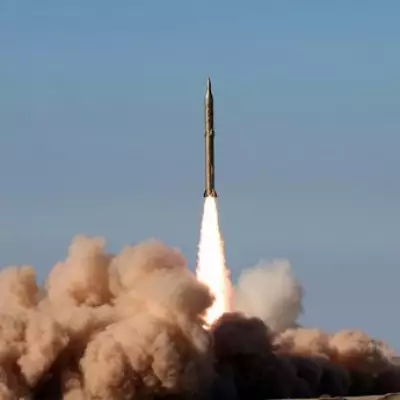
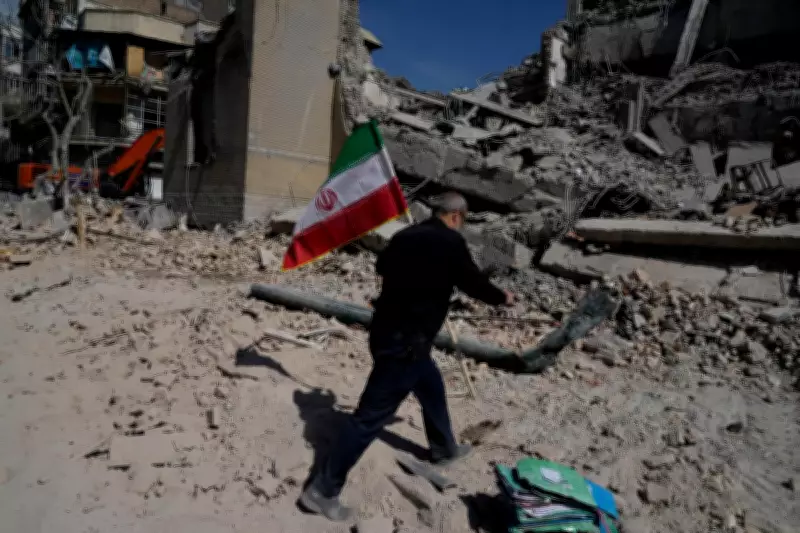
The military conflict between the United States, Israel, and Iran has now entered its sixth consecutive day, with intensified bombing campaigns targeting Iran's military and security infrastructure. Amidst the escalating violence, the United Kingdom has initiated evacuation efforts to repatriate British nationals stranded across the Middle East.
Evacuation Flights from Muscat
The first government-chartered rescue flight, alongside a British Airways commercial service from Muscat, Oman, were scheduled to arrive in the UK early on Thursday morning. Muscat has emerged as a critical evacuation hub, situated approximately 300 miles by road from Dubai and Abu Dhabi, as the vast majority of commercial flights from the United Arab Emirates remain cancelled due to airspace restrictions imposed by the conflict.
Prime Minister Sir Keir Starmer has announced two additional government-chartered flights, with one expected to depart from Oman on Thursday. Furthermore, British Airways will operate two more flights from Muscat to London Heathrow on Friday and Saturday. Qatar Airways has also confirmed it will run a limited number of relief flights to European cities, including London, Madrid, Rome, Amsterdam, and Copenhagen, with services departing from Muscat and Riyadh.

The airline issued a statement on social media platform X, advising passengers: "Passengers are kindly requested not to proceed to the airport unless they have received an official notification from Qatar Airways for these flights."
Political Tensions and Defence Decisions
Prime Minister Starmer has continued to defend the status of the UK's special relationship with the United States following a series of critical attacks from President Donald Trump. After Trump remarked that Starmer was "not Winston Churchill," the Prime Minister asserted that the bilateral bond is not contingent on "hanging on to President Trump's latest words."
In response to Iran's retaliatory actions, Starmer has granted the US permission to utilise British bases for the limited purpose of targeting missile launchers and infrastructure. However, RAF jets have not been involved in direct strikes against Iran. Western officials indicated on Wednesday that US bombers have not yet used facilities such as Diego Garcia in the Indian Ocean or RAF Fairford in Gloucestershire, but the UK is prepared to accept them, with arrivals anticipated within the coming days.
Deputy Prime Minister David Lammy emphasised that while the UK and US are "close allies," the US has chosen a "different way" militarily. "The US has chosen a different way, and we have made an assessment, and it's the right assessment, about not putting UK soldiers into an offensive situation that did not meet the legal threshold that we set in our own country," Lammy stated during an interview with ITV's Peston.
Regional Security Concerns
The UK government has faced criticism for insufficient military assets in the Middle East region, particularly after RAF Akrotiri in Cyprus was struck by a drone. In response, the Type 45 air defence destroyer HMS Dragon will be deployed to the eastern Mediterranean to bolster the protection of Cyprus, although it is not expected to sail until next week.
Starmer confirmed that Wildcat helicopters equipped with anti-drone capabilities will be stationed on the Mediterranean island this week. He insisted that proactive measures had been taken to address rising regional tensions prior to the outbreak of hostilities.
Cyprus's high commissioner to the UK, Kyriacos Kouros, welcomed the deployment of HMS Dragon but noted it would take "more than a week" to arrive. "Already we have the presence of Greek forces on the island. Two frigates arrived, four aircraft arrived, all of them with abilities to combat drones. The French are coming. So… the least we expect is the Britons to also be present since, as I said, we are not only defending Cypriots on the island," Kouros told Sky News.
France has dispatched its flagship nuclear-powered aircraft carrier, the Charles de Gaulle, accompanied by its air wing and escorting frigates, in reaction to the attack on RAF Akrotiri.
Additional Developments
In other significant developments reported on Wednesday:

- Iran's ambassador to the UK, Seyed Ali Mousavi, was summoned by the British government.
- A US submarine sank an Iranian warship in the Indian Ocean.
- Iran continued to launch missile and drone attacks across the region, targeting Saudi Arabia and Kuwait.
- Western officials observed a decline in the rate of Iranian missile strikes, suggesting Tehran may have several more days of capability based on current firing rates, though they cautioned this could also indicate Iran is conserving its stockpiles.
- Turkey reported that a "ballistic munition" launched from Iran was intercepted by NATO air defences.
- The conflict has fuelled economic uncertainty in a region crucial to global oil and gas supplies.
- The UK has deployed military experts with experience from the Ukraine war to the Middle East to provide advisory support on the evolving situation.
Additionally, the UK Maritime Trade Operations Centre (UKMTO) received reports of an incident near Mubarak Al-Kabeer in Kuwait, involving a tanker that witnessed a large explosion, with oil leakage noted and the crew reported safe.
Approximately 138,000 British nationals have registered their presence in the Middle East, underscoring the scale of the evacuation challenge as the conflict persists into its sixth day.