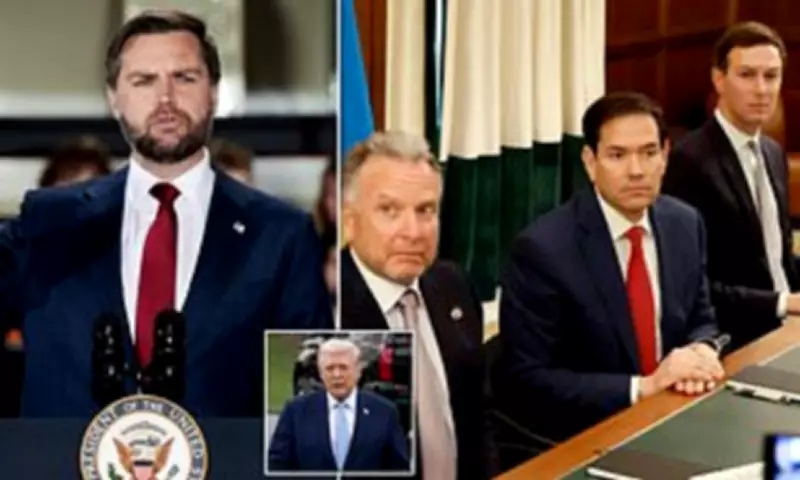
Iran Demands Vance at Negotiating Table, Labels US Envoys as 'Backstabbers'
Iran has explicitly requested Vice President JD Vance to participate in negotiations aimed at resolving the ongoing Middle East conflict, following the delivery of a 15-point ceasefire plan from the Trump administration. According to multiple sources, Iranian officials have expressed a strong preference for Vance, citing distrust toward top Middle East envoys Jared Kushner and Steve Witkoff, whom they accuse of having "stabbed them in the back" in previous diplomatic efforts.
Preference for Vance Over Kushner and Witkoff
Sources told CNN that Iranian envoys flatly refuse to restart negotiations with Kushner and Witkoff, viewing them as representatives of failed talks that occurred before the US and Israel initiated attacks. One Middle East source elaborated to The Telegraph, stating, "Vance is preferred. They don't want to work with Jared and Witkoff because they stabbed them in the back." This sentiment is echoed in reports suggesting Iran perceives Vance as more sympathetic to ending the conflict, unlike Kushner, Witkoff, or Secretary of State Marco Rubio.
Vance, who has denied rumors of a split with President Trump since the war began a month ago, is seen within Trump's inner circle as a non-interventionist voice, having built his political career by advocating against foreign wars in the Middle East. However, it is believed that Iran may ultimately have to deal with Witkoff, who is deeply embedded in US Middle East dealings, as the White House asserts that only President Trump determines negotiation representatives.

Details of the 15-Point Ceasefire Plan
The ceasefire plan, modeled on Trump's Gaza deal and confirmed by officials briefed on the talks to the New York Times, outlines stringent demands and reciprocal benefits. Key provisions include:
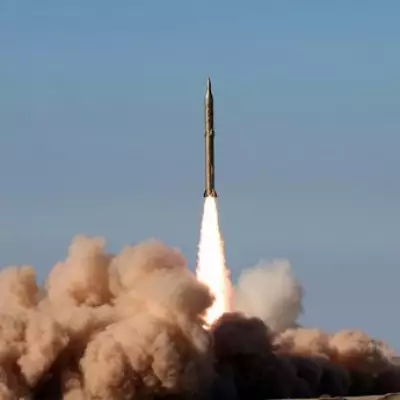
- Iran dismantling all nuclear and long-range missile capabilities.
- Opening the Strait of Hormuz, a critical waterway for global oil shipments.
- Abandoning ties to proxy terror groups across the Middle East.
- Assistance with advancing Iran's civilian nuclear program.
- Lifting all international sanctions imposed on Iran.
Pakistan delivered the plan to Iranian officials with a 24-hour deadline to respond, as reported by Haaretz. Despite this, Iran has not promised to reopen the Strait of Hormuz, which remains blocked by threats of Iranian mines and missiles, causing a global oil crisis with gas prices surging to an average of $4.00 per gallon nationwide.
Ongoing Conflict and Diplomatic Moves
President Trump announced a five-day ceasefire on strikes against Iranian energy infrastructure after what he described as "very good conversations," but Iranian state media reported that US-Israeli strikes hit gas facilities and a pipeline shortly after, prompting retaliatory ballistic missile attacks on Tel Aviv and Kuwait. Trump has also threatened to deploy US troops to seize Kharg Island, through which 90% of Iran's crude oil exports pass, if the strait remains closed.
In diplomatic circles, Kushner and Witkoff are working on a framework involving a monthlong ceasefire period for negotiations, according to sources from Israel's Channel 12. Meanwhile, Vance has held private calls with Israeli Prime Minister Benjamin Netanyahu regarding talks with Tehran. US officials have suggested that Iran's parliamentary speaker, Mohammad-Bagher Ghalibaf, a hardline figure, could meet with the Trump delegation in Pakistan, but he may refuse to engage unless Vance attends.
Market Reactions and Regional Dynamics
Markets have reacted positively to signs of de-escalation, with the Dow surging 1,000 points in pre-market trading and oil prices dropping significantly. Asian shares gained on Wednesday over possibilities of negotiations, though at least 1,000 more American troops from the 82nd Airborne Division are reportedly being deployed to the Middle East. Saudi Crown Prince Mohammed bin Salman has privately urged Trump to continue the war, viewing it as a "historic opportunity" to remake the region, while Pakistan has offered to host talks between Washington and Tehran.

As the situation evolves, the White House maintains that President Trump alone decides negotiation teams, but with Iran's clear preference for Vance and ongoing hostilities, the path to peace remains fraught with challenges and diplomatic intricacies.