Iran Issues Stark Warning Over Potential US Invasion
Iran has issued a direct threat to US President Donald Trump, declaring plans to destroy any invading American forces and transform the strategically vital Strait of Hormuz into an active war zone should American troops set foot on Iranian soil. The warning comes as Tehran defiantly dismissed Trump's earlier threat to 'wipe out' Iran's oil industry, instead promising to escalate its military response with more powerful weapons including ballistic missiles.
Escalating Conflict and Regional Tensions
The war of words intensified dramatically overnight following new American attacks on Iran's Kharg Island, a critical oil export hub through which approximately 90 percent of Iran's oil exports flow. This exchange has occurred against a backdrop of already skyrocketing fuel and energy prices across the United States, United Kingdom, and global markets.
On Saturday, Iran continued its effective paralysis of maritime traffic through the Strait of Hormuz, threatened US interests throughout the region, and launched an attack on a major oil field in the United Arab Emirates. These actions represent Tehran's angry response to the American strikes.

Military Buildup and Iranian Retaliation Plans
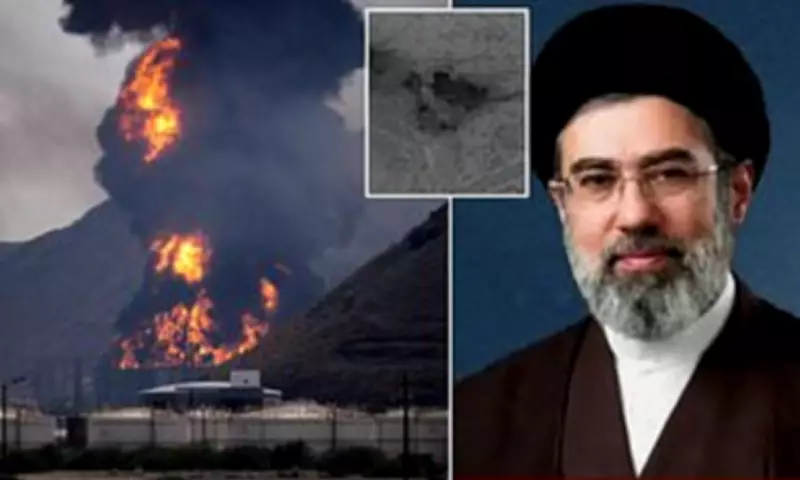
As reports emerged that the United States is deploying up to 5,000 marines and sailors to the region as part of an amphibious ready group, Iranian officials warned of severe consequences for any attempted landing. According to sources, new supreme leader Mojtaba Khamenei—whose current whereabouts and condition remain subjects of intense speculation—has authorized extreme measures, including formally designating the Strait of Hormuz as a de facto war zone in the event of an invasion.
Other potential responses reportedly include the 'total destruction' of any island where US forces might stage a landing, even if such action necessitates the complete annihilation of associated oil infrastructure. Iranian MP and former Foreign Minister Manouchehr Mottaki suggested that if US forces land on Iranian territory, Iran could reciprocate by seizing American troops from regional bases.
Strategic Waterway Under Threat
The Strait of Hormuz represents one of the world's most crucial shipping lanes, with approximately 20 percent of global oil and liquefied natural gas passing through its waters before the current conflict began. Iran has effectively halted commercial traffic through this narrow passage, contributing significantly to spiraling energy prices.
According to the United Kingdom Maritime Trade Operations, at least 16 attacks and four incidents of 'suspicious activity' have been reported on vessels in the region since the conflict's outbreak. This blockade has directly impacted British consumers, with diesel prices reaching 159.2p per litre and petrol hitting an 18-month high of 140.6p per litre on Friday.
Conflicting Claims and Military Analysis
While Iranian General Mohsen Rezaei claimed the strait remains open to all except US Navy vessels and their coalition partners—noting that some Indian vessels were permitted passage on Saturday—the reality of restricted access is driving global economic concerns. Oil prices surged back above $100 per barrel for the second time this week, with fears that the Iran conflict will continue to drive higher energy costs and inflation for families worldwide.
Former US General David Petraeus, speaking to BBC Radio 4, described reopening the Strait of Hormuz by force as 'feasible but very, very challenging,' noting that naval forces would need to be 'pretty close to perfect' to achieve this objective given the complexity of mine clearance operations in such confined waters.
Regional Fallout and Humanitarian Impact
The conflict has entered its third week with little sign of de-escalation. Gulf states are reportedly privately expressing anger at Trump over the escalating war, though regional leaders have avoided public criticism. Dubai billionaire Khalaf Al Habtoor made a thinly veiled criticism of the US president in a since-deleted social media post, suggesting the region had been dragged into dangerous escalation without proper consultation.

Humanitarian consequences continue to mount, with Iran's health ministry reporting over 1,200 deaths from US and Israeli attacks—though these numbers cannot be independently verified. The UN refugee agency estimates up to 3.2 million people have been displaced within Iran since the war began, while Lebanese authorities report more than 770 killed and 800,000 displaced in their country.
Continued Attacks and Economic Implications
Iran's Revolutionary Guards declared US interests in the United Arab Emirates—including ports, docks, and military locations—as legitimate targets, urging residents to evacuate these areas to avoid civilian casualties. The Iranian military launched nine ballistic missiles and 33 drones toward the UAE on Saturday alone, bringing total launches since the conflict began to 294 ballistic missiles, 15 cruise missiles, and 1,600 drones.
An attack on a major port and energy installation in Fujairah resulted in clouds of dark smoke and reports of a fire, with Bloomberg indicating a partial suspension of oil loading operations. This follows Iran's threat to turn US oil assets in the region to 'ashes' if American forces target oil infrastructure on Kharg Island.
As Israel's Defence Minister declared the war was entering a 'decisive phase,' explosions continued to rock cities across the Middle East, including strikes on the US embassy in Baghdad. The conflict has sent shockwaves through the global economy, with millions displaced and no clear resolution in sight.