Iran Vows to Target US Banks and Economic Hubs in Retaliatory Escalation
The Islamic Republic of Iran has issued a stark threat to target American and Israeli banks and economic centres across the Middle East, as the regime intensifies its military strikes in the region. This declaration follows what the United States described as its "most intense" day of attacks yet against Iranian interests, prompting a furious response from Tehran.
Retaliation for Alleged Bank Strike in Tehran
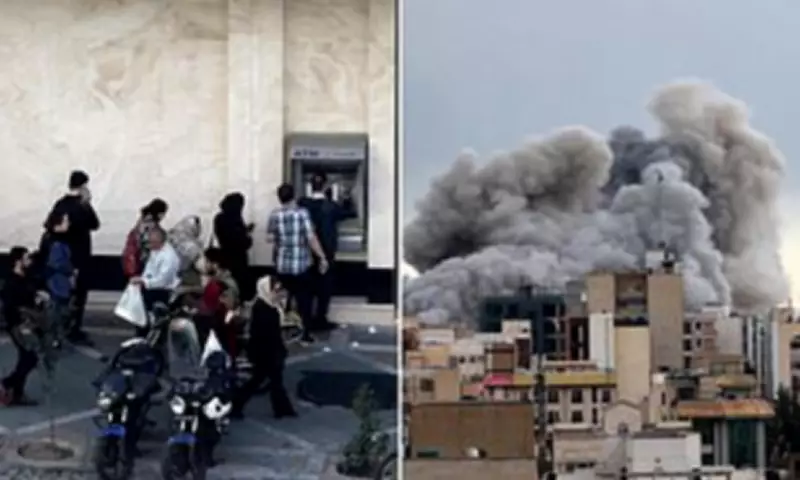
Iran's central military command, quoted in state media, stated that a recent alleged US-Israeli overnight attack on Bank Sepah in Tehran—a financial institution with ties to Iran's military—has forced its hand. "With this illegitimate and uncommon action, the enemy is forcing our hand to target economic centers and banks linked to the US and Zionist regime in the region," the command warned. The regime claims that several bank employees were killed in the strike on a bank in northern Tehran, although details remain unverified.
In a chilling advisory, Iranian authorities warned people in the Middle East to stay at least 1 kilometre away from such institutions, threatening their destruction as part of a "painful response" to American and Israeli actions.

Strait of Hormuz Blockade Cripples Global Oil Exports
Simultaneously, Iran has moved to cripple the world's economy by forcing the closure of the Strait of Hormuz, a vital maritime passageway that transports approximately 20 per cent of the world's oil. The regime has declared it will not allow "one litre of oil" to be shipped from the Middle East if US and Israeli attacks continue, leading to a severe disruption in global oil shipments.
This blockade has already had immediate consequences:
- Fires broke out on three commercial ships in the Strait of Hormuz, including the Thailand-flagged bulk carrier Mayuree Naree, attacked by an unknown projectile, with three crew members missing and 20 rescued by the Omani navy.
- The Japan-flagged container ship One Majesty sustained minor damage from a projectile near Ras Al Khaimah in the UAE.
- A third bulk carrier was hit approximately 50 miles northwest of Dubai, according to maritime security reports.
Saudi Arabia's state oil company, Aramco, has warned of "catastrophic consequences" for the world's oil markets due to the ongoing closure. CEO Amin Nasser admitted that while Aramco is meeting most customer needs by tapping into storage facilities outside the Gulf, these reserves cannot sustain an extended period. "The longer the disruption goes on … the more drastic the consequences for the global economy," Nasser emphasised.
Regional Strikes and US Warnings Intensify
Iran has continued to pummel Israel and US allies in the Gulf in retaliation for the killing of Ayatollah Ali Khamenei. On Wednesday morning, two drones hit Dubai International Airport, injuring four people—two Ghanaians, a Bangladeshi national, and an Indian citizen. The UAE reported that its air defence systems had detected 1,475 drones sent by Iran since the conflict began twelve days ago.
In response, former US President Donald Trump issued a stark warning to Iran, telling the regime to brace for "death, fire and fury" for keeping the Strait of Hormuz shut. He threatened that US attacks could rise sharply if Iran seeks to block tanker traffic, vowing, "We will hit them so hard that it will not be possible for them or anybody else helping them to ever recover that section of the world." In a Truth Social post, Trump reiterated, "If Iran does anything that stops the flow of Oil within the Strait of Hormuz, they will be hit by the United States of America TWENTY TIMES HARDER than they have been hit thus far."
US Military Claims Progress Amid Ongoing Conflict
US Defence Secretary Pete Hegseth stated that Tuesday marked the "most intense" day of attacks inside Iran, with refined intelligence and increased military assets. "Today will be yet again, our most intense day of strikes inside Iran. The most fighters, the most bombers, the most strikes," Hegseth claimed, adding that the US was "crushing the enemy."

Despite Trump's earlier insistence that the war was "pretty much" over and ahead of schedule, he later indicated a willingness to escalate, stating, "We've already won in many ways but we haven't won enough...we're going to go further." He described the conflict as a "short-term excursion" but vowed not to relent until the enemy is "totally and decisively defeated."
The Islamic Revolutionary Guard Corps (IRGC) countered, asserting, "We are the ones who will determine the end of the war," and dismissing Trump's comments as "nonsense." As tensions mount, the threat to global economic stability and regional security continues to grow, with no immediate resolution in sight.