Iran Launches Coordinated Strikes on Global Transport Hubs
In a significant escalation of Middle East hostilities, Iran has targeted one of the world's busiest international airports alongside multiple commercial shipping operations. The attacks, which occurred on Wednesday and Thursday, represent a deliberate strategy to amplify global economic pressure, aiming to compel the United States and Israel to cease military engagements in the region.
Airport and Port Facilities Under Fire
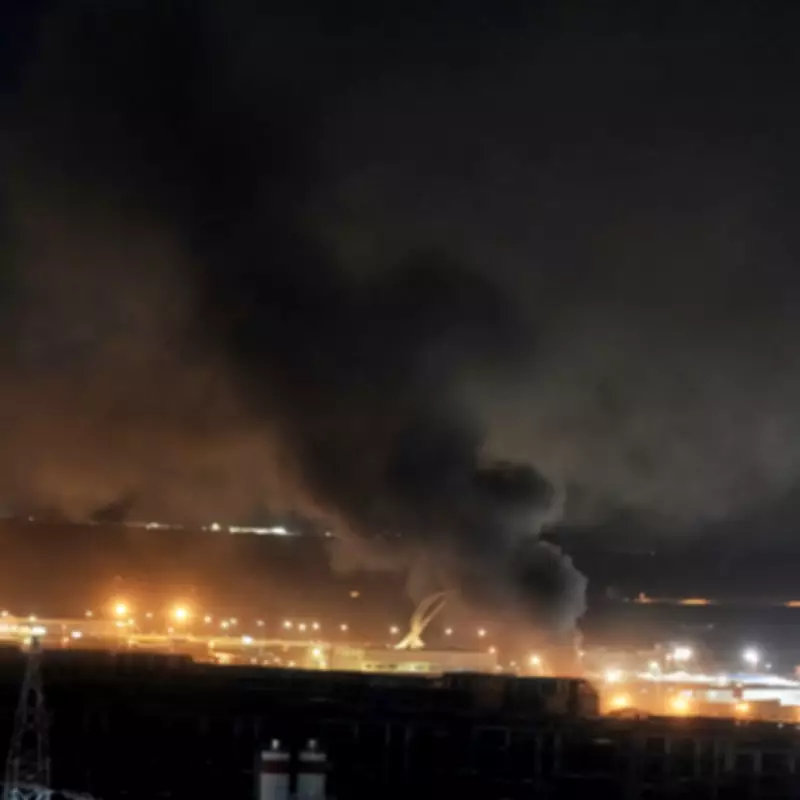
Bahrain's Muharraq Island, home to the kingdom's primary international airport, was engulfed in flames following an Iranian assault on Thursday. Authorities urgently advised residents to remain indoors and secure windows to avoid hazardous smoke inhalation. The airport's proximity to jet fuel storage tanks and other critical infrastructure serving Bahrain's oil industry heightened safety concerns.
Simultaneously, Iran carried out an attack on Iraq's Basra port, resulting in at least one fatality and forcing the complete shutdown of all Iraqi oil terminals. Farhan al-Fartousi, director-general of the General Company for Ports of Iraq, confirmed the strike targeted a vessel in a ship-to-ship transfer area within the Persian Gulf port. While oil terminals were closed, commercial ports in the affected countries remained operational.

Economic Warfare and Global Repercussions
The Pentagon disclosed that the initial week of conflict with Iran has cost the United States a staggering $11.3 billion (£8.47 billion), according to confidential briefings provided to Congress. Both sides appear entrenched in a war of attrition, with the conflict severely disrupting vital trade routes, constraining fuel and fertiliser supplies from the Gulf, and jeopardising air traffic across one of the globe's most frequented aviation corridors.
Iran's offensive has extended to oil fields and refineries in Gulf Arab nations, effectively halting cargo traffic through the strategically critical Strait of Hormuz. This narrow passage facilitates approximately one-fifth of all globally traded oil, making its disruption a catalyst for worldwide energy market instability.
International Response to Energy Crisis
In response to the escalating crisis, the International Energy Agency has authorised the release of 400 million barrels of oil from emergency reserves—the largest volume in its history—to mitigate the war's impact on energy markets. Concurrently, the United States plans to release 172 million barrels of oil from its Strategic Petroleum Reserve next week, aiming to counteract soaring fuel prices exacerbated by the conflict.
The situation underscores a broader geopolitical standoff, with Iran leveraging attacks on critical infrastructure to inflict maximum economic pain, while international actors scramble to stabilise energy supplies and contain regional fallout.