Iran's Proposal to Impose Fees on Ships in Strait of Hormuz
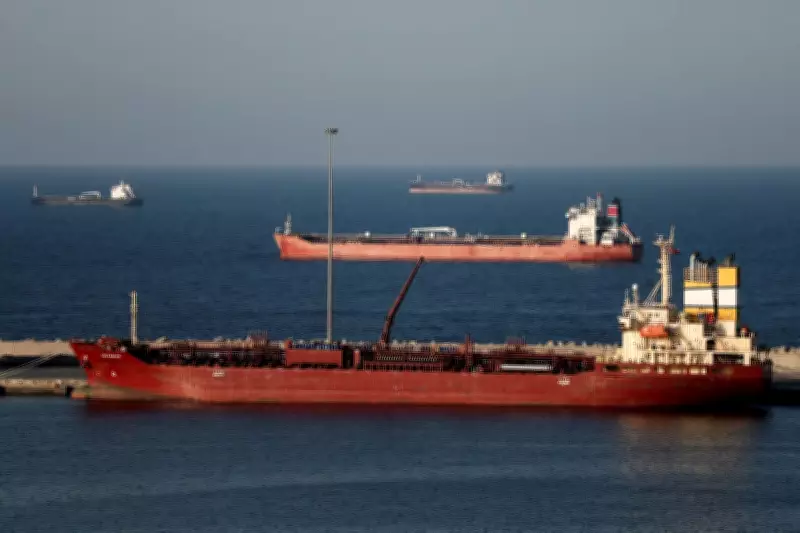
Iran has put forward a contentious proposal to charge fees for vessels passing through the Strait of Hormuz, a critical maritime chokepoint, as part of ongoing efforts to negotiate an end to the conflict with Israel and the United States. This move comes after weeks of Iran blocking most traffic through this narrow 34-kilometre (21-mile) waterway, which lies between Iran and Oman and serves as the primary route for approximately one-fifth of global oil supplies, along with other essential goods such as fertilisers.
Details of Iran's Fee Structure and Peace Deal Conditions
A senior Iranian official, speaking to Reuters, revealed that any permanent peace agreement to resolve the war that began with U.S. and Israeli strikes on Iran's leadership on February 28 must include provisions allowing Tehran to demand fees for ships traversing the strait. The fee would not be fixed; instead, it would vary based on factors such as the type of ship, its cargo, and other unspecified prevailing conditions. The official did not provide further elaboration on how these fees would be calculated or enforced.
In a related development, Iran's deputy foreign minister, Kazem Gharibabdi, stated last week that Tehran is drafting a protocol with Oman to require ships to obtain permits and licences for passage through the Strait of Hormuz. Gharibabdi emphasised that this measure is intended to facilitate transit rather than restrict it, though the implications for global shipping remain uncertain. Oman confirmed that talks with Iran have taken place to explore options for ensuring smooth transit but did not disclose whether any agreements have been reached.

Current Situation and International Reactions
Since the start of the conflict, Iran's Islamic Revolutionary Guards Corps has blocked off the Strait of Hormuz, firing on some vessels in the Gulf and allowing only a small number of ships to pass through. Reports have emerged of at least one payment of $2 million made for a vessel to traverse the strait, although Reuters has been unable to verify this claim. The blockade has heightened tensions in the region, with significant implications for global energy markets.
International opposition to Iran's proposal is mounting. Shipping industry officials noted that no such unilateral move to demand fees for traversing a strait has occurred in modern history. U.S. President Donald Trump asserted on Monday that free traffic of oil through the Strait of Hormuz must be a component of any peace deal with Iran. Gulf states, which rely heavily on energy exports through the strait, have expressed particular concern. The United Arab Emirates declared over the weekend that the waterway "cannot be held hostage by any country" and insisted that free navigation must be part of any war settlement. Similarly, Qatar's foreign ministry stated that all regional countries have the right to use the strait freely and that discussions about future financial mechanisms should be postponed until after it is reopened.
Legal and Practical Challenges to Iran's Proposal
Under international law, the United Nations Convention on the Law of the Sea (UNCLOS) stipulates that states bordering straits cannot demand payment merely for permission to pass through. However, they are permitted to impose limited fees for specific services, such as piloting, tugging, or port services, provided these are not applied more heavily to vessels from particular countries. This legal framework poses a significant hurdle to Iran's plans, as a general transit fee would likely contravene these provisions.
In comparison, other international waterways operate under different rules. Canals, such as the Suez Canal in Egypt and the Panama Canal, charge fees because they are man-made structures, unlike natural straits. The Turkish straits, governed by the 1936 Montreux Convention, allow Turkey to levy standardised charges to cover service costs but prohibit a general transit fee, ensuring free passage for merchant vessels in peacetime. Similarly, Singapore does not charge a fee for transiting the Singapore Strait, highlighting the uniqueness of Iran's proposal.

Potential for Enforcement and Broader Implications
Given that Israel and the United States have already engaged in weeks of military strikes against Iran, it remains unclear what actions the international community could take to compel Iran to allow free passage through the Strait of Hormuz. Any military effort to keep the strait open would likely involve a prolonged ground operation along Iran's mountainous coast, facing well-entrenched forces capable of targeting vessels from inland positions. China, as a world power with strong ties to Iran and the largest importer of energy shipped through the strait, could wield more influence than other nations in mediating the situation.
The proposal also raises concerns about other maritime chokepoints. While Yemen's Houthis have periodically disrupted shipping through the Bab el-Mandeb Strait, alternative routes exist, albeit longer ones. Vessels could find alternatives to the Singapore Strait and the Malacca Strait if necessary, though no current threats exist. Similarly, there is no immediate likelihood of threats to passage through the Strait of Gibraltar or the Oresund, but Iran's move could set a precedent that impacts global shipping norms and regional stability.