Iran Conflict Exposes Global Reliance on Petrochemicals and Climate Impact
The ongoing conflict in Iran has starkly revealed a critical vulnerability within the global economy: profound dependence not merely on oil, gas, and coal for energy, but on the petrochemicals derived from these fossil fuels that form the backbone of countless everyday products.
As disruptions cascade through international energy markets, the war is casting a harsh spotlight on how deeply fossil fuels are embedded far beyond transportation and electricity generation. In the immediate term, this widespread reliance is triggering higher prices for a myriad of goods, while in the long term, the pollution generated by petrochemical production continues to exacerbate the global climate crisis.
Petrochemicals: The Invisible Driver of Fossil Fuel Demand
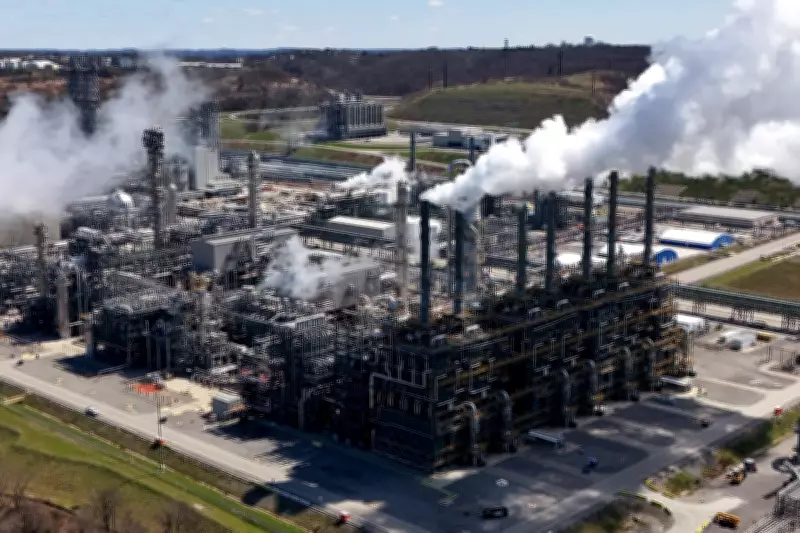
Petrochemicals, primarily manufactured from oil and natural gas, are essential components in a vast array of items. These include plastic packaging, synthetic textiles, agricultural fertilizers, paints, and crucial medical equipment. Unlike fuels that are combusted for energy, petrochemicals are transformed into materials, making their pervasive role in daily life less visible but no less entrenched.

"We cannot continue relying on fossil fuels neither for energy nor for material," stated Delphine Lévi Alvarès, global petrochemicals campaign manager at the Center for International Environmental Law. "We cannot continue relying on fossil fuels for absolutely everything around us."
Fredric Bauer, a senior lecturer at Sweden's Lund University who studies industrial transformation, emphasized the sector's growing centrality. "Petrochemicals are not just a sort of byproduct or something that happens on the side," he explained. Bauer noted that petrochemicals currently account for approximately 15% to 16% of global oil demand and represent one of its fastest-growing segments, with new industrial facilities increasingly designed to maximize chemical output over fuel production.
Fragile Supply Chains and Global Consequences
A significant portion of the global petrochemical industry is concentrated in the Persian Gulf region, including major producers of fertilizers and plastic feedstocks. Disruptions to oil and gas flows can therefore rapidly ripple through industries dependent on these chemical inputs, particularly agriculture, which relies heavily on fossil fuel-based fertilizers.
"It’s not just a disruption in the global trade of oil," Bauer warned. "It’s also a disruption in the global trade of chemicals." He cautioned that such interruptions, especially during critical planting seasons, can cascade into global food systems, leading to higher food prices and broader economic strain.
Environmental anthropologist Trisia Farrelly of New Zealand's Cawthron Institute likened the crisis to a stark wake-up call. "For me, this is like another COVID wake-up call," she said, highlighting risks to food security and livelihoods from rising costs and supply chain fragility. She pointed out that agriculture is among the most challenging sectors to wean off petrochemicals due to its deep reliance on fertilizers, pesticides, plastics, and fuel.
The Challenge of Finding Alternatives
While reducing petrochemical use could significantly cut fossil fuel dependence, experts agree there is no simple, single solution. Farrelly argued that cutting petrochemical use, particularly in plastics, would "certainly" reduce reliance on fossil fuels but cautioned against assuming bio-based plastics are a straightforward replacement.
"We need to be regulating out nonessential plastics," she asserted, stressing that demand reduction is essential alongside any material substitution. International negotiations on plastic pollution have repeatedly stalled, largely due to resistance from major oil-producing nations against limits on plastic production.
Bio-based plastics currently constitute only about 0.5% of global plastics production, according to the European Commission Joint Research Center, and are generally more expensive to produce, limiting large-scale adoption. Farrelly warned that shifting to alternatives without proper safeguards risks creating new environmental and social problems, such as driving unsustainable land use changes.

Calls for Systemic Change and Reduced Consumption
Bauer noted that while renewable energy can reduce greenhouse gas emissions from production, replacing fossil-based feedstocks remains exceedingly difficult. Recycling offers some help, he said, but only when coupled with substantial reductions in overall consumption.
Lévi Alvarès emphasized that diminishing reliance on petrochemicals will necessitate changes in consumption patterns. She pointed to practical steps such as purchasing fewer heavily packaged goods, supporting local food systems, and engaging directly with producers who use fewer synthetic fertilizers and pesticides.
"It is not a choice of the consumer," she acknowledged, noting many people are constrained by market availability, but individuals can begin by critically examining everyday products.
Industry Perspective: Petrochemicals as Essential
The petrochemical industry maintains that demand will remain robust, arguing its products are indispensable to modern life and the energy transition itself. The American Chemistry Council, representing U.S. chemical manufacturers, stated that petrochemicals are vital for products ranging from medical devices and semiconductors to building materials and packaging. The group also highlighted their role in renewable technologies like wind turbines, solar panels, and electric vehicles.
The council asserted that companies are working to cut emissions through efficiency gains, recycling, and new technologies, rejecting the notion that demand must decline and calling petrochemicals "foundational" to healthcare, food production, clean water, and infrastructure.
As governments prepare to gather in Santa Marta, Colombia, for an international conference on transitioning away from fossil fuels from April 24-29, petrochemicals are expected to be a central topic. The discussions will likely focus on demand reduction, recognizing the sector as a major driver of future fossil fuel use. The Iran conflict has made this conversation more urgent than ever, underscoring the deep systemic risks of the global economy's petrochemical dependence.