Iran has firmly rejected any claims of seeking ceasefire negotiations, as Israel launches wide-scale strikes in a significant escalation of the ongoing conflict. The developments mark the third week of hostilities between the two nations, with tensions heightened by statements from former US President Donald Trump.
Iran's Defiant Stance
Iran's foreign minister, Abbas Araghchi, has explicitly denied allegations that Iran requested negotiations or a ceasefire. In an interview with CBS News, Araghchi stated that the country is prepared to defend itself indefinitely, vowing to "fight as long as it takes." He emphasized that Iran will continue its resistance until President Donald Trump acknowledges the conflict as an "illegal war with no victory." This declaration underscores Iran's unwavering position amid increasing military pressure.
Trump's Claims and Military Actions
Former President Donald Trump had previously asserted that Iran requested a ceasefire, but he indicated he was not ready for a deal, describing the terms as "not good enough yet." Trump also boasted that US forces had "totally demolished" military targets on Iran's Kharg Island, suggesting further bombing "just for fun." These remarks have added a layer of complexity to the geopolitical landscape, highlighting the volatile nature of US-Iran relations under his administration.
Israel's Escalation
Simultaneously, Israel has launched "wide-scale" strikes on Iran, intensifying the conflict that has now entered its third week. The attacks represent a significant military escalation, with reports indicating widespread damage and disruption. The strikes come amid a backdrop of regional instability, with both nations engaging in aggressive posturing and military maneuvers.
Environmental and Humanitarian Impact
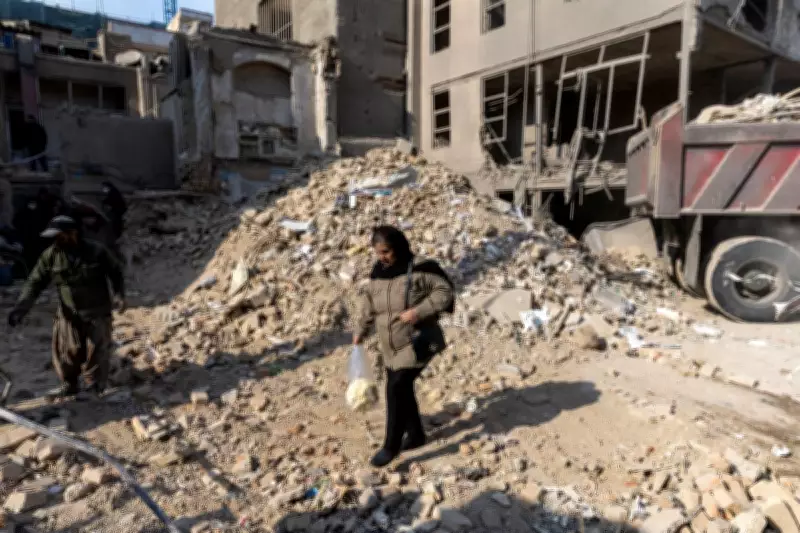
Reports from the region describe 'black rain' falling in Iran as toxic smoke billows from bombed oil depots, raising concerns about environmental contamination and public health risks. The imagery of dark precipitation underscores the severe consequences of the ongoing hostilities, affecting civilian populations and infrastructure.
Broader Implications
The rejection of ceasefire talks by Iran, coupled with Israel's aggressive strikes and Trump's provocative statements, suggests a prolonged and potentially worsening conflict. Analysts warn that the situation could spiral further, with implications for global security, oil markets, and diplomatic relations in the Middle East. The steadfast refusal of Iran to back down, despite military setbacks, indicates a deep-seated resolve that may complicate future peace efforts.
As the conflict continues, international observers are closely monitoring developments, with calls for de-escalation growing louder. However, with both sides entrenched in their positions and external actors like the US adding to the rhetoric, the path to resolution remains uncertain and fraught with challenges.