
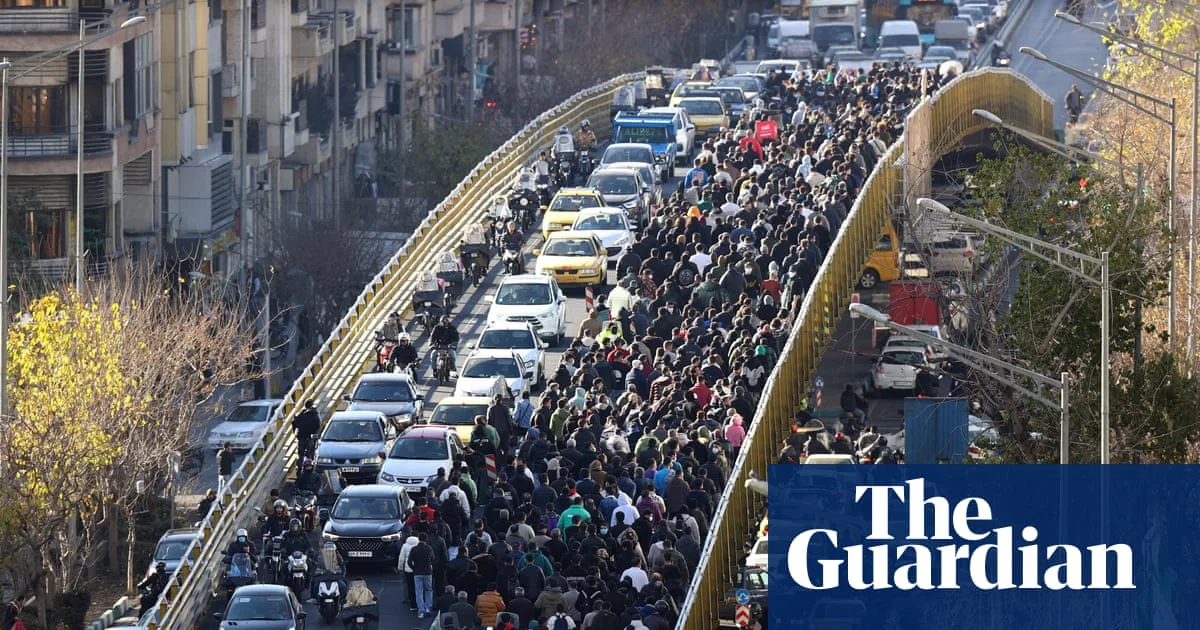
Demonstrations against deteriorating living conditions in Iran have widened to include criticism of the government, marking the largest protests since 2022. Tens of thousands of Iranians have taken to the streets, with merchants shuttering stores and students occupying campuses across the country.
The protests, now in their fourth day, were triggered by the national currency's plunge to a historic low on Sunday, when the rial dropped to 1.42 million to the US dollar—a decline of more than 56% in six months. Soaring inflation has pushed food prices up by 72% compared to the same time last year, exacerbating the struggles of ordinary citizens.
One protester, a textile merchant in Isfahan who spoke under a pseudonym, told the Guardian: 'What will my children eat? Do we have to bring suitcases of cash to simply buy bread? Do you find that normal?' He added that the government's corruption left him with no choice but to join the protests.
Social media videos show protesters chanting anti-government slogans and throwing stones at security forces. Slogans such as 'death to the dictator' and 'woman, life, freedom' have been heard, echoing the 2022 protests sparked by the death of Mahsa Amini. Those protests were violently suppressed.
In response, President Masoud Pezeshkian has called for dialogue, stating the government should listen to 'legitimate demands.' However, protesters remain sceptical, citing past repression. One activist said: 'If the administration wanted to talk, they wouldn't fire teargas, shoot at protesters... we want the mullahs gone and we want democracy.'
The unrest comes as Iran faces intensified international sanctions and the aftermath of a 12-day war with Israel in June. The government has yet to quell the demonstrations, which show no signs of abating.




