
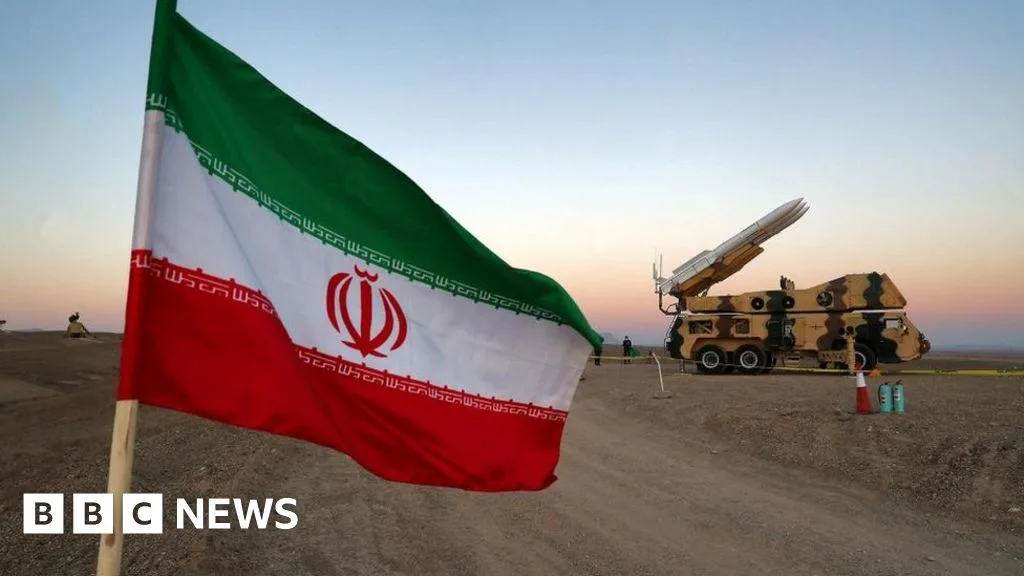
The European Union has agreed to expand sanctions on Iranian producers of drones and missiles following Tehran's unprecedented attack on Israel. The bloc's 27 leaders reached the agreement during a summit in Brussels, marking their first meeting since Iran launched more than 300 missiles and drones at Israel on Saturday.
European Council President Charles Michel stated, "It's very important to do everything to isolate Iran." The EU already has multiple sanctions in place against Iran, including for selling drones to Russia for use in its war against Ukraine. The US has hinted it will impose its own new penalties in the coming days.
Tehran has maintained the attack was retaliation for a presumed Israeli air strike on its consulate in Syria on 1 April, in which 13 people were killed. Israel has not ruled out a response, but world leaders have urged restraint to prevent a wider conflict in the Middle East.
German Chancellor Olaf Scholz said after the meeting, "For us, it is important that this moment is now also used for further de-escalation and that Israel also uses this success to strengthen its position in the whole region and not respond with a massive attack of its own."
Israel has called on allies to sanction Tehran's missile programme and designate the Islamic Revolutionary Guard Corps (IRGC) a terrorist organisation, something the US has done but the EU and UK have not. US Treasury Secretary Janet Yellen signalled that Iran's oil exports could be targeted, saying, "Clearly, Iran is continuing to export some oil. There may be more that we could do."




