Talks between the US and Iran in Switzerland are expected to continue for the rest of the week after a tense start that saw Iranian negotiators walk out in protest at threats issued by US President Donald Trump on social media. Trump had threatened to bomb Iran and kidnap the negotiating team unless the Strait of Hormuz was reopened, forcing mediators Qatar and Pakistan to continue negotiations in the background.
Iranian state media said the talks had entered a “difficult phase” and recessed after the “publication of an insulting message by the US president”. The Iranian delegation met Qatari mediators and then left the negotiating site. However, high-level negotiations continued before concluding in the early hours of Monday, with Pakistan and Qatar saying technical talks would continue for the rest of the week.
Iran’s foreign minister, Abbas Araghchi, praised Pakistan and Qatar for their mediation, saying they “delivered major progress”. A joint statement from Qatar and Pakistan said the US and Iran agreed to set up a “communication line” to avoid incidents in the Strait of Hormuz and a “de-confliction cell” with Lebanon’s government to ensure the “adherence of the termination of military operations in Lebanon”. Araghchi said the first real test of the understandings would be this deconfliction method due to fighting between Israel and Hezbollah.
Iran and the US last week signed a memorandum of understanding designed to lift the blockade on the Strait of Hormuz, leading to 60 days of talks on Iran’s civil nuclear programme. Trump’s aggressive threats on social media and in TV interviews caused anger among the Iranian negotiating team, who said they represented an unacceptable threat to their personal safety. They pointed out the memorandum included a non-aggression pact.
Iran’s chief negotiator, Mohammad Bagher Ghalibaf, said: “Don’t they think to themselves that if their threats had any effect, they wouldn’t have reached the desperation they face today? We don’t take the Americans’ threats into account at all.” The delegation felt compelled to walk out partly due to domestic political pressure to show distrust of the Trump negotiating team.
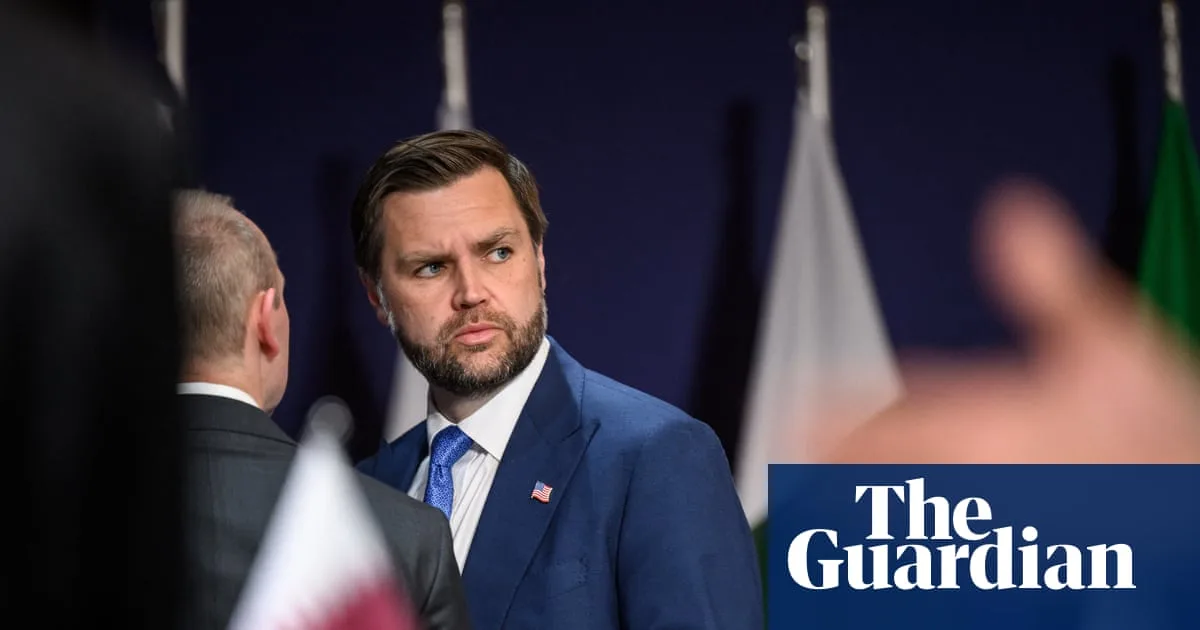
Trump’s threats contrasted with the tone adopted by Vice-President JD Vance, who said he had been asked by the president to use the talks to turn over a new leaf with Iran. Vance played down the impact of violence in Lebanon, saying progress had been made towards ending hostilities there. “These things are always a little bit messy,” he said.