Iranian Hardliners Escalate Nuclear Bomb Calls Amid US Invasion Fears
Following the death of Supreme Leader Ayatollah Ali Khamenei at the onset of the war, hardliners within the Islamic Revolutionary Guard Corps (IRGC) have solidified their dominance over Tehran. These Iranian hardliners, who have controlled the regime since Donald Trump's actions led to the ayatollah's demise, are now significantly ramping up calls to develop a nuclear bomb. Concurrently, the regime claims it has mobilised one million fighters on stand-by, prepared for a potential US ground invasion aimed at reopening the strategic Strait of Hormuz.
Intensifying Debate Over Nuclear Pursuit
According to Reuters, an intense debate among leaders of the IRGC about whether to seek a nuclear weapon in defiance of US-Israeli strikes is gaining popularity within Iranian leadership. This marks a stark shift from the regime's long-standing denial of nuclear ambitions, with Khamenei previously banning nuclear weapons as forbidden under Islam. However, Western intelligence agencies have publicly stated that Iran has been secretly enriching and stockpiling uranium in pursuit of a weapon, undermining its official stance.
Tehran's leaders are now seriously considering quitting the Nuclear Non-Proliferation Treaty and abandoning their posturing on nuclear weapons altogether. Sources informed Reuters that the relentless US-Israeli strikes have persuaded the regime it has nothing to gain by holding back from building a bomb, pushing it toward a more aggressive nuclear strategy.

Military Mobilisation and Regional Tensions
In a parallel development, Iranian state media has claimed that over a million troops have been mobilised in preparation for a US ground invasion to reopen the Strait of Hormuz, a critical chokepoint for global oil shipments. This comes as Pentagon chiefs ordered around 2,000 paratroopers from the 82nd Airborne Division to the Middle East last night, joining some 4,500 Marines already en route to the region. These deployments signal a collapse in Trump's peace push, heightening fears of a broader conflict.
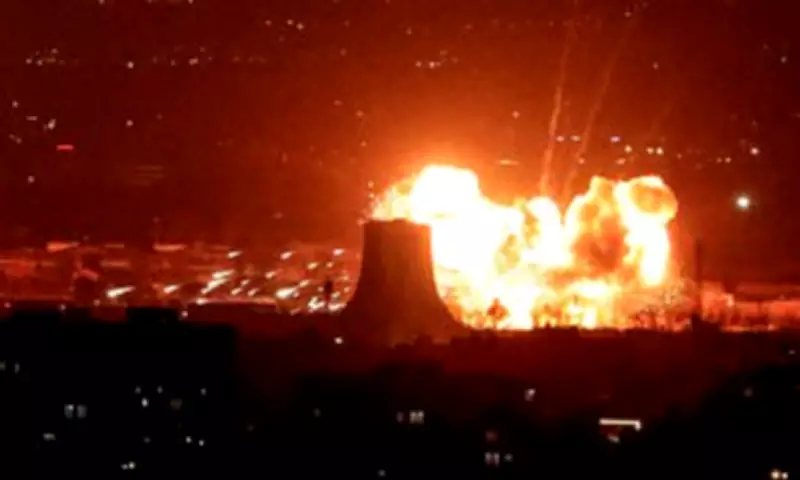
Israel is engaging in a wide range of military strikes across the Middle East, including in Gaza and Lebanon, where Iran's proxies are actively opposing Netanyahu's forces. These actions have exacerbated regional instability, with recent strikes near tent encampments in Deir el-Balah, central Gaza Strip, illustrating the escalating violence. The combination of nuclear ambitions and military mobilisation underscores a volatile situation, with Iran's hardliners pushing the regime toward unprecedented confrontations with the US and its allies.