Iran's Revolutionary Guard Commander Issues Stark Warning to United States
The commander of Iran's paramilitary Revolutionary Guard has declared his forces are "more ready than ever, finger on the trigger" as tensions with the United States escalate dramatically. General Mohammad Pakpour's warning comes amid significant US naval movements toward the Middle East and follows a brutal crackdown on nationwide protests that has left thousands dead.
Heightened Military Posturing and Diplomatic Warnings
According to reports from Nournews, a media outlet closely aligned with Iran's Supreme National Security Council, General Pakpour explicitly cautioned both the United States and Israel "to avoid any miscalculation." The commander emphasized that "the Islamic Revolutionary Guards and dear Iran stand more ready than ever" to execute orders from the country's leadership.
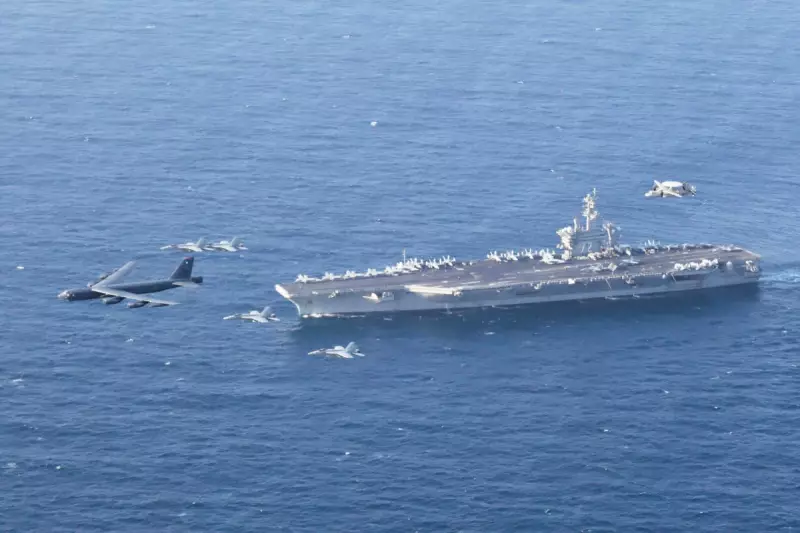
This bellicose rhetoric coincides with confirmed movements of US warships toward the region. A US Navy official, speaking anonymously about military operations, revealed that the aircraft carrier USS Abraham Lincoln and accompanying vessels are currently positioned in the Indian Ocean. The naval deployment represents a significant show of force in an already volatile geopolitical landscape.

Background: Deadly Protests and International Response
The current crisis stems from widespread protests that erupted across Iran beginning December 28th, triggered by the collapse of the national currency, the rial. The demonstrations swept the country for approximately two weeks before being violently suppressed by security forces, with the Revolutionary Guard playing a central role in the crackdown.
Human rights organizations continue to document a rising death toll despite Iran implementing the most comprehensive internet blackout in its history, now extending beyond two weeks. The US-based Human Rights Activists News Agency reported on Saturday that at least 5,137 people have been killed, with expectations this number will increase further. More than 27,700 individuals have reportedly been arrested during the unrest.
Iran's government offered its first official casualty figures on Wednesday, acknowledging 3,117 deaths but categorizing many victims as "terrorists" rather than civilians. Historically, Iranian authorities have significantly underreported fatalities during periods of civil unrest.
US Presidential Warnings and Nuclear Negotiations
US President Donald Trump has repeatedly issued warnings to Tehran, establishing two clear red lines that could trigger military action: the killing of peaceful demonstrators and mass executions of protest detainees. President Trump has claimed Iran halted plans to execute 800 people arrested during the protests, though Iranian officials have vehemently denied this allegation.
During remarks aboard Air Force One on Thursday, President Trump confirmed the movement of US warships toward Iran, stating "just in case" military action becomes necessary. He noted that "we have a massive fleet heading in that direction and maybe we won't have to use it."
The President also referenced previous negotiations over Iran's nuclear program before Israel's military actions against Iranian nuclear sites in June. Trump threatened that any future US military action would make previous strikes "look like peanuts" and suggested Iranian leaders "should have made a deal before we hit them."
Regional Impact and Aviation Disruptions
The escalating tensions have already begun affecting civilian aviation in the region. Air France announced temporary suspension of its service to Dubai in the United Arab Emirates, cancelling two return flights from Paris over the weekend citing "the current situation in the Middle East." The airline emphasized it continuously monitors geopolitical developments to ensure flight safety.
Additional flight cancellations to Dubai included services from Amsterdam operated by KLM and Transavia, plus a Luxembourg-based Luxair flight. KLM also cancelled flights to Tel Aviv, Israel on both Friday and Saturday according to online flight tracking services. These disruptions highlight how regional military tensions can rapidly affect international travel and commerce.

The current death toll from Iran's protest crackdown represents the highest casualty figures from civil unrest in decades, recalling the chaotic period surrounding the 1979 Islamic Revolution. With military forces on high alert and diplomatic channels strained, the situation remains dangerously volatile as both Iranian and American leaders exchange increasingly confrontational rhetoric.