
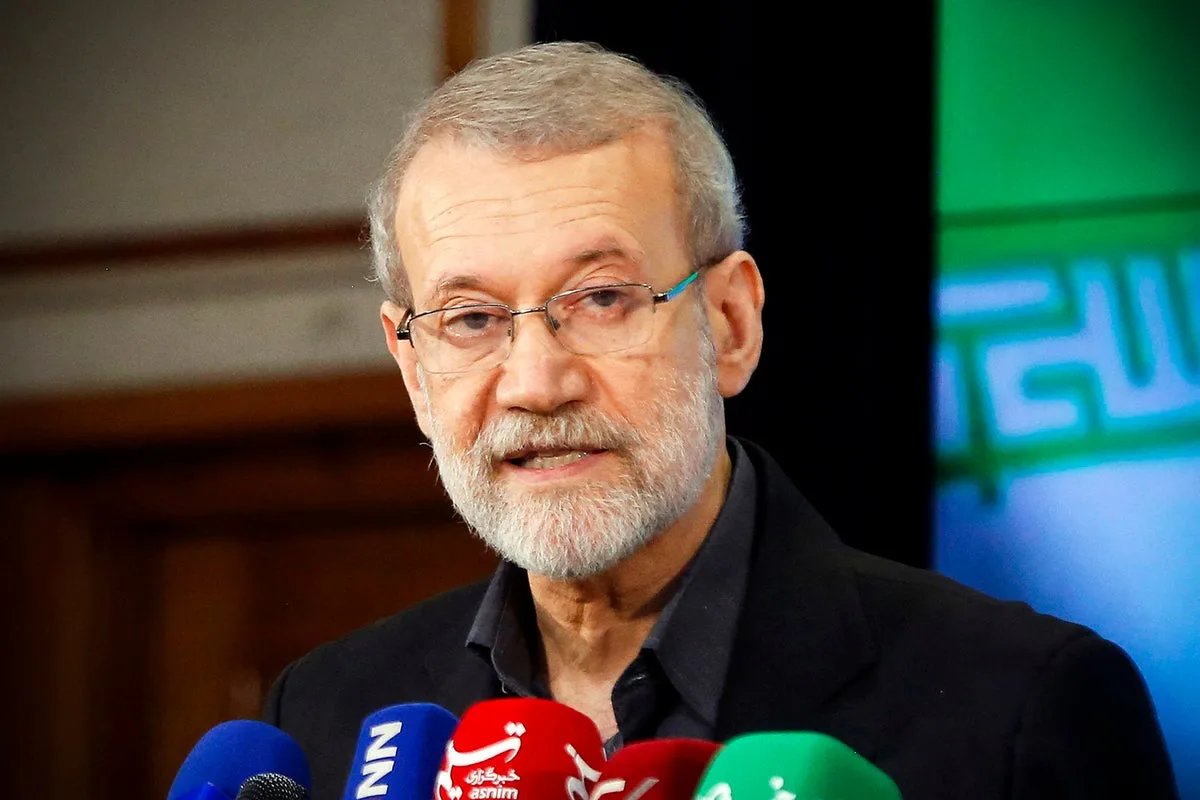
Iran has confirmed the deaths of two senior security officials following Israeli air strikes, with the Israeli defence minister stating that Ali Larijani, secretary of Iran's Supreme National Security Council, and General Gholam Reza Soleimani, head of the Revolutionary Guard's Basij force, were eliminated. The Iranian judiciary's news agency Mizan quoted the Revolutionary Guard as confirming General Soleimani's killing, while Iranian state media also confirmed Mr Larijani's death.
Both men were key figures in Iran's crackdown on protests earlier this year and were sanctioned by the US and other nations. Israeli Prime Minister Benjamin Netanyahu said the killings aimed to weaken Iran's government, giving the Iranian people an opportunity to remove it. The Israeli military said it had begun a wide-scale wave of strikes across Tehran and struck more than ten Basij posts.
Iran retaliated by firing missiles and drones at Gulf Arab neighbours and Israel on Tuesday. Dubai briefly shut its airspace, and an Iranian official said Tehran had no intention of relinquishing its grip on shipping through the Strait of Hormuz. President Donald Trump said NATO and other allies had rejected his calls to help secure the strait.
In Iraq, two drones were shot down at the US Embassy in Baghdad, and a third crashed inside the compound, causing a large fire. In the United Arab Emirates, an oil facility in Fujairah was hit, and a man was killed in Abu Dhabi by debris from an intercepted missile. Saudi Arabia intercepted drones, and air defences were heard over Qatar's capital, Doha.
The killings occurred on the eve of the Persian festival Chaharshanbe Souri, with authorities sending threatening text messages urging the public not to celebrate. State media aired footage of pro-government demonstrations, including men with assault rifles on motorcycles, signalling efforts to prevent renewed protests.




