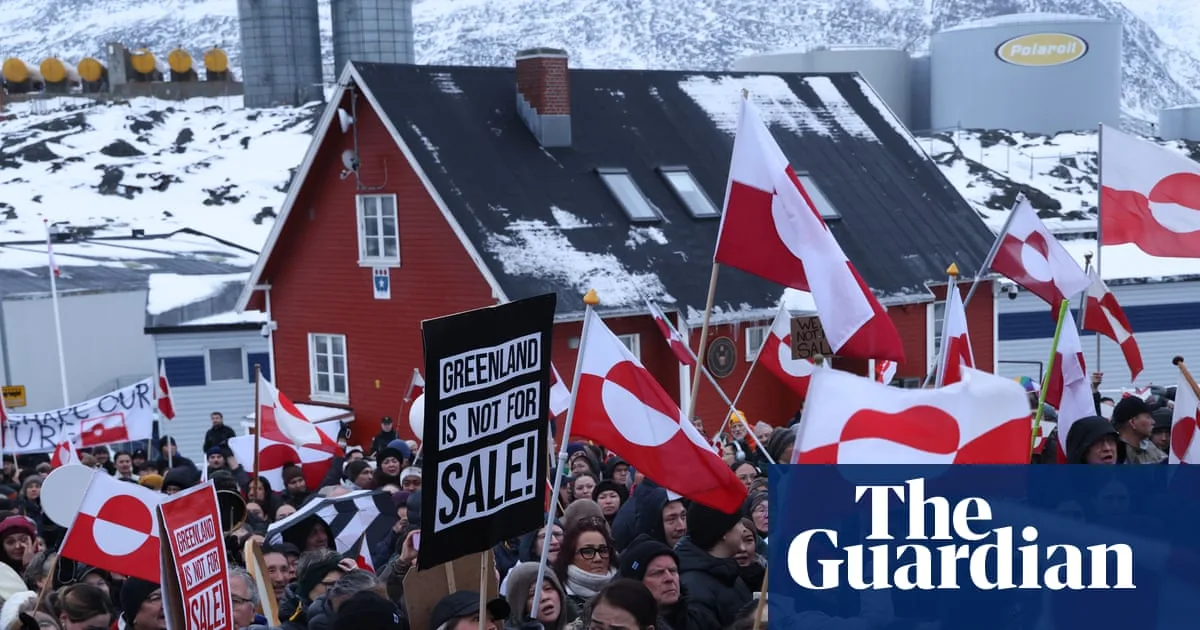
In Greenland’s capital, Nuuk, families are quietly wondering whether they will have to flee as politicians find themselves in the sights of a superpower. The largely autonomous Danish territory, sparsely populated but strategically vast, sits between North America, Europe and Russia – and as the Arctic ice melts, its importance is growing fast.
Climate heating is shrinking the Arctic ice cap, opening up sea routes that were once the preserve of icebreakers and exposing valuable mineral resources beneath Greenland’s retreating ice sheet. What was once seen as a frozen backwater is now viewed increasingly as a strategic prize, helping to explain why Donald Trump’s previously outlandish-sounding threats are being taken far more seriously in Europe’s capitals.
Our Nordic correspondent, Miranda Bryant, who has just returned from Nuuk, says the tone and mood have shifted markedly since Trump’s election. “I went to Nuuk this time last year, just before Trump became president but after Donald Trump Jr had visited. Returning this January, the tone and the mood was quite markedly different in terms of how seriously Trump’s threats were being taken.”
Greenland’s premier, Jens-Frederik Nielsen, has stated firmly: “Greenland does not want to be part of the US … We choose the Greenland we know today, which is a part of the Kingdom of Denmark.” However, the second biggest party, Naleraq, thinks Greenland should negotiate directly with the US, without Denmark – a crack Trump can try to prise open.
All major parties support eventual independence from Denmark, but Trump’s rhetoric has forced a brutal reprioritisation: security first, sovereignty later. Denmark’s military presence in Greenland is more than the two dog sleds Trump has mocked, but it is not a dominant presence on the island.