The Collapse of Iran Nuclear Negotiations: A Tale of Missed Opportunities
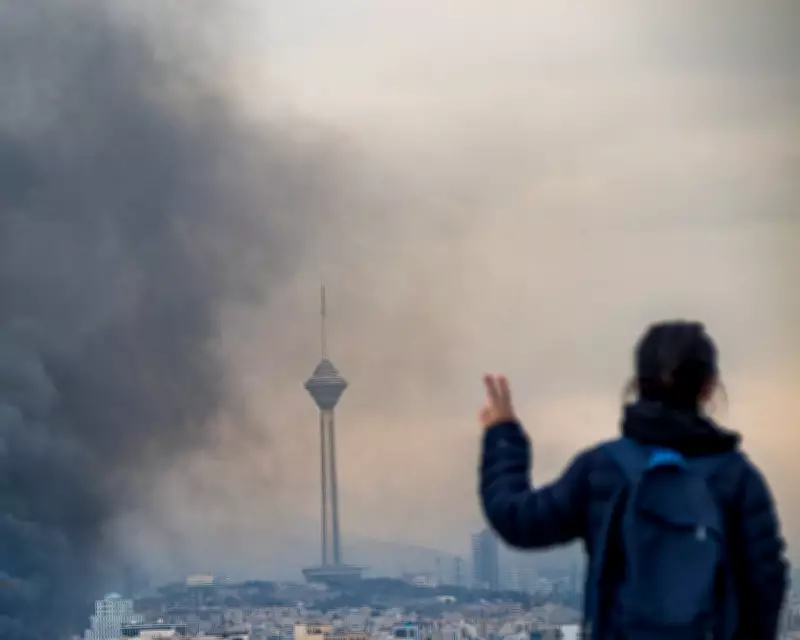
In a striking image from early March, a woman in Tehran flashes a victory sign as plumes of smoke rise from explosions, symbolizing the tragic outcome of failed diplomatic efforts. This scene underscores how ignorance, misunderstanding, and deliberate obfuscation ultimately terminated critical nuclear talks between the United States and Iran, paving the way for war.
Unconventional Diplomacy and Bizarre Exchanges
Negotiators had reportedly reached agreement on key issues, despite the idiosyncratic approach of the Trump administration's team. However, just two days later, hostilities commenced. Among the many bizarre incidents leading up to the US-Israeli attack was an invitation from Donald Trump's special envoy, Steve Witkoff, to Iranian Foreign Minister Abbas Araghchi. He proposed that Araghchi join him and Jared Kushner, Trump's son-in-law, for a visit to the USS Abraham Lincoln carrier strike group.
This suggestion, which seemed unorthodox at best, highlighted the unconventional methods employed by Kushner and Witkoff throughout the nuclear talks. These discussions spanned last year and into this one, repeatedly interrupted by Israeli and US airstrikes. A Gulf diplomat with direct knowledge of the talks expressed fury, describing the pair as "Israeli assets" that manipulated the US president into a conflict he now seeks to exit.

Lack of Expertise and Protocol Breaches
Witkoff, who admitted to limited regional knowledge—once referring to the Strait of Hormuz as the "Gulf of Hormuz"—brought minimal expertise to the table. During the initial round of talks last year, he rarely took notes and was accompanied only by Michael Anton, a hawkish essayist without specialization in Iran's nuclear file. Anton supposedly had a technical team in Washington, but their expertise was absent from negotiations.
When talks resumed in Oman in February, Witkoff breached protocol by arriving with Admiral Brad Cooper, commander of US forces in the Middle East, in full naval uniform. Witkoff claimed Cooper was "just in the neighbourhood," but Omani hosts politely asked him to leave. This contrasted sharply with the Obama administration's approach in 2009, which involved ten senior officials from multiple departments engaging in detailed, round-the-clock negotiations with constant Washington coordination.
Critical Misunderstandings and Compressed Timelines
The failure of these indirect talks is not merely historical curiosity; it has profound implications for future nuclear diplomacy. Misunderstandings about Iran's complex nuclear programme, including the Tehran Research Reactor's uranium needs and the scope of future plans, contributed to the march toward war. Witkoff further complicated matters by compressing timelines, allotting only three-and-a-half hours for talks with Iran on 17 February, while also engaging with Ukraine.
Iranian officials now believe the talks were a subterfuge to allow US military buildup, while Witkoff accused them of being "deceptive" and "fishy." A Gulf diplomat noted that greater time and expertise might not have guaranteed a deal but would have helped, adding that Iranians have generally been truthful in their accounts.
The Geneva Offer and Final Roadblocks
Iran bears some responsibility, as it has not published its seven-page written offer for a new deal, despite internal calls for transparency. This proposal, shown to Witkoff in Geneva, was deemed worth pursuing by UK National Security Adviser Jonathan Powell. Kushner even admitted it could have surpassed the 2015 Obama deal.
Key elements of the Geneva proposal included the removal of sunset clauses, a US-led regional enrichment consortium, and full International Atomic Energy Agency oversight. Iran agreed to down-blend its stockpile of 60% enriched uranium, rather than export it, and accepted a multiyear pause in enrichment due to plant destruction. However, a major roadblock was Iran's insistence on the right to enrich uranium in the future, requiring 30 centrifuges under strict inspection.

On the final day of talks, Iran offered a three-to-five-year moratorium, extending past Trump's presidency, but after a phone consultation with Trump, Witkoff demanded ten years. The US offered to pay for nuclear fuel imports over that decade. Additionally, negotiators had agreed to lift 80% of sanctions on Iran, with Oman estimating three more months were needed for details.
Oman's Last-Minute Effort and War's Onset
As talks concluded with only a progress statement, Omani Foreign Minister Badr bin Hamad Al Busaidi sensed imminent war and rushed to Washington to advocate for a breakthrough. He proposed zero stockpiling, but it lacked the force of zero enrichment. Oman suspected Witkoff and Kushner were not accurately informing Trump of progress, compounded by Trump's distraction—once derailing discussions to talk about shoes.
A day later, the war began. Since then, Witkoff has claimed Iran had a "Perry Mason moment" over secret uranium stockpiling, though this evidence was publicly known. US briefings have also shown inconsistencies regarding Iran's ballistic missile programme as a red line.
Expert Frustration and Future Implications
Katariina Simonen, an adjunct professor at the Finnish National Defence University, criticized the Trump administration's impenetrable, closed-circle approach, noting that expert advice on nuclear physics was ignored. She emphasized that a deal would have reinstated IAEA access to Iran, resolving many issues. The war's aftermath may intensify calls within Iran for nuclear weapons, especially if the government survives, as recent protests in Tehran demand no return to talks with America.
This analysis reveals how diplomatic missteps, lack of expertise, and mutual distrust led to a preventable conflict, with lasting repercussions for regional stability and global nonproliferation efforts.