Israeli Military Sparks Controversy with Viral Music in Propaganda Video
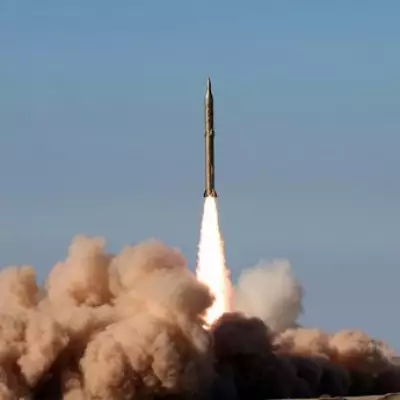
The Israel Defence Forces (IDF) has ignited significant controversy by incorporating British singer Jess Glynne's viral song Hold My Hand into a military propaganda video that boasts about the assassination of high-ranking Iranian leaders. The video, posted on the IDF's official X platform account, features dramatic footage of Israeli fighter jets and missile strikes, culminating in the display of six deceased Iranian terror leaders behind a banner boldly stating: 'Eliminated'.
Musical Choices and Viral Context
The audio track begins with Jess Glynne's uplifting anthem Hold My Hand, which gained renewed popularity last summer after becoming the soundtrack for a Jet2 holiday advertisement. The song was widely used on TikTok by users overlaying it with clips of their travel mishaps and adventures. In the IDF video, the track transitions into a remix of the popular Spanish song Yo Voy by Daddy Yankee, Zion, and Lennox. The video opens with a caption inspired by the Jet2 advert, reading: 'Nothing beats a...' creating a jarring contrast between the cheerful music and the grim subject matter.
Escalating Conflict and Casualties
This provocative video emerges against the backdrop of a rapidly escalating conflict in the Middle East that has resulted in devastating casualties. More than 1,000 people have been killed in Iran since hostilities erupted on Saturday, with numerous high-ranking officials among the deceased. The list includes Supreme Leader Ayatollah Ali Khamenei, Head of National Defence Ali Shamkani, Islamic Revolutionary Guard Corps commander Mohammed Pakpour, Defence Minister Aziz Nasirzadeh, and Armed Forces chief Sayyid Mousavi, all of whom perished following intensive air strikes.

Military Statements and Operations
Major General Tomer Bar, chief of the Israeli Air Force, declared on Wednesday that his troops are executing extraordinary missions across the Middle East. He revealed that hundreds of targets have been struck by Israeli missiles and hinted at the potential deployment of ground troops within Iranian territory. In a statement, Major General Bar emphasized: "On this Shabbat morning, over 200 Israeli Air Force aircraft are attacking targets in Iran. This is not a drill. This is a real operation to defend the State of Israel."
He further detailed that Israeli forces have been engaged in continuous combat for approximately 100 hours, coordinating with ground and naval units to strike hundreds of targets associated with the Iranian regime and its proxy forces. The military campaign has specifically targeted Iran's nuclear program, missile production facilities, and other strategic sites deemed critical to national security.
Regional Developments and International Involvement
The conflict has triggered significant regional repercussions and international military involvement. Reports indicate that between four and seven US-Israeli helicopters conducted an airdrop operation in the Najaf desert of Iraq on Wednesday, though the precise purpose remains unclear. Speculation suggests the helicopters may have been delivering equipment to anti-Iran regimes. An Iraqi convoy dispatched to investigate the aircraft was subsequently hit by airstrikes, resulting in one soldier killed and two wounded.
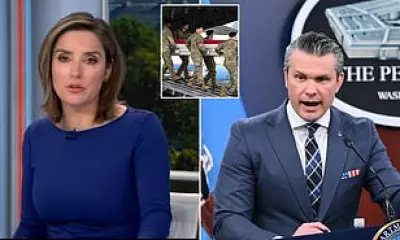
In a separate development, US Secretary of War Pete Hegseth announced that an American submarine torpedoed and sank an Iranian frigate, IRIS Dena, in the Indian Ocean off the coast of Sri Lanka. The attack resulted in at least 80 sailors confirmed dead and 78 wounded. Secretary Hegseth described this as the first sinking of an enemy ship by a torpedo since World War Two, though this statement overlooks the British sinking of the Argentinian cruiser Belgrano during the 1982 Falklands War.

Political Aftermath in Iran
The death of Supreme Leader Ayatollah Ali Khamenei has created a significant power vacuum in Iran, leading to the cancellation of his scheduled funeral ceremony in Tehran due to ongoing airstrikes. A member of the Iranian Assembly of Experts stated on Wednesday that the body is close to selecting a successor to Khamenei, whose reign spanned four decades. Reports suggest that Mojtaba Khamenei, the 56-year-old second eldest son of the former Supreme Leader, is a leading candidate to assume the position. Mojtaba maintains strong connections with the Iranian Revolutionary Guard Corps (IRGC), which is reportedly pressuring the Assembly of Experts to expedite the appointment.
Wider Regional Impact and Economic Consequences
The conflict has expanded beyond the immediate Iran-Israel theater, with Israel striking Iranian-backed Hezbollah militant positions in Lebanon, while Iran has launched attacks on Bahrain, Kuwait, and Israel. Turkey reported that NATO defense systems intercepted a ballistic missile launched from Iran before it could enter Turkish airspace. The war has resulted in substantial casualties across the region, with at least 1,045 people killed in Iran, 50 in Lebanon, 11 in Israel, and six US troops.
The economic ramifications are severe and far-reaching. The conflict has disrupted global oil and gas supplies, particularly after an attack on a container ship passing through the Strait of Hormuz—a critical chokepoint through which approximately one-fifth of the world's oil transits. This disruption has caused oil prices to soar dramatically, hammering global stock markets and raising concerns about potential damage to the world economy and corporate profitability.
Strategic Objectives and Future Outlook
Israeli and US officials have explicitly stated their desire to see the Iranian public overthrow the country's theocratic regime. Military strikes targeting Iran's Basij volunteer force and internal security command—both instrumental in suppressing domestic protests—appear designed to weaken the regime's control mechanisms. Iranian state television has begun referring to the conflict as the Ramadan war, suggesting preparations for a prolonged engagement during the holy Muslim fasting month.
Admiral Brad Cooper, the top US military commander in the Middle East, reinforced this perspective, stating: "We've just begun." He confirmed that American forces have successfully damaged Iranian air defenses and destroyed ballistic missiles, launchers, and drones. Despite these setbacks, explosions continued to echo over Jerusalem on Wednesday as Iran launched further missile attacks, while Hezbollah fired rockets into Israeli territory.
The Iranian paramilitary Revolutionary Guard issued its most severe threat to date, warning that the ongoing strikes would result in the complete destruction of the region's military and economic infrastructure. As the conflict enters its fifth day with no immediate resolution in sight, the humanitarian, political, and economic consequences continue to mount, creating unprecedented instability across the Middle East and beyond.