Caribbean Role in Maduro's Ousting: Trinidad's High-Stakes US Alliance
How Trinidad's US alliance aided Maduro's ousting

The geopolitical landscape of the Americas was fundamentally reshaped in early 2026 when the Trump administration executed a raid that ousted Venezuelan President Nicolás Maduro, placing him in US custody. While Western capitals grapple with the legal implications, for Caribbean nations, the event has triggered profound political fear and uncertainty, exposing deep regional fractures.

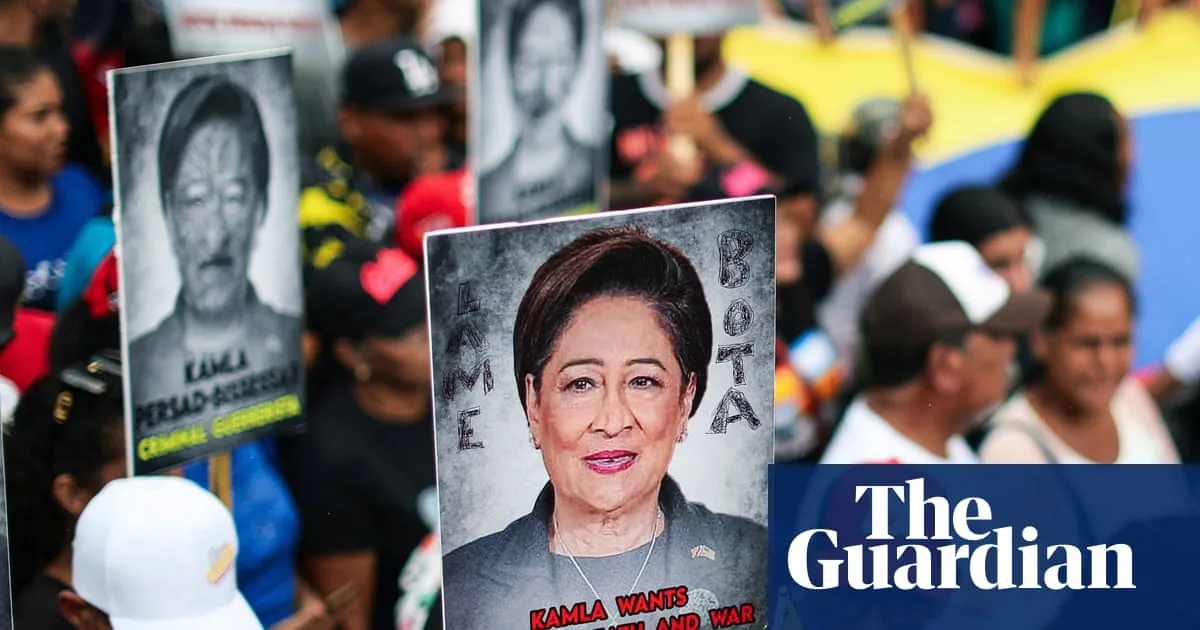
The operation's success appears to have been facilitated, in part, by strategic cooperation from an unexpected quarter: the twin-island nation of Trinidad and Tobago. Under Prime Minister Kamla Persad-Bissessar, the country has openly aligned itself with Washington, a move that analysts suggest laid crucial groundwork for the action against Caracas.

A Strategic Partnership: Radar, Jets, and Transits

This alignment manifested in tangible military cooperation. On 28 November, a sophisticated US Marine Corps mobile long-range radar system, known as G/ATOR, was deployed in a coastal area of Tobago, mere miles from the Venezuelan coast. This was accompanied by the arrival of US military aircraft and personnel.

Furthermore, in December, Trinidad and Tobago permitted the US to transit military aircraft through its airports, with its foreign ministry citing logistical needs. This cooperation followed a pattern of support; since September, the US had launched over 21 airstrikes on suspected drug smuggling routes in the region, actions which Persad-Bissessar has publicly endorsed.

Dr Jacqueline Laguardia Martinez of The University of the West Indies notes that Trinidad has "openly endorsed US actions under the pretext of combating transnational crime," a significant shift for a founding member of the Caribbean Community (Caricom).

Diverging from Caricom and Courting Controversy

This stance marks a sharp departure from Caricom's traditional cohesion, which has historically championed the region as a 'Zone of Peace'. Peter Wickham, director of Caribbean Development Research Services, points out that Trinidad is now an outlier. "One could say that their facilities have not been used to stage an attack," he stated, "but nonetheless there is cooperation at least in the provision of intelligence."

This was a conscious choice. Wickham reveals that other islands, like Grenada and Antigua, were asked to host the US radar and refused. The motivation for Trinidad's gamble, he suggests, is resource-driven. While former US President Donald Trump sought Venezuelan oil, Persad-Bissessar is focused on accessing the vast natural gas reserves in Venezuela's nearby Dragon Field.

"She has determined that the best way to get it is not to negotiate with the Maduro administration but to negotiate with Trump," Wickham explained. This high-risk strategy involves betting on an unpredictable US administration and has drawn criticism for potentially exposing the nation to international legal repercussions.

Regional Repercussions and a Climate of Fear

The raid has sent shockwaves through a region with deep, complex ties to Venezuela. For years, Caracas fostered cooperation via initiatives like Petrocaribe, providing oil under favourable terms, and through developmental aid. Venezuela played a key role in re-establishing communications in Dominica after Hurricane Maria and helped build infrastructure in Saint Vincent.

Now, a palpable wariness grips Caribbean capitals. Caricom has opted for a cautious approach, refraining from a strong joint condemnation, a move Wickham attributes to the "path of least resistance." The US indictment of Maduro, which ominously references other leaders who supported him, has been interpreted as a threatening signal.

"This changes everything," Wickham concluded, highlighting the chilling effect on regional politics. With elections due in several islands, leaders are reportedly questioning the safety of their positions. The event has underscored the vulnerability of small states and cast a long shadow of uncertainty over the future of Caribbean sovereignty and diplomacy.




