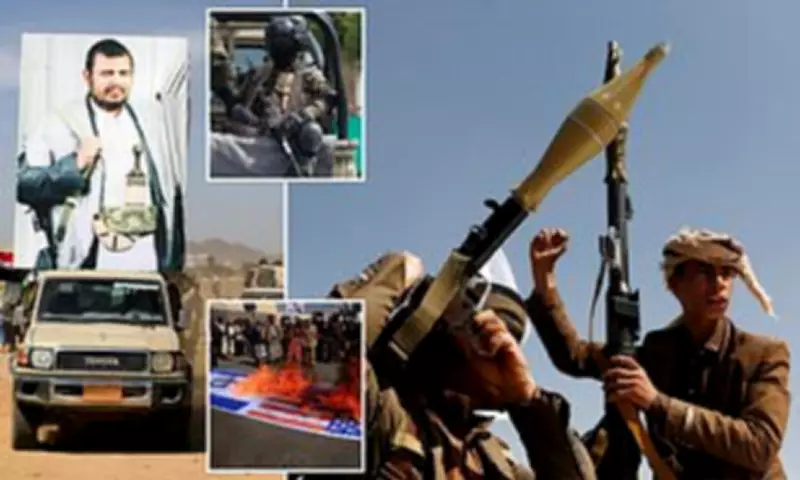
The Iran-backed Houthi terrorist organization has issued a stark warning that it stands prepared to enter the escalating Middle East conflict, directly targeting the United States and Israel. This announcement comes as tensions continue to mount across the region, with the Houthis positioning themselves as a key player in Iran's so-called 'Axis of Resistance.'
Houthi Leadership Issues Direct Threats
On Thursday, Abdul Malik al-Houthi, the leader of the primarily Yemen-based terrorist group, delivered a chilling statement regarding their military intentions. 'Regarding military escalation and action, our fingers are on the trigger, ready to respond at any moment should developments warrant it,' al-Houthi declared, emphasizing their combat readiness.
This sentiment was echoed by senior Houthi political official Mohammed al-Bukhaiti in a phone interview with the New York Times. 'The expansion of the conflict to include other countries, including Yemen, is only a matter of time,' al-Bukhaiti stated, adding, 'Our hands are on the trigger,' mirroring his leader's aggressive posture.

The Houthi Ideology and Regional Position
The Houthi organization's official slogan reveals their fundamental ideology: 'Allah is Greater. Death to America. Death to Israel. Curse on the Jews. Victory to Islam.' This anti-Western, anti-Israeli rhetoric forms the core of their political and military identity.
As part of Iran's 'Axis of Resistance,' the Houthis join other terrorist organizations including:
- The Lebanon-based Hezbollah
- Hamas and Palestinian Islamic Jihad in the Gaza Strip
- Shiite militias operating in Iraq
Expert Analysis on Houthi Strategy
Nadwa Al-Dawsari, a Yemen expert and associate fellow at the Middle East Institute, provided crucial insight to Fox News regarding why the Houthis have thus far refrained from direct intervention. 'The reason why the Houthis have not intervened is they are the last line of resistance for the axis. Especially after other axis members were degraded,' Al-Dawsari explained.
Indeed, recent developments have weakened other elements of Iran's regional network:
- Hamas has been significantly diminished through its prolonged conflict with Israel
- The Iranian-aligned Ba'athist regime in Syria collapsed after Bashar al-Assad was deposed by rebels in late 2024
Why Yemen Matters to Iran's Survival
Al-Dawsari emphasized the critical importance of the Houthis to Iran's Islamic Revolutionary Guard Corps (IRGC). 'The IRGC can’t afford to lose the Houthis. Yemen is so important to them. They need to preserve the Houthis for tomorrow for the IRGC to continue even after the regime,' she stated.
This strategic calculation explains Iran's careful management of Houthi involvement. The Houthis maintain de facto control over approximately one-third of Yemen's territory and influence up to 80 percent of its population, creating a potential safe haven for the IRGC should the Iranian regime face collapse.
Economic Warfare as Strategic Tool
Iran's broader strategy involves prolonging regional conflicts and expanding them across the Middle East to create political pressure on the United States. A key element of this approach involves disrupting vital shipping lanes.
The Strait of Hormuz represents a particularly sensitive target, with approximately 20 percent of global oil passing through this narrow waterway. By threatening this crucial trade route, Iran hopes to generate sufficient political pressure within the United States to force an early end to conflicts, which would effectively constitute victory for Tehran.
Precedent of Houthi Maritime Attacks
The Houthis have previously demonstrated their capacity for economic disruption during the Israel-Gaza war from 2023 to 2025. During this period, the terrorist organization conducted numerous attacks against both commercial and military vessels in the Red Sea, targeting:

- American ships
- Vessels from more than 40 other nations
- Global shipping routes to disrupt international trade
These attacks represented a deliberate strategy to support Hamas by damaging the global economy and pressuring Israel to cease hostilities. The United States responded with direct military engagement, conducting several bombing operations against Houthi positions before a tentative truce was reached in May 2025.
Future Escalation Risks
Al-Dawsari warned that the Houthi threat should be taken seriously. 'The longer the war continues, the more likely the Houthis will intervene,' she told Fox News, adding that the organization has been 'itching for a while' to attack Saudi Arabia should they enter the conflict.
If the Houthis resume their attacks in the Red Sea or engage the United States and Israel through other means to support Iran, this would represent a significant escalation in an already broadening Middle East conflict. The organization's control of Yemen, combined with their ideological commitment to confronting Western powers, makes them a potentially dangerous addition to regional hostilities.
The delicate balance between preserving the Houthis as Iran's 'last line of resistance' and deploying them as active combatants creates complex strategic calculations for all parties involved in the Middle East's ongoing conflicts.