Gulf States Face Existential Threat as Iran Conflict Escalates
The thunderous boom that reverberated over Dubai marina, rattling the windows of skyscrapers and luxury hotels, has become an alarming new normal for residents across the Gulf. As mobile phones blared with shrill missile and drone strike warnings, a young man sipping coffee with a friend voiced the pervasive anxiety: "That sounded close, do you think a missile has hit something?"
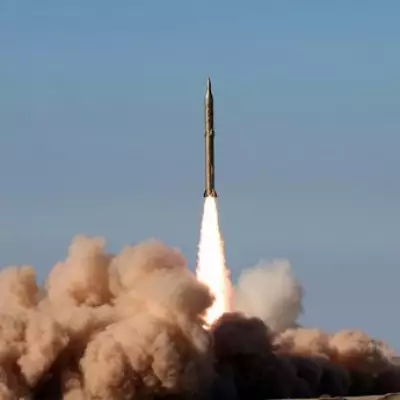
For twenty consecutive days, since the United States and Israel initiated bombing campaigns against Iran, Gulf states have endured a relentless barrage of thousands of Iranian drones and missiles targeting critical infrastructure. Airports, hotels, ports, military installations, financial districts, data centers, and residential complexes have all come under fire, shattering the carefully cultivated illusion of safety and glamour that underpins Dubai's economic success.
Defensive Posture Under Strain
Despite this unprecedented assault on their sovereignty, security, and economies, Gulf Cooperation Council (GCC) members—Saudi Arabia, Qatar, the United Arab Emirates, Kuwait, Bahrain, and Oman—have thus far maintained a strictly defensive stance. They have invested billions in interceptor systems that have successfully neutralized approximately 90% of Iran's ballistic threats. United Arab Emirates air defense systems recently demonstrated this capability, shooting down a drone in a fiery explosion over Dubai's convention center, with debris cascading like ominous fireworks.

However, the conflict has entered a dangerous new phase that threatens the very existence of these petrostates. Following Israeli strikes on Iran's South Pars gasfield—the first targeted attacks on Iranian fossil fuel production since hostilities began—Tehran vowed "zero restraint" in retaliating against Gulf energy infrastructure. Iran has made good on this threat with devastating effect.
Energy Infrastructure Under Attack
In Qatar, nearly one-fifth of liquefied natural gas export capacity was crippled by strikes on the Ras Laffan gas complex. Abu Dhabi authorities were forced to suspend operations at the Habshan gas facility and Bab field, condemning the attacks as a "dangerous escalation." Kuwait's state oil firm reported multiple drone assaults on its Mina al-Ahmadi refinery, while Saudi Arabia confirmed two of its oil refineries had been targeted. Simultaneously, Iran continues its blockade of the Strait of Hormuz, through which most Gulf oil and gas exports flow to global markets.
"From the GCC perspective, this war has exposed a deeply troubling reality: all three parties involved are becoming increasingly irrational and detached from reality, each pursuing agendas that threaten to drag the region and the world into a very dark place," warned Ali Bakir, assistant professor of international affairs, security, and defense at Qatar University.
Mounting Pressure for Offensive Action
The GCC nations, though small in population, possess formidable military resources including approximately 2,000 F-15 and F-18 aircraft collectively, with Western powers eager to supply additional advanced weaponry. Only Saudi Arabia and the UAE have substantial experience in large-scale aerial warfare, but as interceptor stockpiles diminish, pressure mounts for a shift from defensive to offensive operations.
Bakir emphasized that Iran is "playing with fire" by escalating attacks on Gulf energy infrastructure. "The pressure will mount for the GCC states to switch from a defensive to an offensive posture—especially as interceptor stocks run low," he cautioned.
Geopolitical Calculations and Mistrust
Despite American pressure for Gulf states to join "his side" since Donald Trump initiated bombing campaigns against Iran, profound mistrust of U.S. intentions permeates Gulf leadership circles. Analysts suggest GCC military intervention would legitimize a war they vehemently opposed and risk becoming a dangerous geopolitical trap where America withdraws after Gulf states bear the brunt of conflict.

"The GCC would be left with a bloody, open-ended war with Iran that would scar generations," Bakir predicted. Gulf states remain suspicious that the U.S. acts as an Israeli proxy seeking regional hegemony. Omani minister Badr Albusaidi recently wrote that America had "lost control of its foreign policy," while one Gulf leader privately described Trump as Benjamin Netanyahu's "poodle."
Saudi Posturing and Collective Dilemma
Saudi Foreign Minister Prince Faisal bin Farhan recently asserted Saudi Arabia's right to take military action if necessary, but analysts interpret this as Crown Prince Mohammed bin Salman projecting domestic strength following previous Houthi attacks from Yemen. Few believe Saudi Arabia would act unilaterally, and a GCC consensus on collective intervention remains elusive.
"I doubt very much whether any Arab Gulf state would ever join the American-Israeli war because, as they have all said repeatedly: this is not our war," stated Fawaz Gerges, professor of international relations at the London School of Economics. "They believe it's not even America's war."
Impossible Choices and Future Security
Gerges described the Gulf's predicament as "an impossible situation, between a rock and a very hard place," balancing immediate sovereignty defense against long-term regional security concerns. The assassination of Iranian Supreme Leader Ali Hosseini Khamenei and other senior officials by U.S. and Israeli forces has failed to produce surrender, leaving an entrenched regime that has "crossed every red line."
"Arab Gulf states have to think about the future and what a postwar Iran might look like," Gerges explained. "An injured, enraged and a bleeding Iran could really threaten Gulf security and economic interest for the foreseeable future. A military offensive only risks antagonizing them further."
Hardening Attitudes and Existential Threats
As diplomatic solutions fade, Gulf perspectives on Iran are hardening. Muhanad Seloom, assistant professor of international politics and security at the Doha Institute for Graduate Studies, argued that "the GCC countries understand that this regime is now extremely dangerous, even unhinged—we don't even know who is really running the country."
Seloom advocated for complete U.S. decimation of Iran's military capabilities: "The US decapitating the Iranian regime for good is definitely the only option we have now. Otherwise, any time Iran is under pressure, they know they can hit the Gulf, they know they can blockade the Strait of Hormuz, and that will be effective. That's an existential threat for the GCC."
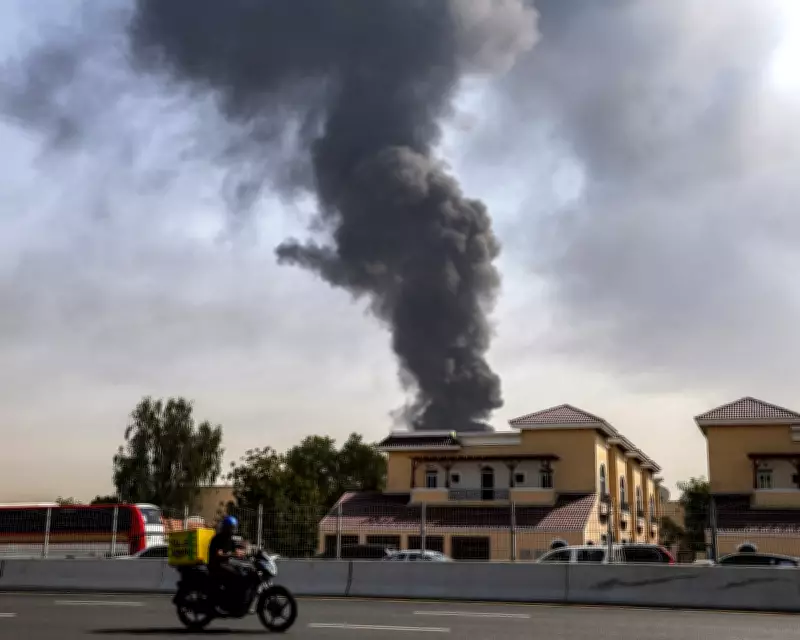
Abdulkhaleq Abdulla, associate professor of political science at United Arab Emirates University, echoed this sentiment with stark simplicity: "America wanted this. So let them finish it." As smoke continues to rise near Dubai International Airport from drone-related incidents, Gulf states confront their most severe security challenge in decades, weighing defensive restraint against the growing imperative for offensive action against an increasingly aggressive Iran.