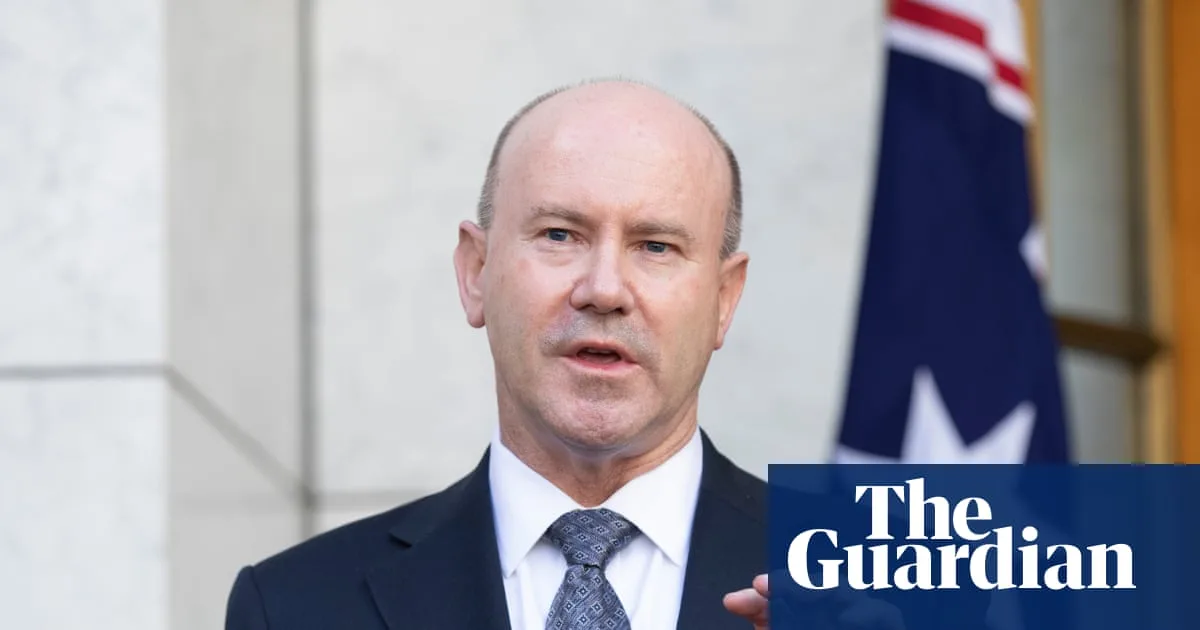
Prime Minister Anthony Albanese and Foreign Affairs Minister Penny Wong have officially announced the appointment of Greg Moriarty as Australia's next ambassador to the United States, succeeding Kevin Rudd in the crucial diplomatic role. The career public servant, who has led the Department of Defence since 2017, will take up his posting in Washington from April, representing Australian interests during a critical period in bilateral relations.
Distinguished Public Service Career
Greg Moriarty brings an impressive portfolio of experience to his new diplomatic position. As Australia's inaugural counter-terrorism coordinator, he established foundational security frameworks that continue to shape national policy. His extensive diplomatic background includes serving as Australian envoy to both Iran and Indonesia, providing him with nuanced understanding of complex international relationships across different regions and political systems.
Moriarty's military and defence credentials are particularly noteworthy. He previously worked within US Central Command in the Persian Gulf during Operations Desert Shield and Desert Storm, giving him firsthand experience of American military operations and strategic thinking. His career has also included representing Australia in Papua New Guinea and serving as a negotiator for the peace monitoring group in Bougainville, demonstrating his capacity for delicate diplomatic work in challenging environments.
Managing Critical Relationships
Prime Minister Albanese emphasised that Moriarty would represent Australia's interests with distinction during the Trump administration, particularly as the Aukus nuclear submarine agreement progresses toward implementation. The prime minister described Moriarty as "an outstanding Australian public servant" who has served both Labor and Coalition governments with professionalism and dedication.
"I have been impressed by the dignified way he handles himself, by the connections in the United States as well," Albanese told ABC Television. "I engaged broadly in discussions about who the right person was." The prime minister confirmed that members of the Trump administration had been consulted regarding the appointment, indicating careful diplomatic preparation for the transition.
Transition from Defence Leadership
Moriarty's departure from his role as Defence Department secretary comes as the department prepares for significant structural changes announced in December by Defence Minister Richard Marles. These represent the most substantial overhaul of Australia's defence bureaucracy since the mid-1970s, involving the merger of three major agencies responsible for capability acquisition, guided weapons systems, and naval shipbuilding.
A new independent delivery agency will be established to manage billions of dollars in complex defence and military projects, consolidating organisations that currently oversee nearly forty percent of the department's functions. Moriarty's successor will inherit responsibility for implementing these reforms while addressing budget and timeline challenges affecting major procurement projects.
Diplomatic Context and Challenges
The appointment follows Kevin Rudd's decision to leave his ambassadorial position a year ahead of schedule. The former prime minister will assume the role of global president at the Asia Society thinktank, where he will also head the society's Center for China Analysis. Albanese praised Rudd's diplomatic achievements, particularly his work in transforming the Aukus agreement from concept to reality and advancing critical minerals deals between Australia and the United States.
Rudd's tenure was not without diplomatic complications, however. His 2020 characterisation of Donald Trump as "the most destructive president in history" created tension with the White House, resulting in an awkward moment during Prime Minister Albanese's first face-to-face meeting with Trump in October. Moriarty's appointment represents an opportunity to reset diplomatic relations while maintaining Australia's strategic priorities.
Selection Process and Contenders
Moriarty emerged as the successful candidate from a competitive field of potential appointees. Other serious contenders included former Labor ministers Joel Fitzgibbon and Stephen Conroy, Australia's former ambassador to Japan Justin Hayhurst, and Trade Minister Don Farrell. The selection process considered candidates with diverse backgrounds in politics, diplomacy, and public service, ultimately favouring Moriarty's combination of defence expertise and diplomatic experience.
Prime Minister Albanese also confirmed that Canadian Prime Minister Mark Carney has been invited to address federal parliament in March, highlighting ongoing efforts to strengthen international partnerships and diplomatic engagement across multiple fronts.






