Gaza Peace Plan Stalls Over Hamas Disarmament Dispute as US Ultimatum Looms
Progress in the US-brokered Gaza peace plan has ground to a halt amid escalating disputes over the disarmament of Hamas, with Israel threatening to resume full-scale military operations if the condition is not swiftly met. The second phase of the ceasefire, initiated in January, was intended to involve Hamas surrendering its weapons, Israeli forces withdrawing, and an interim Palestinian administration taking control of Gaza, supported by a Palestinian police force and an International Stabilisation Force (ISF). However, the 20-point plan, overseen by Donald Trump's newly established Board of Peace, remains ambiguous on the sequence of these critical steps.
Israeli Government Demands Immediate Disarmament
The Israeli government is aggressively advocating for the complete disarmament of Hamas to occur as a precondition for any further actions. Israeli officials have been briefing journalists that the United States will soon impose a 60-day deadline for this process to be completed. Far-right Finance Minister Bezalel Smotrich stated on public radio that Hamas is expected to receive an ultimatum from Washington within days to disarm and fully demilitarise Gaza. He warned that if Hamas fails to comply, the Israel Defense Forces (IDF) would gain international legitimacy and American backing to enforce disarmament themselves.
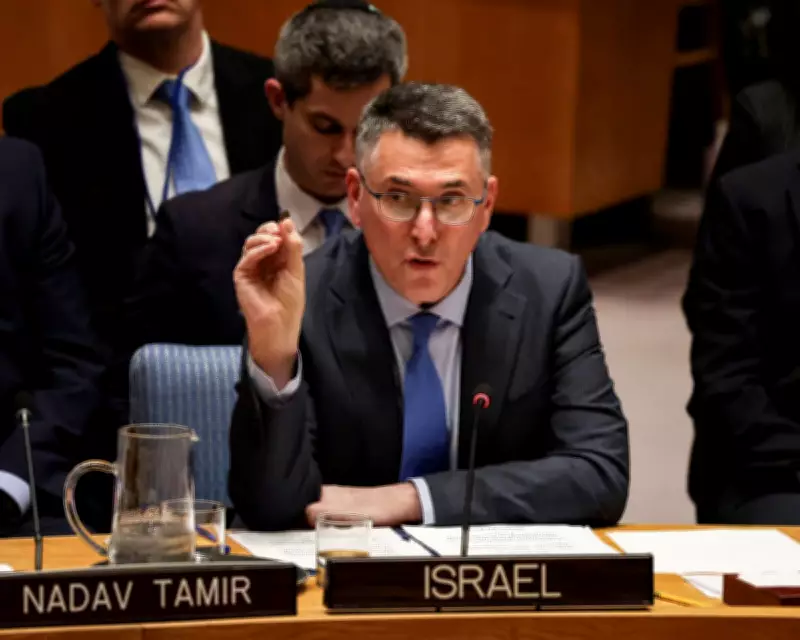
Israeli Foreign Minister Gideon Saar reportedly informed Israel's security cabinet that Trump would deliver this ultimatum imminently. Despite this, Trump did not address the issue in his recent State of the Union speech, instead focusing on the return of Israeli hostages and omitting mention of the Board of Peace, which he had previously hailed as a historic development.

Challenges in Implementing Disarmament
Even if a disarmament campaign is announced, significant logistical hurdles remain. The National Committee for the Administration of Gaza (NCAG), a group of 15 Palestinian technocrats, has assembled in Cairo to prepare for managing the devastated territory but is far from ready to enter Gaza. Funding has been slow to arrive, and security arrangements are lacking. A police force is being trained under the committee, but Israel is vetting recruits and rejecting those who served under Hamas rule, deeming them compromised by association. Only a few thousand officers have been trained in Jordan and Egypt, which is widely viewed as insufficient for Gaza's population of 2.2 million people following a devastating two-year bombardment.
According to a report in the rightwing Israel Hayom newspaper, the NCAG plans to present Hamas with a six-month disarmament strategy in March, starting with heavy weapons and progressing to light firearms. Initially, Hamas would need to provide an inventory of its heavy weapons and a map of its tunnel network. The report, citing unnamed sources, aligns with Israeli talking points, stating that rival militias and armed groups would only be disarmed after Hamas, with every subsequent step in phase two contingent on its prior disarmament. It also suggests that Israel would have full international backing to resume its assault on Gaza if disarmament fails.
Analysts Skeptical of Feasibility
Michael Milshtein, head of the Palestinian Studies Forum at Tel Aviv University and a former military intelligence colonel, described the plan as "more wishful thinking than a serious plan." Analysts argue that Hamas is likely to reject the disarmament proposal as outlined in the Israeli press, as it requires surrendering its primary asset—its weapons—without guarantees of Israeli withdrawal or disarmament of other groups, leaving Hamas members vulnerable during the transition to NCAG governance.
Muhammad Shehada, a Gaza analyst at the European Council on Foreign Relations, noted that Hamas might accept freezing or decommissioning offensive weapons like rockets while retaining light arms for self-protection against clans and gangs or potential IDF resumption of operations. He emphasised that light weapons could be kept under strict policies of no use or public display, with violations leading to arrest by NCAG police.

International Dynamics and Potential Collapse
The Board of Peace held its first working meeting in Washington last week, but it failed to bring clarity on disarmament. Egypt and Saudi Arabia are advocating for a decommissioning process modelled on the Northern Ireland peace agreement, involving phased disarmament of all paramilitary groups overseen by an independent commission. In contrast, the United Arab Emirates has sided with Israel, demanding complete Hamas disarmament as a precondition.
Shehada warned that this approach could lead back to all-out war, accusing Israeli Prime Minister Netanyahu of making maximalist demands to provoke Hamas into refusal and persuade Trump that military action is the only viable option. Hamas's belief in Israel's intent to resume war has reportedly strengthened its resolve to retain its weapons. A message from Hamas leadership in Gaza to its politburo in Qatar, cited by The Times of Israel, urged readiness to fight the IDF again, convinced of an impending Israeli reinvasion.
Smotrich has openly expressed expectations that disarmament will fail, paving the way for Israeli occupation and settlement establishment in Gaza. HA Hellyer, a senior associate fellow at the Royal United Services Institute, criticised the Israeli strategy, stating that making the peace process dependent on Hamas disarmament virtually guarantees the collapse of the 20-point plan, with everything held up until Israel decides to return to full-scale war.