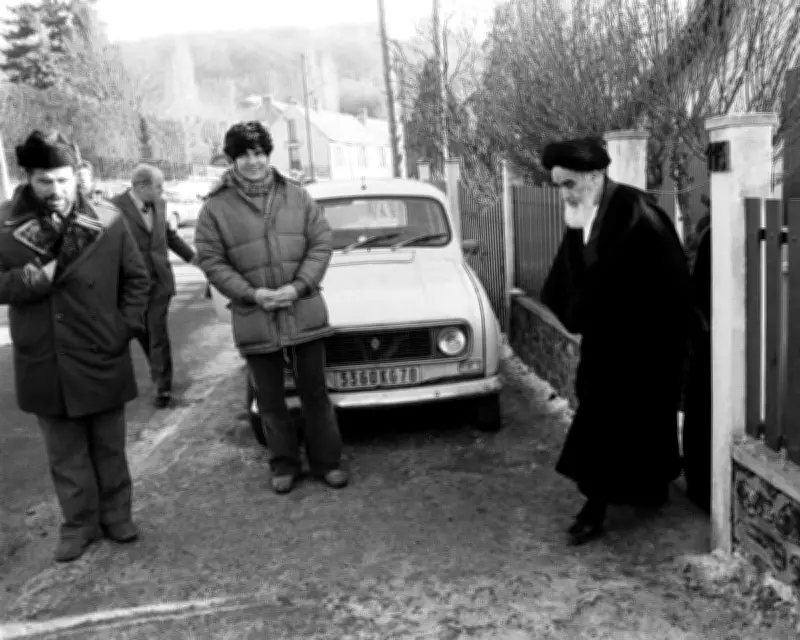
The French Sanctuary That Shaped Iran's Revolution
In the quiet, picturesque town of Neauphle-le-Château, located just outside Paris, a significant chapter of modern Middle Eastern history unfolded in 1978. This small French community became an unexpected sanctuary for Ayatollah Ruhollah Khomeini, the exiled religious leader who would soon lead Iran's Islamic Revolution. The decision to grant him refuge was not merely a local gesture but a complex diplomatic move with far-reaching consequences that continue to resonate in international relations today.
A Pivotal Haven in Exile
Ayatollah Khomeini arrived in Neauphle-le-Château after being expelled from Iraq, where he had spent years in opposition to the Shah of Iran. The French government, under President Valéry Giscard d'Estaing, permitted his stay, a choice that sparked considerable controversy at the time. From this serene French setting, Khomeini orchestrated his revolutionary campaign, leveraging the town's relative obscurity to avoid detection while maintaining communication with his supporters in Iran. The sanctuary provided him with a secure base to plan and propagate his vision for an Islamic republic, fundamentally altering Iran's political landscape.
Diplomatic Intricacies and Global Repercussions
The French authorities' decision to host Khomeini was fraught with diplomatic intricacies. It reflected a delicate balance between upholding principles of asylum and navigating the volatile politics of the Cold War era. This move inadvertently positioned France as a key player in the lead-up to the Iranian Revolution, influencing Middle Eastern dynamics and straining relations with Western allies concerned about regional stability. The aftermath saw Khomeini's return to Iran in 1979, culminating in the overthrow of the Shah and the establishment of the Islamic Republic, events that have had lasting impacts on global geopolitics, including tensions with the West and shifts in oil markets.

Neauphle-le-Château's Enduring Legacy
Today, Neauphle-le-Château remains a point of historical interest, though it has largely returned to its tranquil existence. The town's role in harboring Khomeini is commemorated by some as a symbol of France's commitment to political refuge, while others view it as a controversial episode that contributed to decades of instability. Historians and policymakers continue to debate the implications, examining how this small French sanctuary became a crucible for revolutionary change. The story underscores the profound ways in which local decisions can have international ramifications, reminding us of the interconnectedness of global events.