France and Britain Forge Diplomatic Alliance on Hormuz Crisis
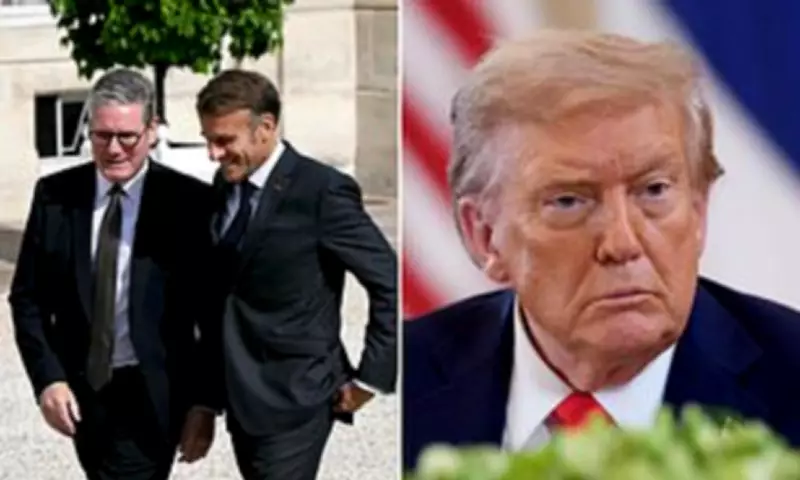
French President Emmanuel Macron has announced that France and the United Kingdom will jointly host a significant diplomatic event in Paris this Friday. The primary focus of this gathering is to address the ongoing crisis in the strategically vital Strait of Hormuz. Notably, the proceedings will exclude former US President Donald Trump, marking a deliberate shift in European diplomatic strategy regarding post-war Middle East planning.
Macron's Call for Multilateral Action
In a public statement posted on social media platform X, President Macron urgently called for the strait to be opened 'as soon as possible'. This announcement followed a recent conversation between Macron and newly elected Iranian President Masoud Pezeshkian. Macron elaborated that the Paris meeting would specifically involve 'non-belligerent countries ready to contribute, alongside us, to a multilateral and purely defensive mission'.
The objective of this mission is to restore freedom of navigation in the strait once security conditions permit. The countries Macron referred to as 'belligerent' likely include Israel, the United States, and Iran itself. This diplomatic initiative represents a growing trend among European nations to exclude Trump from Middle East planning discussions, particularly following recent conflicts.

Contradictory Claims and White House Response
The diplomatic developments come amid contradictory statements regarding the strait's status. In an interview aired Wednesday morning, Donald Trump declared the Strait of Hormuz 'permanently open' following what he described as secret negotiations with Chinese leader Xi Jinping. Trump claimed that Jinping had agreed to cease arming Iran as part of these discussions.
However, the White House later contradicted the former president's assertions. White House spokeswoman Olivia Wales responded to inquiries by stating, 'The United States doesn't need help from any other country – the blockade is working perfectly, implemented by the greatest Navy in the world, while Iran's navy is at the bottom of the ocean.' This statement confirms that the naval blockade of the strait remains in effect despite Trump's claims.
European Diplomatic Calculations
French diplomatic sources have revealed strategic reasoning behind Trump's exclusion from their planning. According to insiders familiar with the matter, French officials believe that Trump's participation would make their proposals less attractive to Tehran and potentially jeopardize diplomatic progress with Iran. This perspective has been shared with international media outlets including the Wall Street Journal.
Meanwhile, British officials have reportedly expressed concerns about the potential consequences of sidelining the American leader. There are fears that excluding Trump could enrage the former president and create additional diplomatic obstacles for the coalition. British Prime Minister Keir Starmer has indicated a desire to maintain distance from the ongoing friction between Washington and Tehran.
In a recent BBC interview, Starmer clarified Britain's position: 'We're not supporting the blockade. My decision has been very clearly that whatever the pressure, and there's been some considerable pressure, we're not getting dragged into the war.'
Operational Objectives and Regional Stability
The Franco-British led coalition has established clear operational objectives for their proposed mission. The primary goal is to ensure that shipping companies regain confidence in safe passage through the Strait of Hormuz once active hostilities conclude. The comprehensive strategy includes several key components:

- Rescue operations for stranded commercial vessels
- Execution of de-mining operations to remove Iranian naval mines
- Establishment of a dedicated program for military personnel deployment
- Protection of commercial vessels passing through the vital waterway
French Foreign Minister Jean-Noel Barrot emphasized the conditional nature of the proposed mission during a Tuesday briefing. 'The mission we are referring to could only be deployed once calm has been restored and hostilities have ceased,' Barrot stated, highlighting the operation's dependence on regional stability.
NATO Tensions and European Commitments
The diplomatic maneuvering occurs against a backdrop of ongoing tensions within NATO. According to a Daily Mail/JL Partners flash poll of over 1,000 registered voters, public opinion is divided on whether the United States should withdraw from NATO. This division follows the refusal of some member states to contribute military support for reopening the Strait of Hormuz.
NATO Secretary General Mark Rutte addressed these tensions during recent discussions. Rutte acknowledged that some allies were initially 'a bit slow, to say the least' in providing support to the United States during its conflict with Iran. He described a significant 'mindset shift' in Europe, evidenced by Britain leading a coalition to help reopen the strategic waterway.
Germany is reportedly likely to join the Franco-British operation and could officially commit to the plan as early as this week. This expanding coalition represents a significant European diplomatic and military initiative independent of American leadership.
Trump's NATO Criticism and European Response
Donald Trump has repeatedly criticized NATO allies for what he perceives as insufficient support regarding the Strait of Hormuz crisis. The former president has threatened to withdraw the United States from the alliance entirely if member nations fail to contribute more substantially. On his Truth Social platform, Trump recently wrote: 'None of these people, including our own, very disappointing, NATO, understood anything unless they have pressure placed upon them!!!'
During a high-stakes encounter with journalists, Rutte was pressed on whether Trump would maintain America's commitment to NATO following their discussions. Rutte responded by praising Trump's leadership while acknowledging Europe's need to increase defense spending. 'We must applaud Trump for his bold leadership and vision,' Rutte stated, even as European nations proceed with diplomatic plans that explicitly exclude the former American president.
The White House has not provided immediate comment on the upcoming Paris summit or the exclusion of Trump from the proceedings. This diplomatic development represents a significant evolution in European approach to Middle Eastern security challenges, with France and Britain taking coordinated leadership on an issue of global economic and strategic importance.