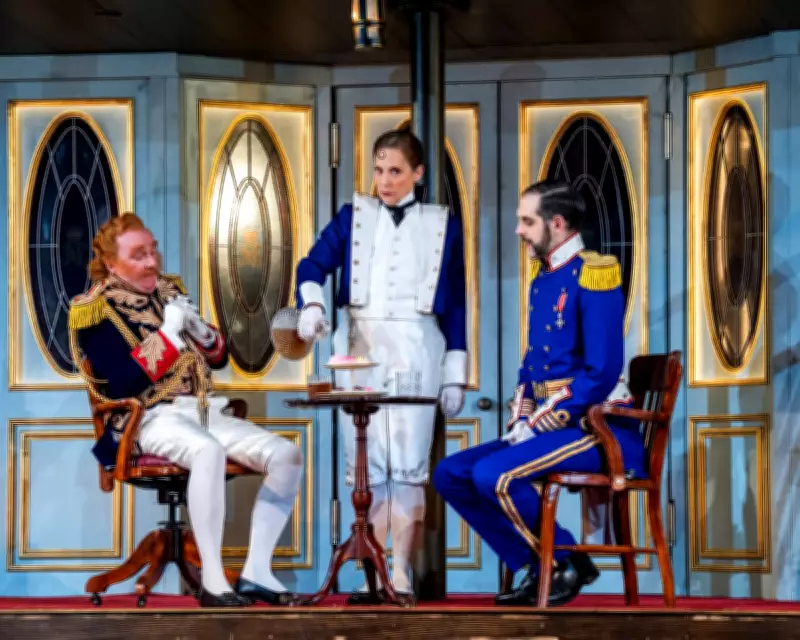
From Patriotic Parody to Political Threat: The Unlikely Journey of Flanders and Swann's 'The Likely Lads'
In a surprising twist of cultural reinterpretation, the beloved 1960s comedy song 'The Likely Lads' by the iconic duo Flanders and Swann has shifted from its origins as a light-hearted patriotic parody to being perceived as a potential political threat by the Reform party. This development highlights the enduring power of satire and its complex relationship with contemporary political landscapes.
The Original Satirical Intent of Flanders and Swann
Flanders and Swann, renowned for their witty musical comedies, created 'The Likely Lads' as a playful critique of British patriotism and social norms during the post-war era. The song, with its humorous lyrics and catchy melodies, was intended to entertain audiences while gently poking fun at traditional values. It quickly became a staple of British cultural heritage, celebrated for its clever wordplay and nostalgic charm.
Reform Party's Interpretation as a Threat
Recently, members of the Reform party have begun to view the song not as harmless fun, but as a subtle critique that could undermine their political messaging. They argue that the parody's themes of questioning authority and mocking establishment figures resonate in ways that may challenge Reform's policies and public image. This interpretation has sparked heated debates among political analysts and cultural commentators.

Supporters of this view point to specific lyrics that, when taken out of their original context, could be seen as aligning with anti-establishment sentiments. For instance, lines about 'sticking it to the man' or 'laughing at the powers that be' are now being scrutinized for their potential to inspire dissent against Reform's agenda.
Broader Implications for Satire and Politics
This situation raises important questions about the role of satire in modern society. On one hand, satire has long been a tool for social commentary, allowing artists to critique power structures without direct confrontation. On the other hand, in an era of heightened political polarization, even decades-old works can be reinterpreted in ways that amplify divisions.
- Cultural Resilience: The fact that a song from the 1960s is still relevant today underscores the timeless nature of Flanders and Swann's artistry.
- Political Sensitivity: Reform party's reaction suggests a growing sensitivity to cultural artifacts that might influence public opinion.
- Freedom of Expression: Debates are emerging about whether such reinterpretations threaten artistic freedom or simply reflect the dynamic nature of political discourse.
Experts note that this is not an isolated incident. Similar reinterpretations have occurred with other historical satires, as political groups seek to control narratives and mitigate perceived threats. The case of 'The Likely Lads' serves as a reminder of how culture and politics are inextricably linked, with old jokes taking on new meanings in changing times.
Public and Critical Reactions
Public reaction has been mixed, with some dismissing the Reform party's concerns as overblown, while others see it as a valid point about the power of media. Cultural critics argue that this episode highlights the need for a nuanced understanding of satire, emphasizing that context is key to interpreting artistic works.
In conclusion, the transformation of Flanders and Swann's 'The Likely Lads' from a patriotic parody to a perceived political threat by the Reform party illustrates the fluid boundaries between entertainment and ideology. As political landscapes evolve, so too do the interpretations of cultural touchstones, reminding us that satire is never static but always subject to the tides of history.