Donald Trump's recent assertion that the United States should confiscate oil from seized Venezuelan tankers forms part of a broader right-wing ideology experts are labelling 'resource imperialism'. The former president's comments have ignited fresh criticism, with analysts drawing stark comparisons to the rhetoric that preceded the Iraq war.
Escalating Pressure and Seizures
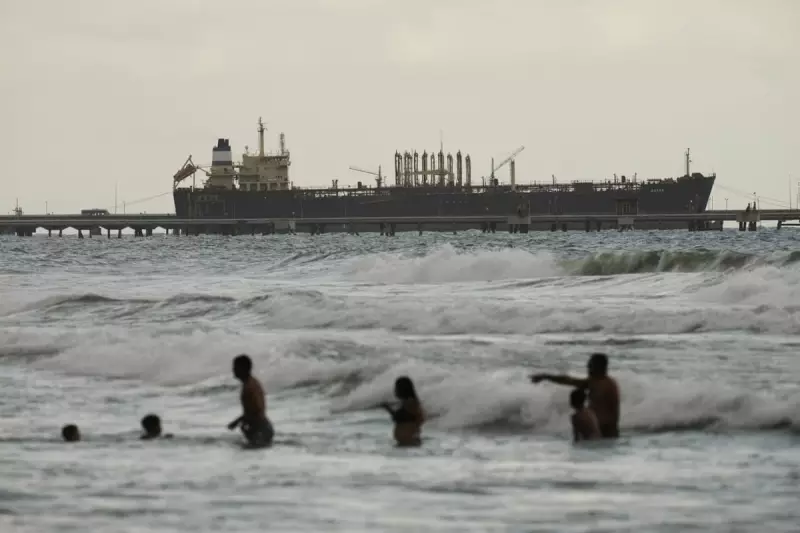
In recent weeks, the Trump administration has significantly intensified its campaign against Venezuela's government, led by President Nicolás Maduro. This offensive has included the interception of two tankers carrying Venezuelan crude and the pursuit of a third, all under the pretext of combating drug trafficking. The administration escalated its rhetoric this month by controversially labelling fentanyl, which it claims flows from Venezuela, a 'weapon of mass destruction'.
On Monday, Trump explicitly suggested that oil seized from Venezuela could be treated as a US asset. 'Maybe we will sell it, maybe we will keep it,' he told reporters. 'Maybe we'll use it in the strategic reserves. We're keeping the ships also.' These remarks are not isolated but reflect a long-standing belief that American power grants it the right to control or extract resources from other sovereign states.

A Doctrine of Extraction
Patrick Bigger, co-director of the Transition Security Project, argues the administration's global energy policy is fundamentally about using threats to secure resources. 'The administration's global energy policy is mostly about using the threat of violence or the withholding of aid to secure the inputs for the 'most of the above' energy strategy,' he said, noting this strategy excludes only solar and wind power.
Trump's philosophy of resource extraction first emerged publicly during his 2015-2016 presidential campaign. He repeatedly argued that while the US should not have invaded Iraq, it should have taken the country's oil as compensation. 'You win the war and you take it,' he told ABC in 2015. 'You're not stealing anything … We're reimbursing ourselves.' He later expanded, claiming that seizing Iraqi oil would have prevented the rise of ISIS.
This approach was mirrored in Syria, where Trump explicitly tied a continued US troop presence to control over eastern oilfields, suggesting companies like Exxon Mobil could exploit them. The strategy extends beyond oil to rare earth minerals, vital for modern technology and weaponry. Trump has long fixated on Greenland, an autonomous Danish territory rich in minerals, even threatening to use force to acquire it and appointing a special envoy this week.
Broader Geopolitical Gambit and Climate Cost
Adam Hanieh, author of 'Crude Capitalism', notes that escalating US-China rivalry is a key driver, pushing Washington to attempt control over global energy and industrial supply chains. 'I think Trump's difference with other US administrations is mostly stylistic,' Hanieh said. 'Previous administrations pursued the same strategic control... but cloaked it in multilateralism and 'market stability', whereas Trump voices the extractive logic directly.'
Alice Hill, an energy expert at the Council on Foreign Relations and former Obama adviser, describes Trump's approach as 'essentially resource nationalism'. 'He sees fossil fuel dominance as key to our national power and he doesn't care about international norms or what climate science says,' Hill stated. 'This is a short-term gamble that will cost everyone a great deal. For current and future generations who will have to deal with climate change, he's making a catastrophic mistake.'
The pattern is consistent: from seeking preferential access to Ukraine's minerals in exchange for military aid, to pressuring the UK to drill for more North Sea oil, and aggressively sanctioning Iran to cut its oil revenue. Critics warn that this doctrine, whether styled as imperialism or nationalism, prioritises immediate resource control over diplomatic norms, climate imperatives, and long-term global stability.