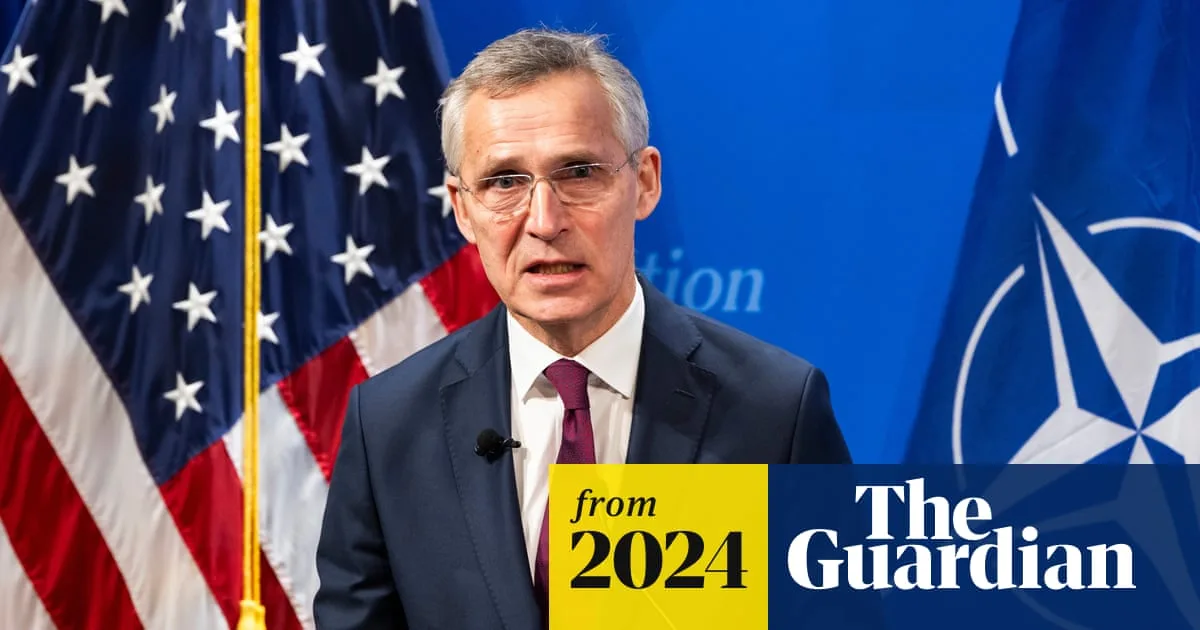
Former NATO Commander Warns Trump Poses Greater Threat Than Putin to Alliance
Ex-NATO Chief: Trump Bigger Threat Than Putin

Former NATO Commander Delivers Blistering Assessment of Trump's Impact on Alliance

In a striking intervention that has sent shockwaves through diplomatic circles, one of NATO's most senior former commanders has declared that Donald Trump represents a more significant threat to the alliance than Vladimir Putin. General Sir Richard Shirreff, who served as NATO's deputy supreme allied commander for Europe, delivered this damning verdict during an exclusive interview, highlighting the profound damage inflicted upon transatlantic security structures during Trump's second presidential term.

"Destroyed the International Order"

General Shirreff, who now chairs the Healix International Security and Risk Advisory Board, asserted that Trump has "destroyed the international order" within the first year of his renewed presidency. The decorated British Army officer elaborated that while Putin undoubtedly poses an existential threat to European security through his invasion of Ukraine, this aggression paradoxically strengthened NATO cohesion. Trump's approach, by contrast, has systematically undermined the very foundations of the alliance that has guaranteed transatlantic security for nearly eight decades.

"He is also on the way to destroying the one alliance that has guaranteed transatlantic security for 77 years," Shirreff warned, adding that Trump has effectively presented Putin with two of his most cherished foreign policy objectives "on a plate" by decoupling America from European security commitments.

Wide Pickt banner — collaborative shopping lists app for Telegram, phone mockup with grocery list

Greenland Threats and Damaged Trust

The former commander highlighted Trump's repeated threats to seize Greenland - a territory of NATO-member Denmark - as particularly damaging, even after the US President pledged not to use military force. Shirreff insisted these threats must be taken literally, arguing they have fundamentally eroded trust among allies.

"The lead nation of the alliance has threatened the territorial integrity of another member of an alliance... how do you move on and rebuild trust?" he questioned. "Nobody will trust Trump again, and we've got another three years of it."

Shirreff dismissed suggestions that Trump's policy approach represents mere bluster or what critics have termed a "TACO" strategy (Trump Always Chickens Out), maintaining that the threats alone have caused irreparable damage to Washington's standing within NATO.

Call for European Strategic Independence

In response to this perceived instability, General Shirreff advised NATO to pursue what he termed "Europeanisation" - seeking greater strategic and military independence from the United States, particularly for the remainder of Trump's tenure. This recommendation reflects growing concerns among European security experts about over-reliance on American leadership within the alliance.

"Trump is the greater threat if you want to make the comparison," Shirreff concluded unequivocally. "It's Trump who gets the prize. Clearly Putin threatened it massively but Trump has attacked the one alliance which grants our security."

Diverging Expert Opinions

Not all security analysts share Shirreff's stark assessment. Jon B Alterman, chair in global security and geostrategy at the Centre for Strategic and International Studies, acknowledged that Putin's war has had "a unifying effect" on NATO but argued that Trump remains more "open to persuasion" by NATO allies than the Russian leader.

Alterman suggested Trump's foreign policy reflects concerns held by many Americans about the United States' international role, describing European states as "now looking at alternative arrangements" in response to Washington's shifting priorities.

Meanwhile, Gabriel A Giménez Roche, associate professor of economics and finance at NEOMA Business School, pointed to domestic political constraints that might limit Trump's ambitions. "Trump's confrontational stance toward Europe lacks strong support among the American electorate," he observed, noting that polling consistently shows skepticism toward antagonising allies.

Pickt after-article banner — collaborative shopping lists app with family illustration

White House Defense and Strategic Implications

The White House has vigorously defended the President's NATO record, with a spokesperson telling The Independent: "President Trump has done more for NATO than anyone. America's contributions to NATO dwarf that of other countries, and his success in delivering a five percent spending pledge from NATO allies is helping Europe take greater responsibility for its own defense."

Nevertheless, General Shirreff's warning highlights the profound strategic dilemma facing European powers: whether to continue relying on an increasingly unpredictable American partner or accelerate moves toward strategic autonomy. As the former commander starkly put it, Trump has turned the global rules-based system "into a dead duck", leaving NATO members to navigate uncharted waters in transatlantic security relations.




