A former Central Intelligence Agency operative has issued a stark warning about the potential for a European city to experience a devastating "non-traditional" nuclear attack. This exclusive insight comes from Andrew Bustamante, a former CIA intelligence officer with background in United States Air Force and nuclear Intercontinental Ballistic Missile operations, who suggests the global security landscape in 2026 is becoming increasingly perilous.
Escalating Global Tensions Create Dangerous Climate
The current period of international instability, marked by the ongoing Russo-Ukrainian conflict, potential China-Taiwan hostilities, and recent geopolitical developments including the US capture of Venezuelan president Nicolás Maduro, has created what Bustamante describes as a particularly dangerous environment. As host of the EverydaySpy podcast and someone with direct experience in nuclear operations, his perspective carries significant weight within intelligence circles.
Bustamante maintains that his "stance" on nuclear threats has remained "fairly consistent" throughout his analysis, noting that nations continue to be "prepared to observe and react" to conventional nuclear strikes. However, his assessment of the specific threats facing Europe in the coming years presents a concerning picture that diverges from traditional nuclear warfare scenarios.

Why Traditional Nuclear Missile Attacks Are Unlikely
The former intelligence officer explains that a nuclear-tipped Intercontinental Ballistic Missile attack in 2026 remains "extremely unlikely" due to the established principle of Mutual Assured Destruction. Such an overt attack would trigger what he describes as a "very predictable, destructive response" from targeted nations and their allies, making it strategically disadvantageous for any state actor.
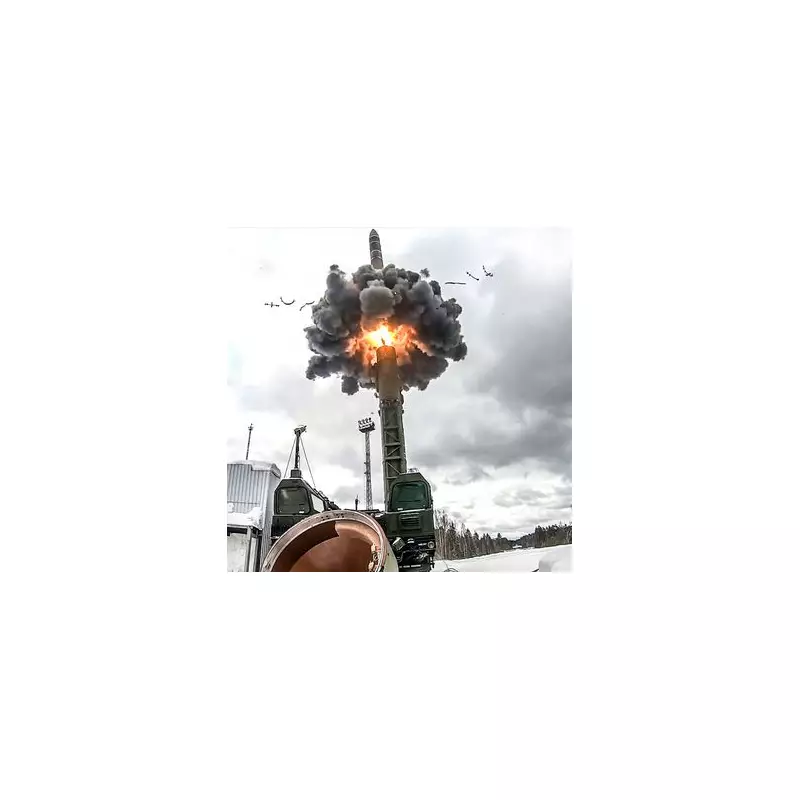
"I'm not worried about Russia launching an Oreshnik against Kyiv with nuclear-tipped ICBMs," Bustamante states emphatically. "That's not going to happen." The Oreshnik, reportedly meaning "Hazel Tree," represents an intermediate-range hypersonic missile capable of carrying multiple warheads to different targets simultaneously. Russia's announcement on January 9 that it had launched an Oreshnik at Ukraine marked only the second such deployment.
The 'Bigger Concern': Covert Nuclear Detonations
Despite dismissing traditional missile attacks, Bustamante contends there persists a "bigger concern" that represents a more significant threat to European security. He characterises this as a "non-traditional nuclear explosion" that would prove substantially harder to anticipate, prevent, and attribute to specific actors.
"The bigger concern for 2026 and beyond is a non-traditional nuclear explosion or nuclear detonation," Bustamante explains. "Think dirty bomb or smuggled nuclear warhead."
He elaborates on this chilling scenario: "What might happen is a nuclear explosion in Kyiv that was delivered in a briefcase nuke by a truck leaving Belarus. That's much more likely than an actual missile strike because in the event that Kyiv or Poland or Germany or France experiences a nuclear explosion, they will have to investigate that explosion."
Chaos and Delayed Response Would Follow Attack
The aftermath of such an attack would create what Bustamante predicts would be "complete chaos without an immediate response." He outlines the complex investigative process that would follow: "They'll have to determine the origination, like the group that delivered that weapon. They'll have to deal with the aftermath."
This investigative period would create strategic advantages for the attacking party, according to the former spy. "Every day that the chaos ensues and that there is no response, the less the response will ultimately be," he notes, suggesting that delayed attribution and reaction would diminish potential retaliation.
A 'dirty bomb,' as referenced by Bustamante, describes a radiological dispersal device that combines conventional explosives like dynamite with radioactive material. While less destructive than traditional nuclear weapons, such devices could create widespread contamination and panic.

Strategic Advantages of Covert Nuclear Attacks
Bustamante explains why covert nuclear attacks align with Russian strategic interests: "It's in Russia's best interest to instead smuggle a bomb using any number of its organised crime or former satellite partners into a third country where that bomb is detonated remotely, and then it takes months for anybody to realise what happened, because that will de-escalate the response against Russia."
He draws parallels to historical responses: "It's very easy for people to overreact in a short period of time, similar to how the United States launched a war after the terrorist attacks of 9-11. High-paced operations lead to escalations, but a slower response time leads to de-escalation."
This strategic understanding, Bustamante suggests, extends beyond Russia: "And it's not just Russia that knows that. China knows that, Israel knows that, the United States knows that, so a traditional nuclear strike, extremely unlikely."
Specific Attack Scenarios and Probability Assessment
In a particularly concerning forecast, Bustamante declares: "The detonation of a nuclear device of some sort, I think, continues to be at about 25% likelihood." He emphasises that such an attack wouldn't "look the way that people expect," potentially taking unconventional forms that complicate defensive responses.
He suggests possible scenarios including a "shoulder-launched nuclear missile" fired in the South China Sea designed to "create an EMP" that disables military or naval convoys. "That's the kind of thing we can expect to see," Bustamante warns. "Something that will confuse existing policy and confuse existing responses that still demonstrate nuclear capability."
The former CIA operative's analysis presents a sobering picture of modern nuclear threats, where traditional missile-based attacks have been supplanted by more covert, difficult-to-attribute methods that could create maximum disruption with minimal immediate retaliation. As global tensions continue to escalate, his warnings about European vulnerability to "non-traditional" nuclear attacks merit serious consideration by security agencies and policymakers across the continent.