EU's Kallas Rejects US 'Euro-Bashing' Claims at Munich Security Conference
EU's Kallas Rejects US 'Euro-Bashing' at Munich Conference

EU Foreign Policy Chief Confronts US Criticism at Munich Security Summit

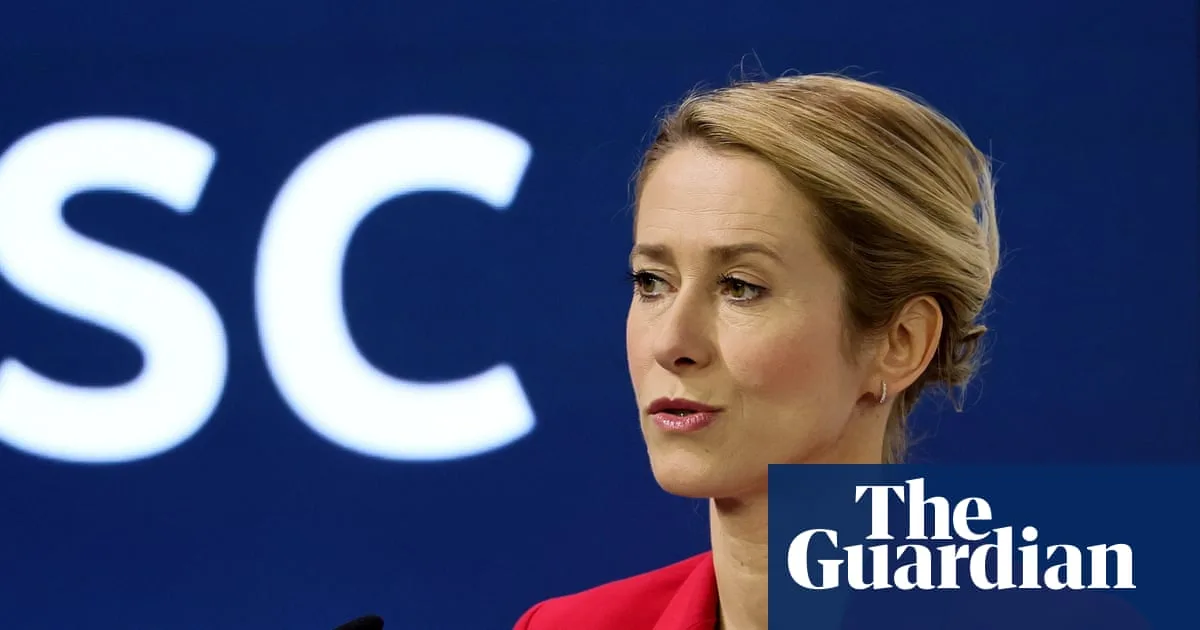
The European Union's foreign policy chief has delivered a robust defence of Europe's global position, directly challenging what she described as "fashionable euro-bashing" emanating from Washington. Kaja Kallas, speaking at the concluding session of the three-day Munich Security Conference, firmly rejected American claims that Europe faces "civilisational erasure" while asserting the continent's enduring international influence.

Transatlantic Tensions Surface at Security Gathering

The annual security conference, attended by world leaders and senior defence officials, became a platform for revealing significant strains within the transatlantic alliance. Discussions throughout the event focused heavily on the future of NATO cooperation, European defence capabilities, and ongoing peace negotiations regarding Ukraine. Kallas's remarks represented a pointed response to earlier comments made by US Secretary of State Marco Rubio, who had adopted a more diplomatic but nonetheless firm stance regarding American expectations from European partners.

"Euro-bashing has become very fashionable despite all the positive contributions Europe consistently makes to global affairs," Kallas declared during her address. "During my international travels, I consistently encounter nations that admire European values and seek to emulate our standards. The notion that Europe faces civilisational decline is fundamentally mistaken—our union remains an aspirational destination for many worldwide."

Wide Pickt banner — collaborative shopping lists app for Telegram, phone mockup with grocery list

Defending European Values and Achievements

The Estonian politician, known for her outspoken criticism of Russian aggression, provided specific examples to counter American criticisms. She highlighted Estonia's second-place ranking in the World Press Freedom Index, contrasting this with the United States' position at fifty-eighth. Kallas expressed particular difficulty comprehending American concerns regarding media freedom within European borders given this documented performance.

"We are actively advancing human rights protections and promoting prosperity across our continent," she emphasized. "These efforts make certain accusations particularly challenging to accept. European nations continue to represent principles that maintain global respect and admiration."

US Conditions and European Response

Secretary Rubio's conference speech had outlined American conditions for enhanced transatlantic cooperation, including European alignment with US leadership on migration policies, trade liberalization, and increased defence expenditure. While describing America as "a child of Europe" and expressing preference for collaborative efforts, Rubio made clear that Washington would pursue its international objectives independently if necessary.

Kallas suggested some American remarks might be intended for domestic political audiences rather than representing genuine foreign policy positions. She further addressed Ukraine's potential EU membership, indicating that establishing a specific accession timeline—including suggestions of 2027—remained unrealistic at present.

Intelligence Cooperation Questions Emerge

Following the conference, Rubio travelled to Bratislava where questions arose regarding American intelligence agencies' absence from a European investigation into Alexei Navalny's poisoning. Five European intelligence services, including Britain's, concluded Russian state involvement using a toxin derived from South American dart frogs. Rubio explained the United States had simply not participated in this specific multinational effort, though he did not dispute its findings.

Meanwhile, British Prime Minister Sir Keir Starmer affirmed that intelligence sharing between the United Kingdom and United States had reached unprecedented levels of cooperation. The Munich conference ultimately revealed both enduring transatlantic connections and emerging diplomatic fractures, with Kallas's defence of European autonomy marking a significant moment in ongoing discussions about the future of Western alliances.

Pickt after-article banner — collaborative shopping lists app with family illustration




