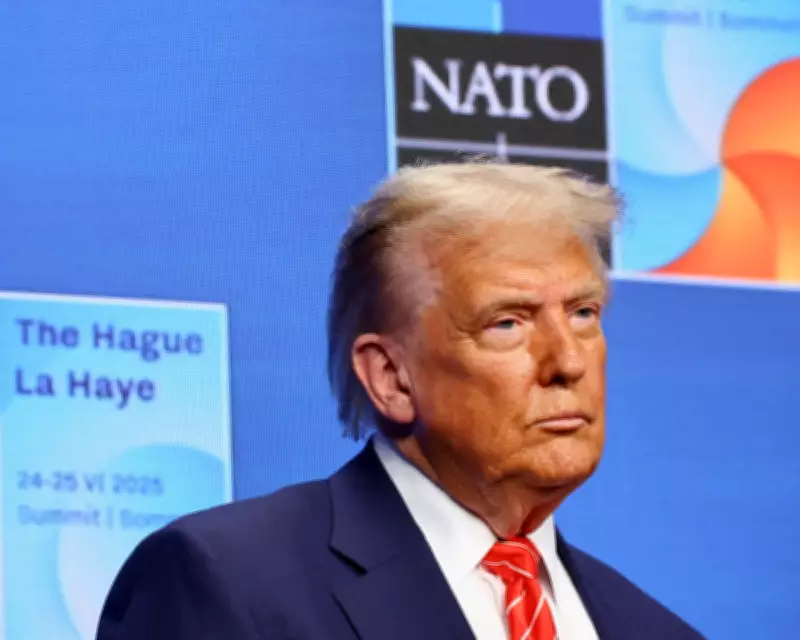
Donald Trump has never been a Nato fan, and since the start of the Iran war has threatened to leave, casting doubt on the US commitment to European defence. This has brought renewed attention to the EU's mutual defence clause, Article 42.7, which had languished in obscurity for decades.
The Little-Known Clause That Europe's Security May Now Depend On
Most people have heard of Nato's Article 5, the 'one for all, all for one' clause that states an armed attack on one member should be considered an attack on all, requiring member states to come to the victim's aid, including with armed force. However, fewer had heard of the EU's own mutual defence clause, Article 42.7, which obliges member states to aid a fellow member under armed attack 'by all the means in their power'. Until recently, there was little need for Europeans to consult this clause, as over 40 US military bases and 85,000 troops across the EU and UK underscored Washington's defence commitment.
But times have changed. Earlier this year, Trump threatened to invade Greenland, and Denmark, a Nato member, took the threat seriously enough to prepare for war. Two months later, the US president attacked Iran without consulting European allies, then demanded they join in, called them 'cowards' when they declined to help reopen the Strait of Hormuz, and dismissed Nato as a 'paper tiger'. He has said he is 'absolutely' considering pulling the US out of the alliance. When European leaders were reluctant to allow US bases on their territory to be used for bombing missions in Iran, Secretary of State Marco Rubio questioned the point of keeping the bases there.

It should now be clear to even the most staunchly Atlanticist European that the US defence umbrella has sprung leaks and could be blown away altogether. This view is shared by Donald Tusk, prime minister of Poland, who told the Financial Times that the bloc's 'most important question' was whether the US would be 'loyal' to its Nato pledge in the event of a Russian attack.
Renewed Interest in Article 42.7
On the face of it, Article 42.7 offers a stronger guarantee than Nato's, obliging EU states to aid their fellows 'by all the means in their power', whereas the alliance stipulates only 'as they deem necessary'. But what might that mean in practice? Unfortunately, nobody quite knows. 'The treaty is very clear about the what,' said Ursula von der Leyen, European Commission chief. 'It is not clear about what happens when, and who does what.' At last week's EU summit in Cyprus, leaders agreed the Commission would 'prepare a blueprint' on how the bloc will respond if the clause is triggered. A 'handbook' was being drawn up, said António Costa, president of the European Council.
The push to 'operationalise' 42.7 has been driven by Cyprus, one of the few EU members not in Nato, after it was targeted by drones seemingly launched by Lebanon's Hezbollah, one of which struck the UK's RAF Akrotiri airbase. The country's president, Nikos Christodoulides, called for bilateral assistance rather than invoking a clause widely acknowledged as poorly defined. Greece, France, Italy, Spain and the Netherlands mobilised assets, including jet fighters. But the incident showed the EU was far from being in a position 'to act as a credible guarantor of security', Christodoulides said, certainly in the event of a full-scale attack. Article 42.7, he said, urgently needed to become a practical operational tool.
France's Experience and Calls for Action
France is so far the only country to have formally triggered 42.7, after its 2015 terror attacks. Several EU states boosted troop numbers on EU and UN missions so France could recall its soldiers, while others provided intelligence and police support. Speaking in Athens at the weekend, President Emmanuel Macron agreed with his Cypriot counterpart: clause 42.7 had to be 'more than words' now there was 'doubt on Nato's article 5 – put on the table not by the Europeans, but by the US president'. Greece's prime minister, Kyriakos Mitsotakis, also acknowledged the bloc had 'never really spoken about' its mutual defence clause, 'because we thought Nato would always do the job. But now we need to take this article much more seriously.'

Europe's War Games
Three scenarios are to be hypothetically 'war gamed' in Brussels by ambassadors and then ministers to start that process, Euractiv reported: an attack on a non-Nato EU country; an attack on one in both; and a hybrid attack not covered by Nato. For the EU's foreign affairs and security policy chief, Kaja Kallas, Articles 42.7 and 5 are 'complementary', with the former covering a variety of different forms of aid such as economic or medical, but only the latter specifically and explicitly mentioning military force. 'There's a very strong European pillar in Nato,' Kallas told Euronews. But, she added, Europe does need to 'operationalise 42.7 … by mapping what the possibilities are; who does what in what case; how we all work together. And we need to do it fast.'
Analysts say Europe should prepare for the worst. 'Europe must insure itself against the possibility that American support may be limited, delayed or politically blocked,' wrote Christian Mölling and Torben Schütz of the European Policy Centre. In one sense at least, it is: European Nato members boosted their defence budgets by 14% last year, the steepest rise since 1953, according to a report this week by the Stockholm International Peace Research Institute (Sipri). The biggest increases were in Belgium (59%), Spain (50%) and Norway (49%). Germany in particular has set itself the goal of creating the strongest military in Europe by 2039.
But, as Mölling and Schütz note, procurement alone will not solve Europe's defence problem. 'The real gap concerns political and military leadership: who will decide on escalation, priorities, operational command and the distribution of risk?' they ask. 'Who will turn political objectives into military options?' For obvious reasons, defence has always been the most sensitive of the EU's dossiers. Figuring out how, if the US fails to show up, Article 42.7 might work – with what would be a very European Nato, or perhaps no Nato at all – might help focus a few minds.