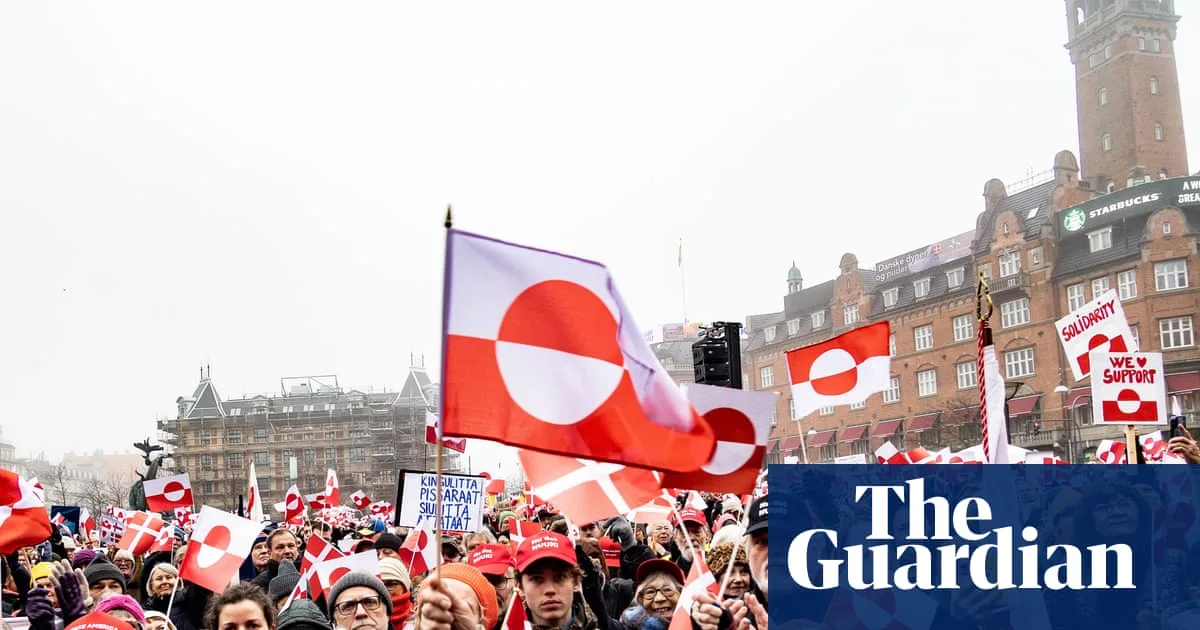
Europe's Retaliation Arsenal: From Trade Bazookas to World Cup Boycotts Against Trump's Greenland Gambit
Europe's Retaliation Plans for Trump's Greenland Tariff Threats

Europe's Diplomatic Crisis Deepens Over Trump's Greenland Ultimatum

European capitals are grappling with an escalating diplomatic crisis as they formulate responses to President Donald Trump's extraordinary tariff threats targeting Greenland. The US administration has vowed to impose 10 per cent tariffs on goods from EU members Denmark, Finland, France, Germany, the Netherlands and Sweden, alongside non-EU states Norway and Britain, unless Washington is permitted to purchase the autonomous Danish territory. These punitive measures would escalate dramatically to 25 per cent from June 1 should no agreement materialise regarding Greenland's transfer.

The Economic Brinkmanship Intensifies

European nations have already threatened retaliatory tariffs worth a staggering €93 billion against American imports, signalling their readiness for economic confrontation. A joint statement from eight affected nations, including Britain, France and Germany, warned that Trump's proposed tariffs would "undermine transatlantic relations and risk a dangerous downward spiral". Subsequent rhetoric from European officials has hardened considerably, with accusations of "blackmail" levelled against the United States administration.

While French and German leaders have adopted particularly bullish public stances, UK Prime Minister Sir Keir Starmer has pursued a more diplomatic approach, emphasising that a full-scale trade war serves "in no one's interest". This divergence highlights the complex balancing act facing European policymakers as they navigate this unprecedented challenge to transatlantic relations.

Wide Pickt banner — collaborative shopping lists app for Telegram, phone mockup with grocery list

The Nuclear Option: Europe's Trade Bazooka

Among the most potent weapons in Europe's arsenal is the EU's Anti-Coercion Instrument (ACI), created in 2023 and described by French officials as a "trade bazooka". This mechanism provides a formalised process for the bloc to respond and seek reparations when countries attempt to pressure the EU through trade and investment threats. The ACI enables various countermeasures including restricting imports from the offending nation or blocking specific investments, potentially allowing temporary exclusion from the European single market.

Dr Trevelyan Wing, a fellow at Cambridge University's Centre for Geopolitics, cautioned that deploying the ACI would represent a "worst-case scenario" short of actual armed conflict, with potential for disputes to become "quite dicey quite quickly". Implementation would require qualified majority support from European Council members, a process that would inevitably consume valuable time during this rapidly evolving crisis.

Cultural Warfare: The World Cup Gambit

Some European economists have proposed an unconventional response leveraging "cultural soft power" rather than purely economic measures. Lucas Guttenberg, Europe Programme Director at the Jacques Delors Centre and former ECB economist, has advocated threatening a boycott of the FIFA World Cup scheduled to begin in the United States this June. In a social media post, Guttenberg argued this approach would transform the tournament into "a completely meaningless event" and strike at Trump's "vanity" where he is most vulnerable.

This provocative suggestion gained traction when reshared by Sander Tordoir, chief economist at the Centre for European Reform, who added the imaginative proposal that Europe should organise a competing football competition in Denmark simultaneously, dubbing it the "Viking Freedom Supercup". Tordoir subsequently noted in emailed statements that while ACI deployment remains unlikely given mutual difficulties promised by trade and tech wars, "a European boycott of the Football World Cup may be more likely!"

The Delicate Calculus of Retaliation

Penny Naas, a European public policy expert at the German Marshall Fund, emphasised the interconnected nature of transatlantic relations, noting that "most actions would also hurt Europe". She suggested European officials might adopt a wait-and-see approach regarding the ACI, with decisions potentially hinging on developments expected around February 1. Naas warned that while Trump respects strength, Europe must prepare for forceful counterpunches should they escalate hostilities.

Pickt after-article banner — collaborative shopping lists app with family illustration

The crisis unfolds against the backdrop of high-stakes Davos talks where world leaders, including Trump, are gathering amid growing fears about potential US attempts to seize Greenland by force—an action that would fundamentally threaten NATO's integrity. As European leaders weigh their options, they confront the uncomfortable reality that any meaningful retaliation risks triggering an escalating cycle of economic measures that could inflict substantial damage on both sides of the Atlantic.




