EU Leaders Gather in Brussels to Deliberate Shifting Transatlantic Landscape
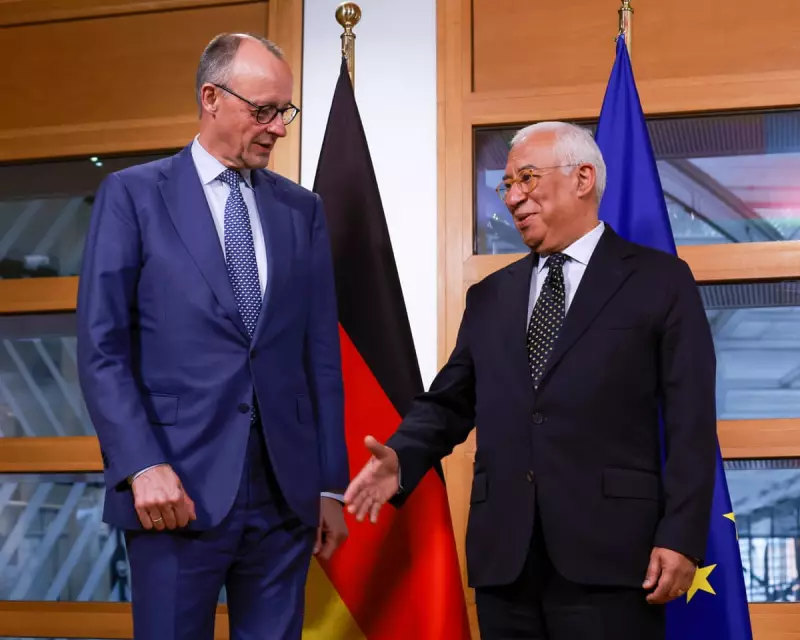
European Union leaders have assembled in Brussels for an informal meeting of the European Council, convened to address the increasingly volatile "new normal" in relations with the United States. The summit follows weeks of escalating tensions sparked by threats from former US President Donald Trump regarding Greenland, an autonomous territory of Denmark.
Tariff Threats and Sudden Retreat Shape Summit Agenda
The emergency gathering was hastily arranged earlier this week after Trump announced intentions to impose 10% tariffs on eight European nations that had defended Greenland's status. Although the US president unexpectedly abandoned these tariff threats on Wednesday, EU officials have emphasised that the summit remains critically important. A European diplomat noted that while Trump's retreat "evidently changes a little the context of this European Council, it does not remove its interest," describing the situation as akin to shifting tectonic plates in the geopolitical order.
A senior EU official characterised the meeting as occurring in "a context that was more positive than it was 24 hours ago," with leaders discussing "how they understand this new reality" and "a new normal of this very important and structural relationship between Europe and the United States." The official stressed that in light of "profound geopolitical movements" involving major military and financial powers, Europeans must demonstrate sufficient unity and strength to defend their interests and define their own strategic path.

Trade Deal Ratification and Economic Countermeasures Under Scrutiny
The European Parliament signalled on Thursday its readiness to reconsider its decision to freeze ratification of the EU-US trade deal, which had been one of the bloc's strongest responses to Trump's tariff threats. Members of the European Parliament had been expected to vote in February to approve zero percent tariffs on numerous US goods, a crucial component of the trade agreement signed at Trump's Turnberry golf resort last summer. However, the process was paused on Wednesday in direct response to the tariff threats.
Bernd Lange, the German Social Democrat lawmaker who chairs the European Parliament's trade committee, announced that his committee would revisit the issue next week. He emphasised the need for continued vigilance, stating on social media platform X: "There is no room for false security. The next threat is sure to come. That's why it is even more important that we set clear boundaries, use all available legal instruments [and] apply them as appropriate to the situation."
In preparation for potential US tariffs, the EU had been discussing imposing duties on approximately €93 billion worth of US goods. Additionally, the bloc contemplated deploying its most powerful economic sanctions weapon, the anti-coercion instrument, which would enable broad economic penalties against US firms. Even traditionally transatlantic-minded EU governments acknowledged that such responses might become necessary if tariffs were implemented.
Geopolitical Concerns Extend Beyond Immediate Tariff Issues
European leaders watched with mounting alarm as Trump persistently advocated for a US takeover of Greenland, a move that threatened to fracture NATO and the broader Western alliance. There were significant concerns that failure to resist such a takeover could establish dangerous precedents, potentially legitimising Chinese seizure of Taiwan or Russian invasion of Baltic states, thereby undermining the post-1945 rules-based international order.
Although the immediate Greenland threat has subsided, European leaders are expected to share apprehensions about Trump's proposed "board of peace." Launched in Davos on Thursday, this initiative initially formed part of Trump's peace and reconstruction plan for Gaza but is evolving into an organisation with expansive geopolitical ambitions operating under his direct control. Among EU member states, only Hungary and Bulgaria have accepted invitations to join, while France, Sweden, and non-EU nations Norway and the United Kingdom have all declined participation.

When questioned about European governments potentially joining a "board of peace" that might include Russian leader Vladimir Putin, who faces war crimes charges related to Ukraine, an EU official stated: "A very large majority [of EU member states] have said they are not in a position to join the board as it stands." Putin has yet to confirm whether he intends to accept the US invitation, though he has suggested he might fund the $1 billion permanent membership fee using Russian assets currently frozen in Europe and designated for Ukrainian reparations.
Acknowledging a More Complex Transatlantic Relationship
Summarising the current state of transatlantic relations, the EU official described it as "a very strong, but certainly more complex relationship with the US," characterised by disagreements, tensions, and areas of cooperation. He concluded: "We have to live with the new complexity," reflecting the broader European recognition that the geopolitical landscape has fundamentally shifted, requiring new approaches to diplomacy and international relations.