EU Paralysed by Middle East Conflict as Von der Leyen's Strategy Faces Criticism
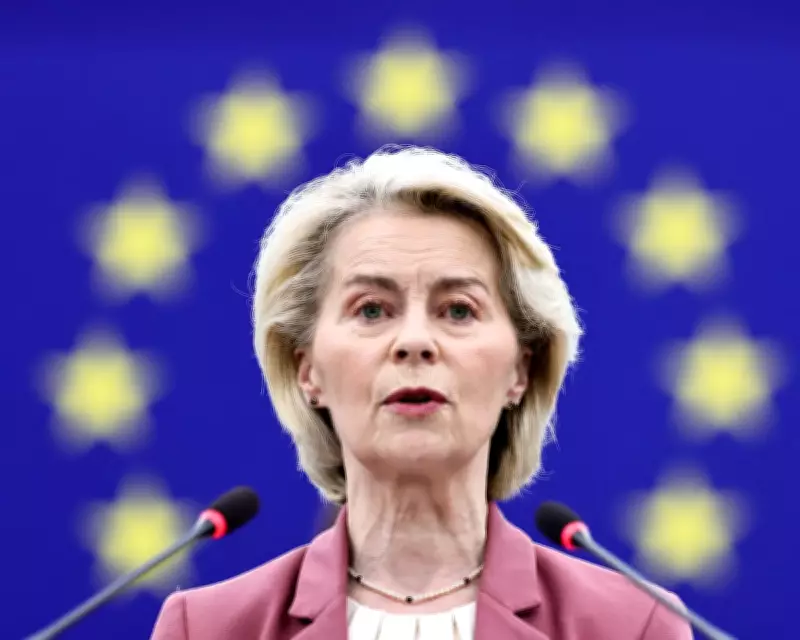
In a major foreign policy speech this week, European Commission President Ursula von der Leyen delivered a blunt message, stating that Europe can no longer serve as a custodian for the old-world order and must adopt a more realistic and interest-driven approach. She emphasised that while the EU will always defend the rules-based system, it can no longer rely on it in a precarious and chaotic world. Her words came as missiles rained down on Tehran and southern Iran on the tenth day of the conflict, underscoring the urgency of her point.
Disunity and Muted Responses
The reverberations of the Middle East conflict across Europe have triggered a range of responses, yet Europe's voice has carried little weight. France has dispatched a dozen naval vessels to the Mediterranean and Red Sea, while EU officials convened an ad-hoc summit with Middle Eastern leaders to show solidarity. Humanitarian aid for Lebanon is being sent to assist 130,000 people, following the displacement of at least half a million by Israeli bombs and evacuation orders.
Despite this frenetic activity, Europe's calls for restraint have gone unheeded, particularly as Donald Trump zigzags between war aims, declaring the conflict 'very complete, pretty much' but also 'we haven't won enough' within a 24-hour period. The problem is compounded by deep disunity among EU member states. Spanish Prime Minister Pedro Sánchez has stood alone, refusing to be complicit in actions he deems contrary to European values. In contrast, German Chancellor Friedrich Merz argued it is not the time to lecture partners and allies on international law.

Criticism from Former Insiders and Analysts
Amid this division, EU officials have issued impersonal calls for diplomacy, an approach that has earned withering reviews. A former head of the EU's diplomatic service wrote that Brussels has 'slipped into a starkly paralysed role as mere commentator on the geopolitical upheaval on its Southern flank.' Similarly, the EU's former representative to the Palestinian territories described Europe's response as 'shameful: stunned, sidelined, and disunited.'
Analysts at the European Council on Foreign Relations concluded that Europe's collective response has been, at best, a fiasco and, at worst, strategic lunacy. Julien Barnes-Dacey, director of ECFR's Middle East and North Africa programme, highlighted the timidity of European leaders, stating they are treading around Trump with such fear of antagonising him that they refuse to adopt a meaningful position on the war. He suggested that while Europeans may not shift dynamics alone, they could pressure Trump by more assertively opposing the conflict.
Fault Lines and Leadership Struggles
The conflict has also exposed old fault lines over who speaks for Europe globally. In a rebuke to von der Leyen's diplomatic outreach, France accused the commission of usurping the role of EU foreign policy chief Kaja Kallas, who operates on a mandate agreed by member states. French Foreign Minister Jean-Noël Barrot called on the commission to adhere strictly to EU treaties, without naming von der Leyen directly. This followed criticism from a senior French MEP, Nathalie Loiseau, who labelled von der Leyen's telephone diplomacy to Gulf leaders as 'NOT your business.'
However, this critique is not universal. Some EU sources argue it is important for a commission president to assume leadership during a global crisis, while others see no issue. One EU diplomat dismissed the criticism as a fig leaf for disliking specific decisions. Von der Leyen has created unease by quickly embracing regime change in Iran, seen as an attempt to stay close to Trump, whereas Kallas has been more cautious, calling a democratic Iran a 'dream scenario' but far from certain.

Debate Over International Law
There is a significant nuance in their approaches. Von der Leyen appeared to deliver an obituary for the international rules-based order, calling for new ways of cooperating with partners. In contrast, Kallas called for a restoration of international law, warning that without it, repeated violations and chaos are inevitable. European Commission Vice-President Teresa Ribera publicly reprimanded von der Leyen, stating it was not the most adequate manner to express herself and stressing the importance of international law for the European project.
Socialist MEP leader Iratxe García Pérez went further, accusing von der Leyen of failing to defend international law and warning that accepting major powers bombing at will leads to a law of the jungle. In response, von der Leyen offered a more full-throated defence to MEPs, asserting that seeing the world as it is does not diminish the fight for a better world.
Strategic Miscalculations and Russian Gains
For Barnes-Dacey, von der Leyen's call for realism is a tacit acknowledgment of the illegality of the war on Iran and Europe's failure to call it out, driven by a perception that Trump must be kept happy over Ukraine. As Trump mused about waiving oil sanctions to guarantee supply, potentially including Russia, this strategy appears doomed. EU leaders are deeply concerned about the conflict's impact on Ukraine, with Russia poised to gain from higher energy prices, diverted air-defence systems, and reduced attention to its invasion.
European Council President António Costa noted that so far, Russia is the only winner in this war. Barnes-Dacey warned that Europe is making a disastrous strategic miscalculation, prioritising Ukraine conflict management and preventing economic shocks over confronting Trump on a conflict that deeply impacts wider interests.