
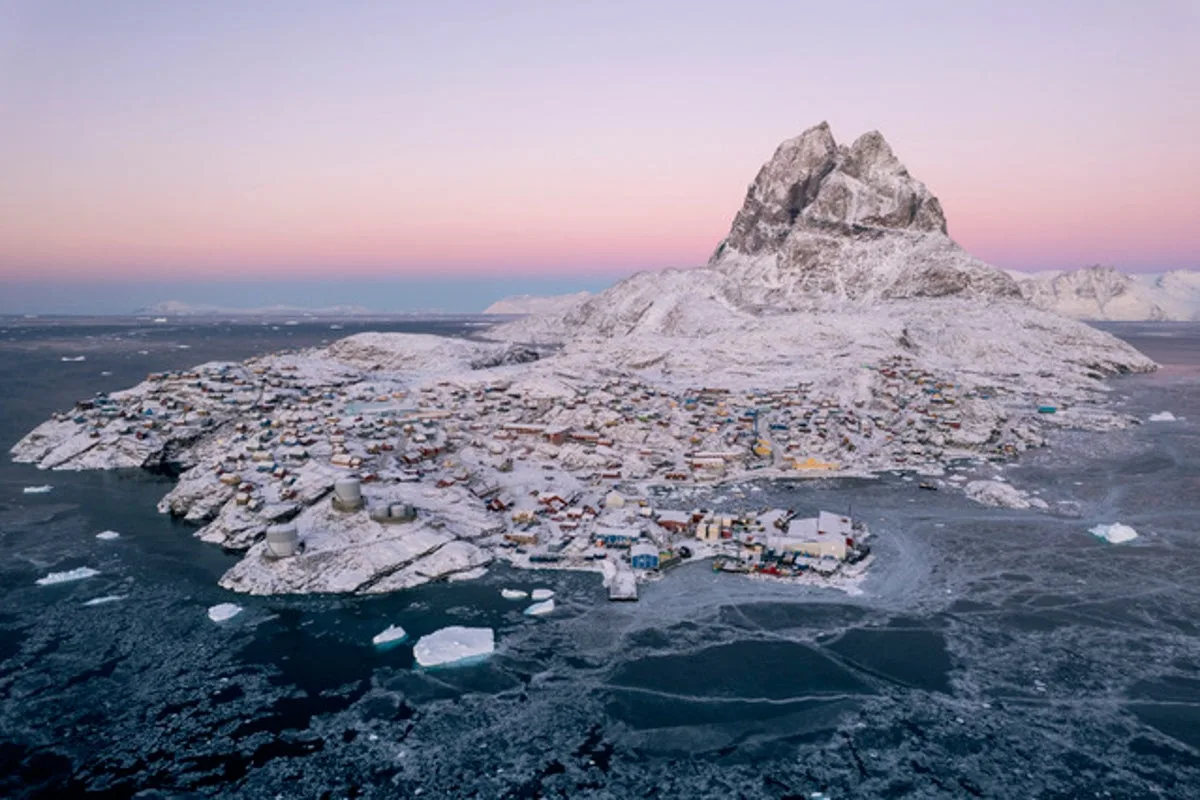
European leaders have issued a joint statement warning that Greenland “belongs to its people” after United States President Donald Trump reiterated his desire to take control of the Arctic territory. The statement, signed by the leaders of France, Germany, Italy, Poland, Spain, Britain and Denmark, firmly rejected any suggestion of annexation.
“Greenland belongs to its people,” the statement read. “It is for Denmark and Greenland, and them only, to decide on matters concerning Denmark and Greenland.” The leaders stressed that Arctic security is a key priority for Europe and that the region is critical for international and transatlantic security, emphasising that security must be achieved collectively through Nato and in accordance with the UN Charter.
Denmark’s prime minister, Mette Frederiksen, earlier warned that a US takeover of Greenland would effectively end Nato. “If the United States chooses to attack another Nato country militarily, then everything stops,” she told state broadcaster TV2, referring to the alliance’s collective defence guarantees that have been in place since the Second World War.
Mr Trump, in an interview with The Atlantic, said “we do need Greenland” for defence and described the island as “so strategic right now”. His comments follow a series of threats aimed at other nations over the weekend. He has expressed interest in purchasing Greenland since 2019, and the territory is rich in natural resources including oil, gas, and critical minerals, while its location between the North American Arctic and Europe adds to its strategic appeal.
His latest remarks have drawn widespread condemnation across Europe, with the EU and several Nato member states reiterating their unequivocal support for Greenland’s territorial integrity and sovereignty.




