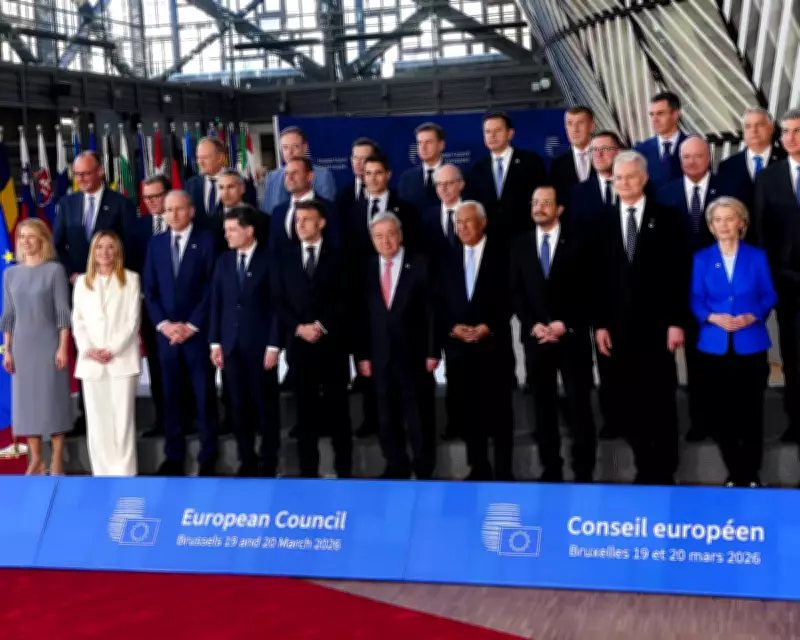
European Union leaders have pledged their firm support for Cyprus as it aims to initiate open discussions with the British government regarding the future of the UK sovereign bases on the island. This commitment was made during the European Council summit, where escalating military tensions in the Middle East were a primary focus of debate.
Cyprus President Calls for Open Dialogue on Colonial Legacy
Nikos Christodoulides, the President of Cyprus, emphasised the need for an open and frank conversation with the United Kingdom about the status and future of the British bases. He described these installations as a colonial consequence but refrained from publicly stating whether he desires their removal, noting that Cyprus maintains a clear approach and will not negotiate in the open.
We have more than 10,000 Cypriot citizens within the British bases; we have responsibility for those people and when the situation is over in the Middle East, we are going to have an open and frank discussion with the British government, Christodoulides declared ahead of the summit.

British Bases Become Targets in Regional Conflict
The Akrotiri and Dhekelia bases, covering 256 square kilometres, have remained under UK sovereignty since Cyprus gained independence in 1960. They serve as training areas and strategic staging posts for British military operations in the region. However, as Middle East tensions have intensified, Cyprus has grown increasingly concerned that the presence of these bases makes them de-facto targets for Iran, which has long-standing strained relations with the UK.
These fears materialised earlier this month when an unmanned attack drone, reportedly launched by the Iranian proxy Hezbollah from Lebanon, crashed onto the runway at RAF Akrotiri on 2 March. Two additional drones were intercepted while heading toward the base the following day, highlighting the direct security threat.
EU Endorsement Marks Diplomatic Victory for Cyprus
Following Christodoulides' intervention, EU leaders endorsed a text at the summit expressing firm and unequivocal support for member states closest to the Middle East. The European Council acknowledges the intention of Cyprus to initiate a discussion with the UK on the UK bases in Cyprus and stands ready to provide assistance as needed, the statement read.
This language represents a significant victory for Cyprus, which currently holds the EU's rotating presidency, as it was not included in earlier drafts of the summit conclusions. The island nation, located just a 20-minute flight from Lebanon, has felt inadequately supported by the UK amidst the crisis.
Military Responses and Regional Security Concerns
While the Royal Navy destroyer HMS Dragon recently departed Portsmouth for the eastern Mediterranean, critics argue that the UK should have deployed a warship to the region sooner, particularly after indications emerged in late January that Donald Trump was preparing for a potential attack on Iran.
In contrast, France responded promptly to a Cypriot request for military assistance by deploying:
- Air defence systems
- A frigate
- The nuclear-powered aircraft carrier Charles de Gaulle
This disparity in response times has further underscored Cyprus's concerns about its security situation and the broader implications of the British bases' presence during regional conflicts.