Dubai Airport Drone Strike Exposes Critical US Strategic Void on Iran
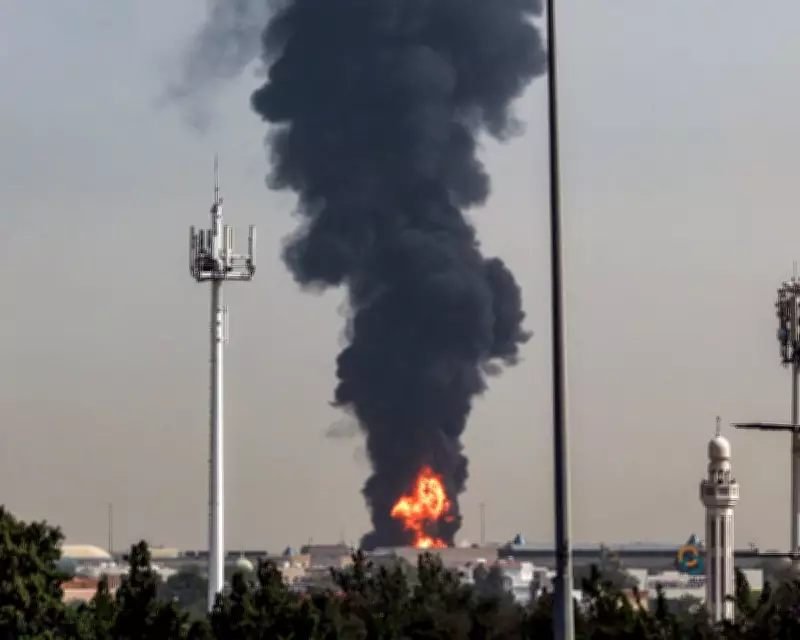
Flames and thick plumes of smoke engulfed Dubai International Airport on Monday following a targeted drone strike, marking the latest in a series of aggressive actions by Iran against United States allies across the Gulf region. This incident starkly illuminates the glaring absence of a coherent and effective American strategy for dealing with Tehran's escalating provocations.
Trump's Demands and the Unanticipated Backlash
Despite initiating military action against Iran in collaboration with Israel, the White House under former President Donald Trump appears to have critically failed to anticipate the nature and scale of the Iranian response. Iran, possessing limited conventional military options, has pivoted to asymmetric warfare, targeting US bases, allied nations, and commercial shipping in the Gulf to impose significant costs on Western interests.
The strategy of resistance was long in the making. Iran's leadership, including former Supreme Leader Ali Khamenei, had prepared for a protracted conflict, even outlining succession plans in anticipation of high-level casualties. The current two-week bombing campaign by US forces, focused on Iranian naval assets and missile sites, has proven insufficient to neutralize the threat to vulnerable merchant vessels.

The Strait of Hormuz: A Chokepoint and a Strategic Card
Central to this crisis is the Strait of Hormuz, a vital maritime chokepoint for global oil shipments. According to reports from Lloyd's List, sixteen commercial ships have been attacked, creating a climate of fear that has deterred tanker traffic. Trump's public urging for tanker owners to "show some guts" and navigate the strait contrasted sharply with the US Navy's own apparent reluctance, highlighting a disjointed approach.
Military analysts note that the US carrier strike group, the Abraham Lincoln, remained positioned at a safe distance off Oman, capable of striking Iran but not securing the shipping lanes. Iran's potential to blockade the strait remains its most potent leverage. The Islamic Revolutionary Guard Corps possesses a formidable arsenal for asymmetric engagement, including speedboats, aerial drones, and thousands of sea mines, though the latter have not yet been deployed.
Drawing lessons from conflicts like the war in Ukraine, Iran is reportedly finding success with sea drones—uncrewed surface vessels. One such drone is suspected of striking the Thai-flagged vessel Mayuree Naree just last week.
A Coalition of None: NATO and Allied Reluctance
The absence of a US strategy is further compounded by a stark lack of allied coordination. Trump's fixation on unilateral military power, primarily with Israel, left no room for building a coalition. Consequently, key US allies—including Britain, France, China, and Japan—had no warships prepared for convoy duties in the Gulf prior to the conflict's outbreak.
Trump's weekend interview remarks, where he insisted NATO allies "should feel obliged to take part" and warned of "a very bad future" for the alliance if they refused, revealed a contradictory stance. This came after over a year of US pressure for Europe to focus on its own continental defence rather than Middle Eastern engagements.
The response from potential partners has been muted or non-committal. Japan cited legal complexities, while China offered no reply, potentially jeopardizing a planned presidential visit. France has dispatched warships to the eastern Mediterranean but stated it would not commit to the Hormuz region until the most intense fighting subsides.
Logistical Challenges and Royal Navy Criticisms
Establishing a viable naval escort operation presents immense logistical hurdles. Experts estimate it might require eight to ten destroyers to protect a mere five to ten vessels transiting every day and a half, amounting to only about ten percent of pre-war shipping volumes through the strait.

The United Kingdom has faced particular criticism for its lack of preparedness. The Royal Navy had to hastily deploy HMS Dragon from dry dock to Cyprus, having failed to anticipate the need for a regional warship presence as the US assembled its carrier groups. This was partly due to a prior strategic focus on deploying the aircraft carrier Prince of Wales to the North Atlantic for an Arctic protection mission—a directive originally championed by Trump during his administration.
This confluence of events—the Dubai airport strike, the shipping threats, and the faltering international response—paints a clear picture of a critical strategic vacuum in US foreign policy regarding Iran, with significant implications for global security and energy markets.