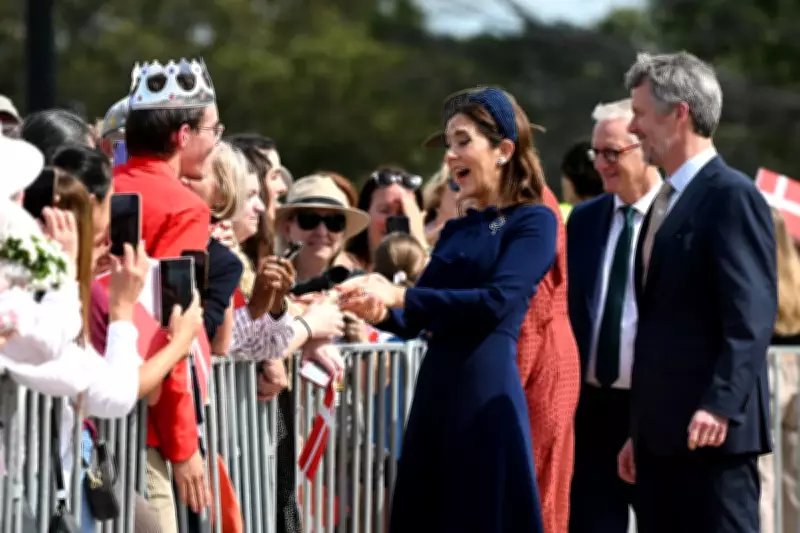
Well-wishers thronged the forecourt of the war memorial, as King Frederik and Queen Mary of Denmark strolled along the fenceline, greeting every outstretched hand with warmth and grace. The scene was one of jubilant celebration, yet beneath the surface of this royal tour lay a deeper, more sobering diplomatic narrative.
A Message of Trust in Uncertain Times
Amid the vibrant optimism and colourful pageantry of Queen Mary and King Frederik's visit down under, a poignant message was delivered at the heart of Australian democracy. Lars Aagaard, the Danish minister for climate change, addressed a gathering of Australian politicians with gravity, stating, "In times of uncertainty, trust is everything. Not only within our society, but also between the nations." He emphasised the need for "even deeper friendship among countries that share our values and interest."
While names like Trump, Iran, and Greenland were not explicitly mentioned, their spectre loomed large. This served as a stark reminder that, beyond the pomp and public-facing levity of such regal visits, there often resides a kernel of serious diplomacy and hard-headed politics, largely unseen by the cheering crowds.
Royal Encounters and Public Adoration
Cheering crowds were abundant during the visit, marking Mary's first trip to Australia as Danish monarch. Arriving in Canberra as the capital emerged from an unseasonal chill, the royal couple's motorcade sped up Anzac Parade toward the war memorial. Following a bushwalk at Uluru-Kata Tjuta national park and a state dinner, Frederik and Mary paid their respects by laying a wreath at the Tomb of the Unknown Soldier and honouring fallen servicemen.
Outside, the public gathered eagerly, with parents, children, and school groups waving paper Danish flags. One woman wore a shirt emblazoned with logos from the 2000 Sydney Olympics, where the couple first met. "I wanted to see if they remember Sydney," she remarked, to which a Danish journalist replied, "They will never forget the Sydney Olympics."
The King and Queen walked over 100 metres along the fenceline, shaking hands and engaging with well-wishers. Frederik led the way, but it was clear that Mary, radiant in a navy dress and fascinator, was the star attraction. She smiled warmly, thanked attendees, paused for selfies, and even patted a dog, as cries of "We love you, Mary!" and "Welcome home!" echoed through the crowd.
Fandom and Fashion Highlights
Rochelle and her daughter Anna, celebrating Anna's 10th birthday, brought a large sign announcing the occasion and were thrilled to receive a handshake and photo. Lynton Martin from Melbourne stole the fashion spotlight in a royal red blazer, plastic crown, and kangaroo print tie, adorned with pins of Danish flags and royal images. He drove solo from Melbourne, driven by a fascination with royalty, and chatted with Mary about the Tasmanian AFL team, suggesting Copenhagen as a "home away from home" for games.
Serious Undertones Amid the Festivities
Beyond the plastic crowns and selfies, the visit carried a more serious tone. In a meeting with Prime Minister Anthony Albanese, Frederik highlighted Denmark's awareness of climate insecurity for future generations, expressing a desire to "walk hand in hand towards the sunset on that one." At a parliamentary reception, Speaker Milton Dick noted shared commitments to democracy, cultural exchange, and sustainability.
Liberal MP Angie Bell, speaking partly in Danish, praised Denmark as an inspiration in community, welfare, and sustainability, stating, "Denmark and Australia lie far apart on the world map, but we stand close together in values."
Global Context and Shared Concerns
Denmark, positioned at the top of the globe, faces challenges such as Donald Trump's attempts to acquire Greenland, while Australia navigates complexities in the Middle East, including impacts from the Iran conflict. Aagaard's emphasis on trust and shared values underscored the alignment between these nations, despite geographical distance.
Ultimately, the royal tour blended public adoration with diplomatic depth, highlighting how even in times of global uncertainty, alliances rooted in common principles can foster resilience and cooperation.