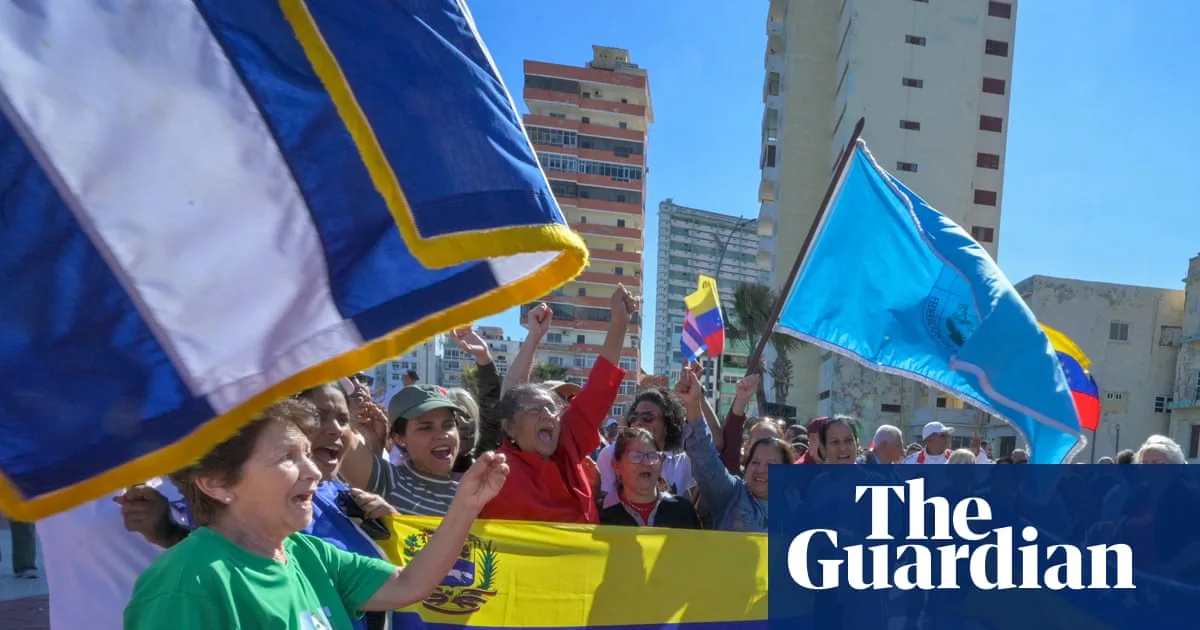
Havana's long, fractious history with the US leaves it vulnerable if Caracas is forced to withdraw its support. On Havana's Fifth Avenue, a billboard outside the Venezuelan embassy declares the two nations bound together 'for ever', but this week, after the US operation to grab Nicolás Maduro, those ties are in danger of unravelling.
In Cuba, every discussion revolves around the implications. Can the island, already in financial crisis, survive the withdrawal of Venezuelan support? Does the US administration have a plan for Cuba? Are there people in the Cuban government willing to deal with the US? At the forefront, many Cubans are asking themselves: could it happen here?
In its attempts to oust the Venezuelan leadership, the US had already found itself in confrontation with Cuba. Havana has had to acknowledge 32 Cubans died in the US military attack on Venezuela. Family members of the dead mourned their relatives on social media, with one aunt evoking the heroes of Cuba's 19th-century wars of independence.
For Maduro, this support was paid for in oil. He could trust the Cubans, and rely on their knowledge of combating US intelligence. An attempt to oust him in 2019 failed – it is believed – because it was foiled by Cuban agents. After that, Trump strengthened US sanctions against Cuba, yet he has always seemed less interested in tackling the island, summing up his policy this week by stating that 'Cuba is ready to fall'.
One of the prices Venezuela looks set to pay for peace is turning off its support for Cuba. It is unclear what level of support there has been, but there were certainly oil shipments. Terrible blackouts once again spread over the island on Monday, but that has been the case for several years. Another positive sign for US hawks is Cuba's communist government's vaunted unity is showing signs of fatigue.
Yet few would bet against the Cuban government's will to survive, despite the suffering of its people. 'We've been there before in the 1990s and I don't necessarily believe further rapid deterioration of the Cuban economy leads to regime change,' said Michael Bustamante, chair of Cuban and Cuban-American Studies at the University of Miami. Only one certainty remains: any appearance of US helicopters over Cuba would be bitterly resented.