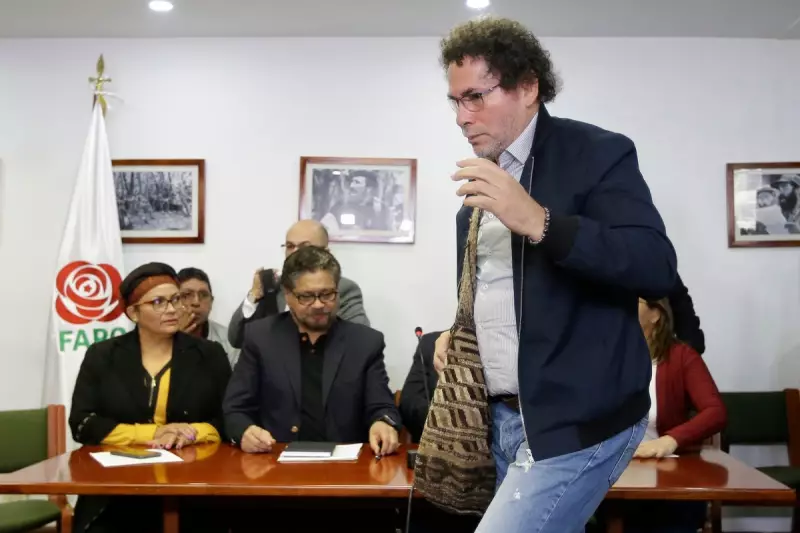
Colombian authorities have issued a stark warning that former Revolutionary Armed Forces of Colombia (FARC) rebels are failing to honour critical commitments made under the landmark 2016 peace agreement. Officials assert the group is violating the deal by not relinquishing substantial quantities of gold, land, and other valuable assets designated to fund reparations for victims of the nation's protracted conflict.
Inspector General's Report Reveals Significant Shortfalls
The Inspector General's Office released a detailed report on Tuesday, highlighting severe deficiencies in the asset surrender process. According to the findings, the FARC has transferred only a fraction of the resources it pledged, significantly undermining efforts to support those affected by decades of violence.
Specific Failures in Asset Handover
The report outlines specific and concerning shortfalls. Under the peace accord, the FARC promised to surrender 444 kilograms (979 pounds) of gold. However, authorities confirm that only 252 kilograms (556 pounds) have been turned in to date.

The situation regarding property is even more pronounced. The rebels committed to handing over 722 rural properties, but have so far transferred just one. Furthermore, only 17% of the promised cash assets have been surrendered to the Colombian government.
Background of the Historic Peace Agreement
The 2016 peace deal was a historic moment, ending at least five decades of armed conflict. In exchange for laying down arms, FARC fighters were spared prison sentences, permitted to form a political party, and granted ten reserved seats in Colombia's congress.
A core component of the agreement required FARC leaders to hand over the group's assets. These resources were intended to finance vital reparation projects, including rural infrastructure development, memorials for conflict victims, and truth and reconciliation initiatives.
The Intended Asset Transfer Process
The assets listed by the FARC were supposed to be transferred to a specific agency known as the Society of Special Assets. This body would then be responsible for selling the assets and channelling the proceeds to another agency dedicated to assisting victims of the conflict.
FARC Leadership Responds to Allegations
Jose Lisandro Lascarro, a former FARC commander known as "Pastor Alape," has responded to the accusations. He told The Associated Press that the FARC did its utmost to hand over assets under United Nations supervision.
However, Lascarro cited significant security problems as a major impediment. He explained that some assets could not be surrendered because other armed groups have occupied former FARC territories following the 2016 disarmament, leading to a surge in violence in some rural areas.
Practical Challenges Cited by Former Commander
Lascarro elaborated on the practical difficulties. He stated that more cash could not be handed over because it was buried in chests in remote areas now controlled by rival rebel groups. Additionally, he noted that the FARC lacked formal legal titles for many of its rural properties, making it legally impossible to transfer the land or houses to the government.
Funding Crisis for Peace Tribunal
The Inspector General's Office also raised alarms about the financial state of the Special Jurisdiction for Peace (JEP), the tribunal established under the peace deal. The report indicates the JEP currently lacks sufficient funds to implement its rulings, which involve crucial truth-telling and reparation activities for victims.
Last year, this peace tribunal issued calls for reparations to victims of FARC kidnappings and to victims of extrajudicial executions carried out by the Colombian military.
Inadequate Budget for Victim Reparations
Compounding the issue, the Inspector General's Office warned that the budget currently reserved for these victim reparations stands at only 17% of the required amount. This severe funding gap threatens the entire reparations process and the long-term healing envisioned by the peace agreement.