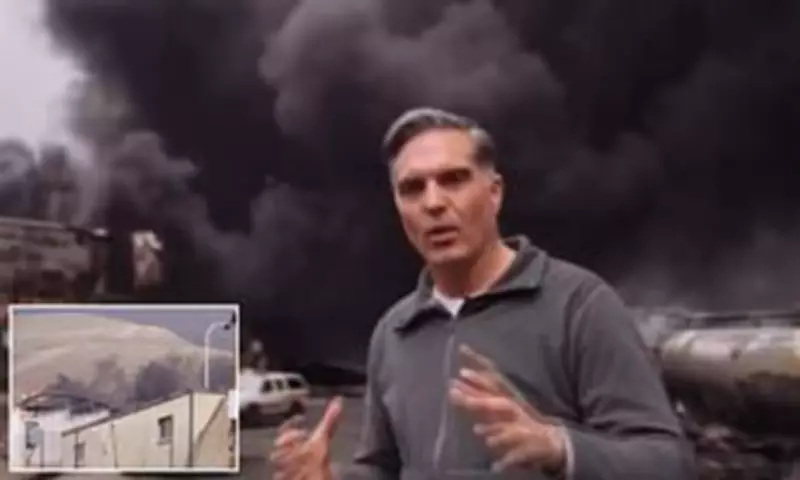
CNN Correspondent Reports Live from Bombed Iranian Oil Facility Amid Toxic Conditions
In a dramatic and hazardous broadcast, CNN Senior International Correspondent Fred Pleitgen delivered a live report on Sunday from the freshly bombed Shahran oil depot in Tehran, Iran. Standing before a backdrop of thick, soot-filled smoke mixing with rainclouds, Pleitgen described the scene as "absolutely apocalyptic" as fires continued to rage around him.
Apocalyptic Scene at Shahran Oil Depot
Pleitgen explained to CNN News Central anchor Kate Bolduan that he and his crew had just arrived at the facility, which had been attacked the previous night in what he characterized as a massive wave of airstrikes lasting approximately an hour and a half. "We heard those going on for about an hour, maybe an hour and a half, with massive thuds and then explosions that we could hear," he reported.
The correspondent detailed the ongoing destruction: "That thick black plume of smoke - we saw that last night. And now we're actually seeing it up close. And what we're also seeing is that some of those destroyed storage tanks are still on fire: There's still flames originating from them." He added that most of the facility was in ruins, with the thick black smoke visible across all of Tehran.
Toxic Conditions and Viewer Warnings
Pleitgen noted that it had been raining that morning, and alarmingly, "there was oil mixed into the rain." He emphasized, "So this is definitely a massive incident that is still going on." Viewers quickly responded with safety warnings, noting the extreme toxicity of the air.
- One viewer wrote: "The air is extremely toxic. You should be wearing at least an N95 mask if outside."
- Another cautioned: "Be careful. You do know you're breathing that oil filled air."
- Others praised Pleitgen's courage, with one commenter stating: "Brave reporting from the frontlines amid toxic smoke and rising tensions. Stay safe out there, Frederik – mask up and keep shining light on what's happening. Prayers for civilians caught in this mess."
Israeli Airstrikes and Regional Context
The dangerous phenomenon was fueled by still-raging fires left by Israeli airstrikes on Saturday night. Former DNC National Field Director Adam Parkhomenko noted that Pleitgen appeared to be the only American correspondent from a major news outlet reporting from within Iran at that time.
On social media platform X, Pleitgen shared additional footage with the caption: "Managed to film at the Shahran oil depot in Western Tehran that was targeted by airstrikes last night. The oil still seems to be burning. We saw flames coming from some of the destroyed oil storage tanks. Also destroyed tanker trucks outside the gate. Sorry for audio issues, was windy."
The day before the broadcast, officials confirmed at least 30 Israeli strikes on various fuel depots in Iran, according to an Axios report. Sources indicated that US forces were "dismayed" by the nature of the strikes.
Political Reactions and Strategic Concerns
Senator Lindsey Graham reshared the Axios report on X, urging Israel to "please be cautious about what targets you select." The MAGA-supporting senator wrote: "Our goal is to liberate the Iranian people in a fashion that does not cripple their chance to start a new and better life when this regime collapses. The oil economy of Iran will be essential to that endeavor."
The broader context involves US and Israeli missions in the region focused on halting ballistic missile deployments and thwarting Iran's nuclear development. Former President Donald Trump, who discussed these objectives last week, has refused to rule out the possibility of US troops on the ground. The conflict entered its tenth day on Monday with no signs of slowing, and a total of seven US servicemembers have been killed in the fighting so far.
Throughout the broadcast, CNN's Kate Bolduan and others urged Pleitgen to stay safe as he continued his reporting from the hazardous environment, highlighting the risks journalists take to document conflicts in real time.