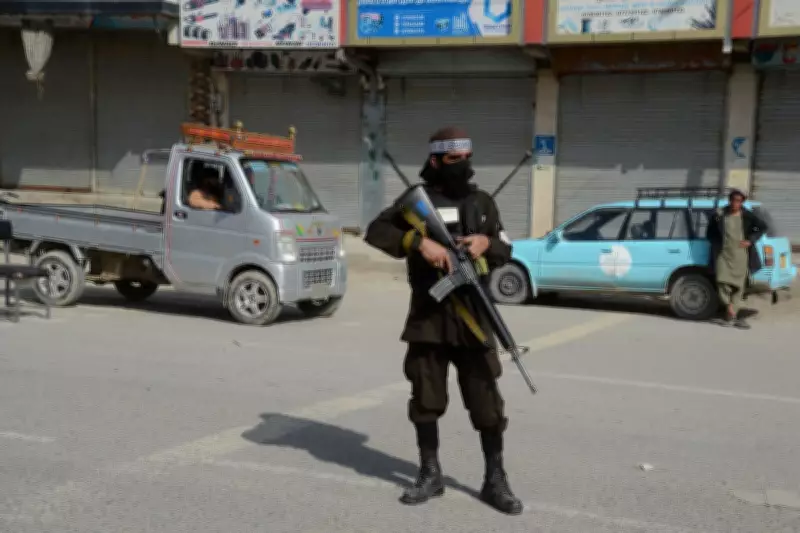
Four civilians, including children, were killed after Pakistan launched overnight airstrikes in Afghanistan, the Taliban administration confirmed, marking a significant escalation in the worst conflict between the neighbouring nations in years.
Taliban Accuses Pakistan of Targeting Civilian Areas
Taliban spokesperson Zabihullah Mujahid stated that Pakistani aircraft struck a fuel depot operated by the private carrier Kam Air near Kandahar airport. "This company supplies fuel to civilian airlines as well as to United Nations aircraft," he emphasised, highlighting the civilian nature of the target.
Mujahid added that Pakistani forces also attacked the capital Kabul and the provinces of Paktia and Paktika, alleging that homes were targeted in some locations. The Taliban government warned that this renewed aggression would "not go unanswered", signalling potential retaliation.

Civilian Casualties Confirmed in Kabul
Kabul police spokesperson Khalid Zadran verified that at least four civilians, including children, were killed in the city, with 15 others injured. This incident adds to a growing toll of civilian deaths amid escalating hostilities.
Background of Escalating Conflict
Pakistan and Afghanistan have been engaged in reciprocal attacks on military installations since late February, when Kabul claimed it struck Pakistani posts in response to border assaults. The Pakistani military asserts its operations target Islamist and ethnic insurgents responsible for attacks within Pakistan, a claim Kabul denies.
Both sides report inflicting heavy losses in what Islamabad has termed an "open war" with its neighbour. According to the UN mission in Afghanistan, Pakistani military operations killed at least 56 civilians, including 24 children, between 26 February and 5 March.
Diplomatic Efforts Amidst Violence
The airstrikes occurred just one day after China's special envoy, Yue Xiaoyong, arrived in Pakistan and met with his counterpart Mohammad Sadiq. Sadiq, Pakistan's special envoy for Afghanistan, posted on social media that they "discussed threats posed by terrorist groups like Tehreek-e-Taliban Pakistan and the East Turkestan Islamic Movement to Pakistan and China respectively", agreeing on collective efforts for peace.
Yue had previously met with Afghan government officials in Kabul, underscoring regional diplomatic manoeuvres amidst the conflict.
Root Causes and Ongoing Tensions
Since the Afghan Taliban regained power in 2021, the Tehreek-e-Taliban Pakistan has intensified attacks inside Pakistan and along the border. Islamabad insists its military operations will persist until Kabul takes verifiable steps to curb this group and other militants operating from Afghan territory.
Before this latest attack, fighting along the contested 2,600km border had somewhat subsided, but the overnight strikes have reignited fears of a broader confrontation. The conflict represents a critical test for regional stability, with civilian casualties mounting and diplomatic channels under strain.