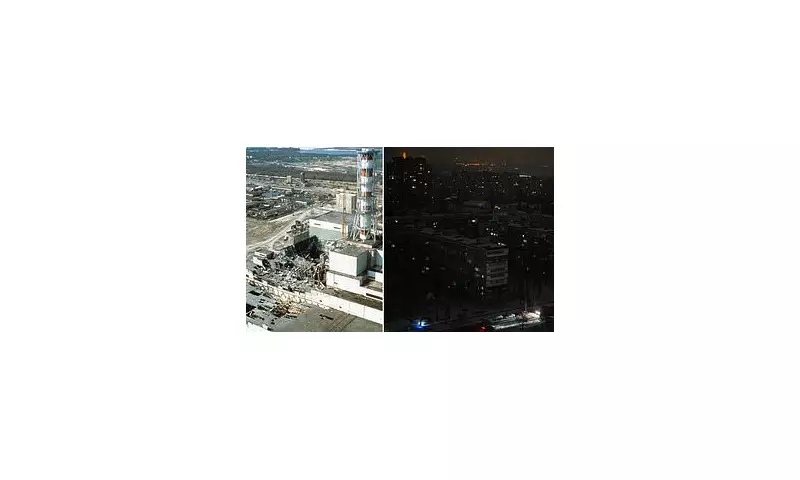
The Chernobyl Nuclear Power Plant has been disconnected from its external electricity supply following a series of Russian military attacks targeting Ukraine's critical energy infrastructure, according to an urgent warning issued by the International Atomic Energy Agency (IAEA).
IAEA Director General Reports Critical Situation
IAEA Director General Rafael Grossi confirmed this morning that multiple Ukrainian power substations have been compromised by extensive military operations. Among the affected facilities is the historic Chernobyl site, which has lost all off-site power connections alongside several other transmission lines serving Ukraine's nuclear power stations.
'The IAEA is actively monitoring developments to assess the impact on nuclear safety,' stated Director General Grossi, highlighting the agency's heightened concern about the deteriorating situation.

Ukrainian Experts Warn of Potential Catastrophe
Ukrainian military intelligence officers had warned just one day earlier that continued Russian missile strikes against the country's power grid could potentially trigger what they described as a 'second Chernobyl' disaster.
Serhiy Beskrestnov, a Ukrainian electronic warfare specialist, revealed that Russian missiles targeting energy infrastructure are landing dangerously close to nuclear reactors - some within approximately 300 metres. 'A miss by an Iskander or a Kinzhal could turn into a second Chernobyl,' he cautioned via his Telegram channel, drawing parallels with the catastrophic 1986 explosion that released massive radiation and forced hundreds of thousands to evacuate.
Beskrestnov emphasised that Russia's combination of targeting critical substations while maintaining a documented history of missing intended targets creates an exceptionally perilous scenario for Ukraine's nuclear facilities.
Strategic Attacks on Energy Infrastructure
According to Ukraine's Military Intelligence (HUR), Russia is actively considering assaults on electricity transmission substations that support the operation of Ukraine's nuclear power plants. This strategy appears designed to pressure Kyiv into accepting what Ukrainian officials have characterised as unacceptable surrender terms.
HUR reports indicate that by mid-January 2026, Russia had already conducted reconnaissance operations targeting ten vital energy sites across nine Ukrainian regions. Ukraine's Energy Minister Denys Shmyha confirmed last week that Russia has executed 612 attacks on energy targets over the preceding year.
Winter Weaponisation and Civilian Impact
The bombardment has intensified significantly during recent months as nighttime temperatures in eastern Ukraine plummeted to -18°C. Throughout the four-year conflict, Russia has consistently targeted Ukraine's power grid during colder periods in a tactic widely described as 'weaponising winter'.
Ukrainian authorities have implemented emergency measures including temporarily easing curfew restrictions and establishing public heating centres to assist civilians affected by widespread power and heating disruptions.
Reciprocal Attacks and Regional Blackouts
In a notable development last month, Russia itself experienced substantial power outages after Ukraine launched a series of drone strikes against Moscow. Footage from the Russian capital showed entire tower blocks without illumination and non-functioning street lamps during a widespread blackout.
Russian power company PAO Rosseti reported that over 100,000 residents in Ramensky, Zhukovsky, and Lytkarino were left without electricity during winter conditions. While Russia attributed the outage to an automatic shutdown at a high-voltage substation, uncertainty remains regarding whether this resulted from technical issues or Ukrainian drone operations.
Iuliia Mendel, former press secretary to Ukrainian President Volodymyr Zelensky, described the situation at the time: 'Total blackout hits Moscow region is reported on social media. Over 600,000 people plunged into darkness for more than four hours - no electricity, no mobile signal, total isolation.'

Geopolitical Context and Nuclear Safety Concerns
The reported attacks occurred shortly after Russia accused Ukraine, without presenting evidence, of attempting to target President Vladimir Putin's residence. Kyiv dismissed these allegations as baseless and suggested they aimed to undermine peace negotiations in the ongoing conflict.
The IAEA continues to monitor the situation closely as the loss of external power to Chernobyl and other nuclear facilities raises significant safety concerns. The agency's warning underscores the precarious balance between military conflict and nuclear security in a region still haunted by the legacy of the 1986 disaster.