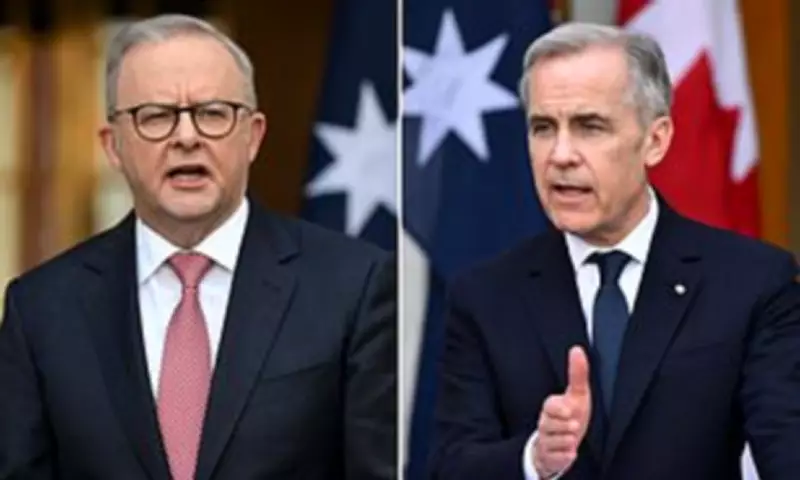
Canadian Prime Minister Mark Carney has delivered a compelling address to the Australian parliament, urging middle powers such as Canada and Australia to establish new coalitions in what he describes as a 'ruptured' global order, reducing dependence on the United States.
The Call for Middle Power Collaboration
In his speech, Carney emphasized that in a post-rupture world, nations that are trusted and can collaborate effectively will be swifter, more proactive, and ultimately more secure and prosperous. He posed a critical question for middle powers: should they preserve existing rules, create new ones to safeguard their security and prosperity, or allow great powers to increasingly dictate outcomes?
Middle powers, including Japan, Australia, Canada, and South Korea, possess significant economic influence but lack the superpower status of countries like China and the US. Carney's enthusiasm for these coalitions raises challenging questions for Australia, particularly regarding its reliance on the United States as a key ally.

Australia's Strategic Dilemma
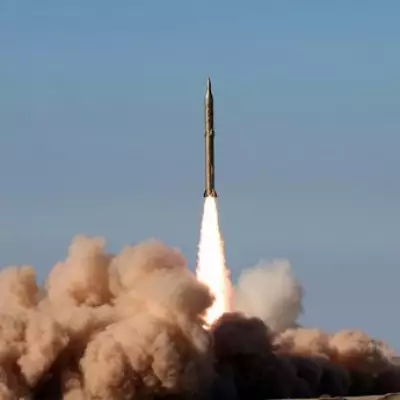
In defence terms, Australia remains heavily dependent on Washington's presence and military capabilities in the Indo-Pacific region. Much of Australia's military hardware is non-functional without US support, making a complete break from the alliance untenable. This explains Canberra's support for recent US and Israeli strikes in Tehran, despite non-participation.
However, Carney argues that Canberra can and should cultivate other relationships to hedge against dependence on an increasingly unreliable US. This can be achieved in areas such as trade, conflict prevention, and international law. With great powers increasingly breaching international norms, middle powers bear a responsibility to work together, safeguarding institutions and restraining great power behaviours when necessary.
Practical Alliances and Variable Geometry
Carney advocates for a 'dense web of connections' with other middle powers, termed 'variable geometry'—creating different coalitions for different issues based on shared values and interests. Australia already has strong ties, including an alliance with New Zealand and comprehensive strategic partnerships with ASEAN countries, India, Indonesia, Singapore, Papua New Guinea, Malaysia, South Korea, and Vietnam.
Notably, Australia signed a defence agreement with Japan in 2023, allowing mutual military operations, and has bilateral defence pacts with Papua New Guinea, Indonesia, and Timor-Leste focused on 'strategic denial' in the region. A key question is whether Australia can cooperate with countries like Canada, the UK, Germany, and France in the Indo-Pacific, depending on their engagement appetite.
Minilateral Partnerships and Economic Cooperation
Australia participates in several 'minilateral' partnerships centred on US involvement, such as the Quad, AUKUS, the Trilateral Security Dialogue, and Five Eyes, aimed at countering China's influence. However, new groupings like Japan-South Korea-Australia and Australia-Japan-Philippines offer opportunities for collaboration without US involvement in areas like economic and maritime security.
Beyond security, economic initiatives like the Critical Minerals Production Alliance and the Comprehensive and Progressive Agreement for Trans-Pacific Partnership (CPTPP) exemplify successful middle-power cooperation. The CPTPP, a free-trade agreement among Pacific Rim countries, has eliminated most tariffs and could expand to include the EU, South Korea, Norway, and Switzerland, potentially creating a trading bloc of 1.5 billion people.
Navigating the Ruptured Global Order
Carney's call avoids simplistic narratives, acknowledging that multilateralism isn't dead and global institutions still matter. Middle and small powers play crucial roles in preserving and creating international norms, especially in the current security environment. While the US shows less interest in multilateralism, there remains a need to encourage great powers to cooperate on issues like trade, climate change, and AI governance.
Ultimately, Carney's vision highlights the urgency for middle powers to build resilient alliances, ensuring they can shape outcomes in an uncertain global landscape, rather than being sidelined by superpower dynamics.