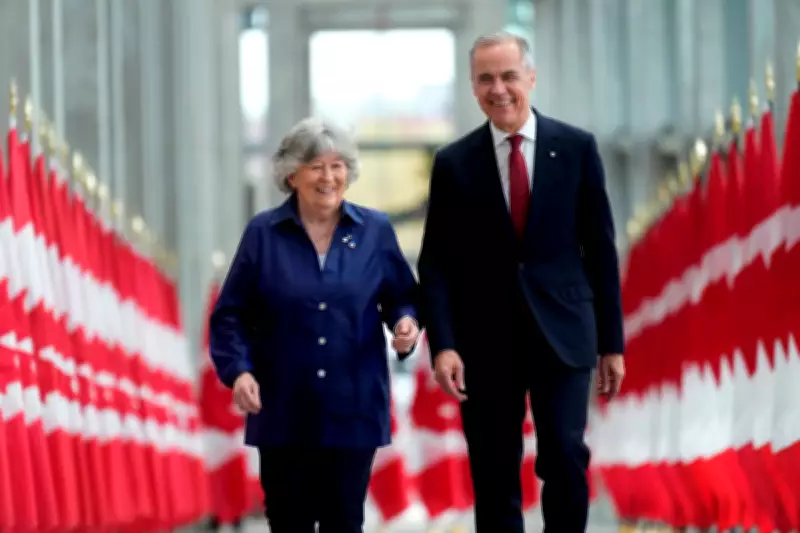
Prime Minister Mark Carney announced on Tuesday that retired Supreme Court Justice Louise Arbour will serve as Canada's next governor general. The governor general acts as the representative of Britain's King Charles III, who is Canada's head of state as a Commonwealth member.
Appointment Approved by King Charles
Carney stated that King Charles approved the appointment on his recommendation. "I will have an opportunity to have very in-depth conversations with Arbour in private on issues that affect Canada and the rest of the world," Carney said. While the governor general holds important constitutional duties, the role is largely ceremonial and symbolic.
A Francophone Appointment
Carney selected a Francophone for the position. When asked if she considers herself a monarchist, Arbour responded in French that she "doesn't really know what that term is supposed to mean" but expressed support for the current system. "I will be the representative of the Crown in a constitutional arrangement that has served Canada extremely well throughout our history, even more in recent decades. I think a system that will continue to provide continuity in our institutions and form of governance," she said.

Replacing Mary Simon
Arbour, aged 79, will succeed Mary Simon, Canada's first Indigenous governor general, who completes her five-year tenure in July. Carney praised Arbour as a world-renowned legal scholar, judge, and leader in human rights and justice. She previously served as a judge on the Supreme Court of Ontario, the Court of Appeal for Ontario, and the Supreme Court of Canada.
International Legal Career
In 1996, the United Nations appointed Arbour as Chief Prosecutor for the International Criminal Tribunals for the former Yugoslavia and Rwanda. She led efforts resulting in the first conviction for genocide under the Genocide Convention and the first indictment for war crimes of a sitting head of state. Later, she served as a U.N. Special Representative for International Migration from 2017 to 2018.
Canada's Constitutional Monarchy
Canada remained a British colony until 1867, after which it continued as a constitutional monarchy with a British-style parliamentary system, even following U.S. independence from Britain.