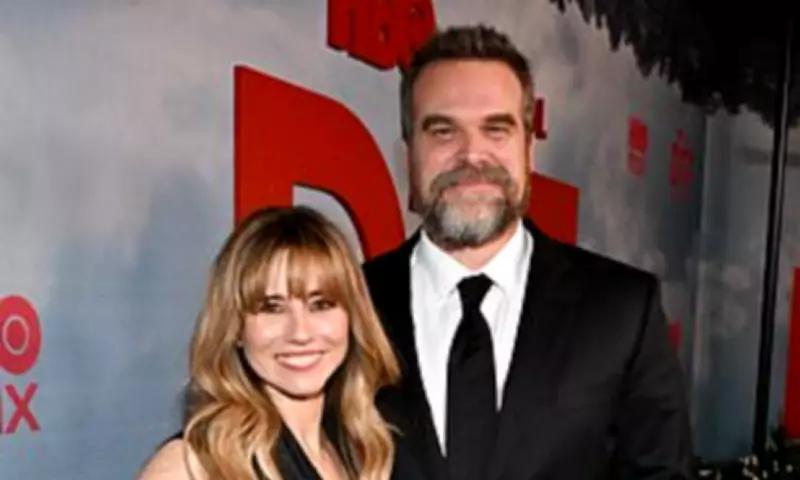
Actress Linda Cardellini has offered her perspective on open relationships in the wake of her co-star David Harbour's highly publicised split from singer Lily Allen. The 50-year-old star, who appears alongside Harbour in the HBO limited series DTF St Louis, was asked about the topic given the show's themes of marital affairs and its parallels to Harbour's personal life.
Art Imitating Life
In DTF St Louis, Cardellini and Harbour portray a married couple who become entangled in a love triangle with a weatherman played by Jason Bateman, leading to a fatal outcome. The series takes its name from a fictional dating app that facilitates affairs for married couples, creating unavoidable connections to Harbour's recent separation from Allen after he allegedly violated the rules of their open marriage through repeated infidelities.
Tactful Commentary
Speaking to the Sunday Times, Cardellini carefully avoided direct mention of Harbour, who has been attached to the project since 2022 and serves as an executive producer. The Dead To Me star insisted she wasn't 'going to tell anybody how to live', but emphasised the importance of mutual respect in any relationship arrangement.

'I mainly talked to Steve [Conrad, the director] about [open marriages],' she explained. 'In my group I don’t hear about [them] but that doesn’t mean it’s not out there. Whatever makes somebody happy, as long as you’re being respectful and kind to each other.'
Lily Allen's Musical Revelation
The interview comes following the release of Allen's album West End Girl, her first in seven years, which was recorded in just ten days after her devastating split from Harbour in December 2024. Described as a 'brutal, tell-all masterpiece', the album lays bare the complexities of their four-year marriage across fourteen tracks.
Lyrical Accusations
In candid lyrics that blend fact and fiction, Allen claims Harbour pressured her into an open relationship only to violate their established rules. She questions whether her ex is a sex addict and recounts discovering numerous sex toys and condoms at his secondary apartment, which she nicknames 'Pussy Palace'.
The track Madeline appears to directly address Harbour's infidelity with a mystery woman, suggesting their arrangement permitted discreet sexual encounters with paid strangers but forbade emotional connections. The chorus states: 'We had an arrangement/ Be discrete and don't be blatant. There had to be payment/ It had to be with strangers/ But you're not a stranger, Madeline.'
The Real 'Madeline' Revealed
The Daily Mail identified costume designer Natalie Tippett as the woman behind the pseudonym Madeline. Tippett, sixteen years Harbour's junior, reportedly met the actor while filming the Netflix movie We Have A Ghost in New Orleans in 2021. Their affair allegedly began shortly after production started, just one year after Harbour and Allen's Las Vegas wedding.
Even after filming concluded, Harbour reportedly flew Tippett to his Atlanta home, continuing the affair behind Allen's back. The singer famously uncovered the infidelity after discovering Harbour's profile on celebrity dating app Raya and 'joining the dots' by creating her own profile pretending to seek women.
Aftermath and Recovery
Ten months before West End Girl's release, reports emerged that the split had driven Allen to seek professional help. Her mental health reportedly deteriorated significantly after returning to her marital home in New York in January, where she felt 'triggered' by thoughts of Harbour being elsewhere in the city with another woman.
A source revealed: 'It was very painful for Lily to return home. David used to be her saviour and now he’s a trigger for her.' Allen subsequently spent several weeks at a residential retreat in the United States, participating in intensive group counselling and one-on-one therapy sessions where she was encouraged to 'unpack' her emotions.

In an October interview with The Times, Allen seemingly confirmed that 'agreed-upon boundaries were not adhered to' in her relationship with Harbour, while noting how dating apps have complicated modern relationships. 'Dating apps make people disposable and that leads to the idea that if you are not happy, there’s so much more to choose from — right in your pocket,' she observed.