Canadian Separatists Discuss US Dollar Adoption and Military Creation in White House Talks
Canadian Separatists Discuss US Dollar and Military in White House

Canadian Separatists Detail White House Meetings on Alberta Independence Plans

In a series of confidential discussions that have sparked diplomatic controversy, far-right Canadian separatists advocating for Alberta's secession have engaged with senior Trump administration officials at the White House. The group, known as the Alberta Prosperity Project, aims to transform the oil-rich province into an independent nation and has explored radical proposals including adopting the US dollar and establishing a new military force.

Secret Meetings and Sovereign Ambitions

According to exclusive reports from the Financial Times and NBC, three clandestine meetings have already taken place between the separatist delegation and representatives from the US State and Treasury Departments. A fourth meeting is scheduled for the coming weeks to further elaborate on transition mechanisms should a legally-binding independence referendum succeed.

Dennis Modry, a co-founder of the Alberta Prosperity Project, expressed optimism about American support, stating to NBC: "For those of us who are very much in support of Alberta becoming a sovereign country, it's heartening to us at each of the three meetings that we've had with the U.S. administration to be informed that the entire U.S. administration is supportive of Alberta becoming a sovereign country."

The group's legal counsel, Jeff Rath, reinforced this perspective in comments to the Financial Times, claiming: "The U.S. is extremely enthusiastic about a free and independent Alberta."

Political Backlash and Accusations of Treason

These extraordinary diplomatic engagements occur against a backdrop of escalating tensions between the United States and Canada. A recent poll reveals that a majority of Canadians consider the separatists' negotiations with American officials to be tantamount to treason, highlighting profound national discontent with the proceedings.

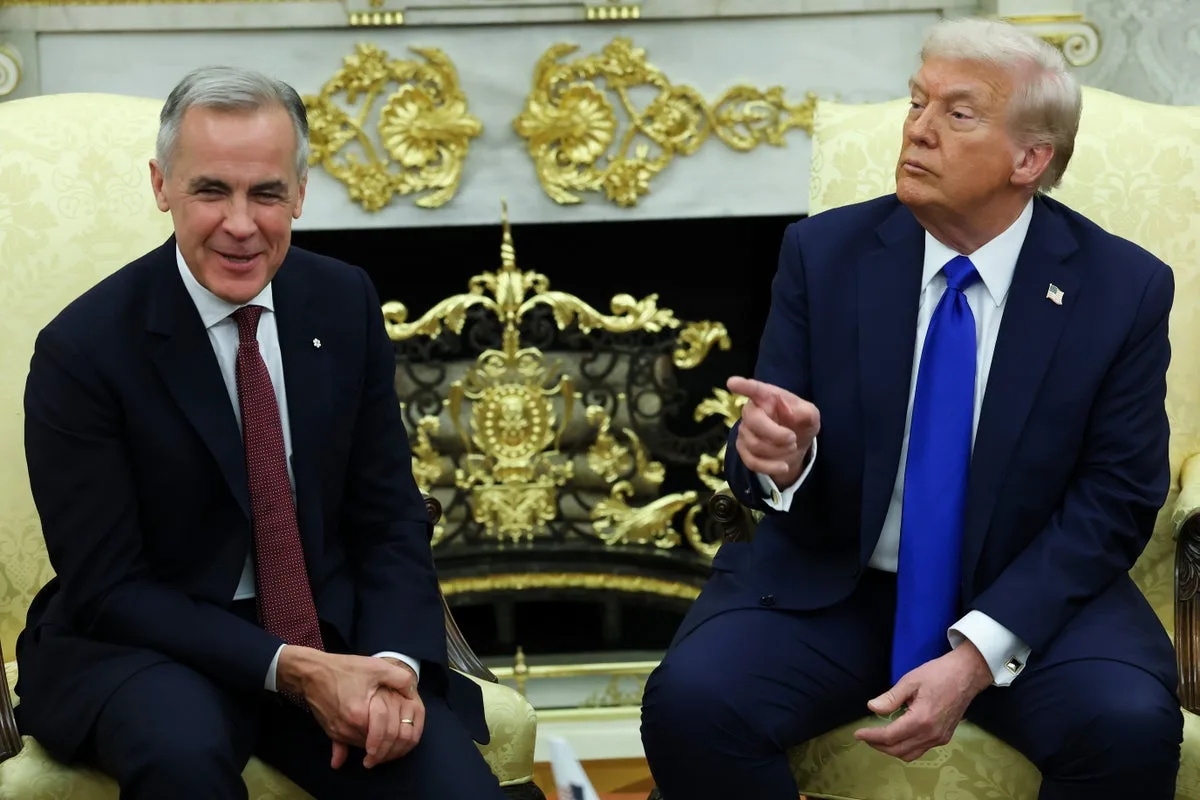
Canadian Prime Minister Mark Carney addressed the deteriorating bilateral relationship last month at the World Economic Forum in Davos, speaking of a "rupture" in the global order—a statement widely interpreted as a veiled critique of President Donald Trump's trade and foreign policies. Carney has since publicly called for the US administration to respect Canadian sovereignty.

The separatist movement appears to be capitalizing on this diplomatic friction. President Trump has repeatedly suggested that the United States should annex Canada as its 51st state, a notion that former Prime Minister Justin Trudeau described as a "real" threat in 2025. Trudeau remarked: "They're very aware of our resources, of what we have and they very much want to be able to benefit from those. But Mr. Trump has it in mind that one of the easiest ways of doing that is absorbing our country. And it is a real thing."

Official Responses and Diplomatic Concerns

US government officials have sought to downplay the significance of the meetings, emphasizing that they involved lower-level staff and yielded no formal commitments. A senior State Department official confirmed that no further meetings are anticipated, attempting to quell speculation about American endorsement of Alberta's separation.

However, former diplomats speaking anonymously have voiced severe criticism of the Trump administration's engagement with the separatists. One unnamed ex-official told NBC: "It's really irresponsible for the United States to be engaging with these kinds of people, because it just encourages behavior that cannot be in the U.S. national interest." Another described the actions as "irresponsible as hell."

The Road to a Referendum

The Alberta Prosperity Project is actively campaigning for a provincial referendum on independence this year, seeking to leverage Alberta's substantial oil reserves and economic potential—often likened to Texas within the Canadian federation. The group's discussions with American officials have reportedly covered:

  • The logistical challenges of transitioning to US currency
  • The establishment of an independent military force
  • Mechanisms for international recognition
  • Economic cooperation frameworks post-independence

As these controversial dialogues continue behind closed doors, they underscore deepening fractures in US-Canada relations and raise fundamental questions about sovereignty, diplomacy, and the future of North American political alliances.



