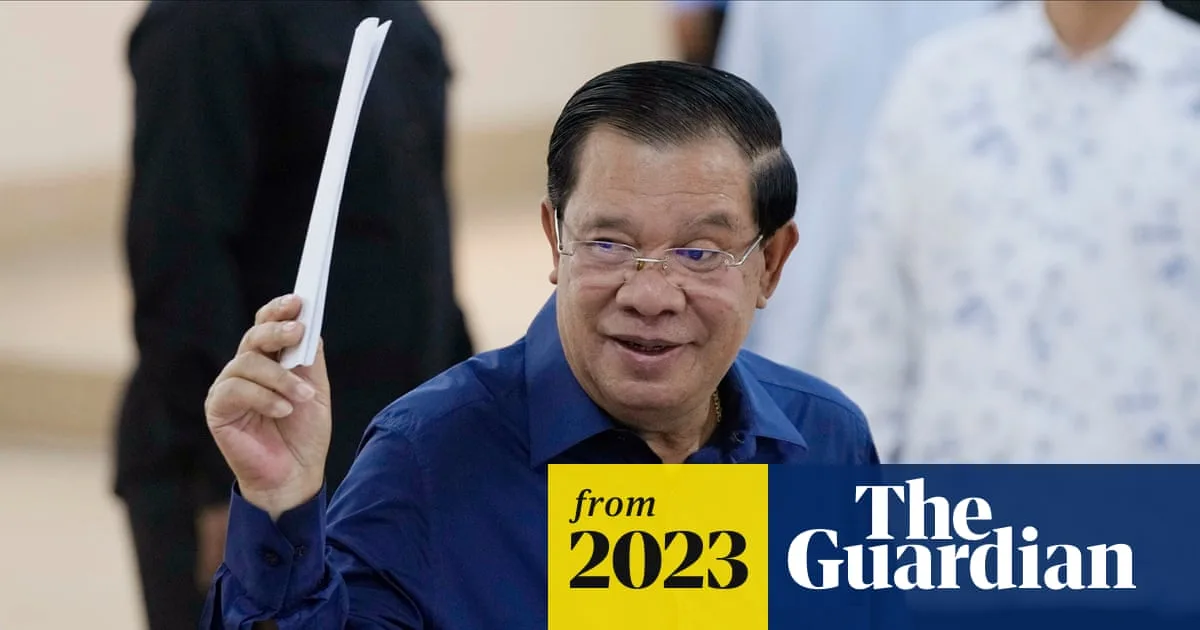
Cambodia's long-serving authoritarian leader, Hun Sen, has announced his resignation after nearly four decades in power, paving the way for his eldest son, Hun Manet, to become prime minister. The announcement was made in a televised speech on Wednesday, following his party's landslide victory in a widely criticised election.
Hun Sen, 71, has ruled Cambodia since 1985, a period marked by economic growth but also by the suppression of political dissent, imprisonment of opponents, and restrictions on free speech. He said he would step down to allow his son to take over, but made clear he expects no change in governance style, warning that any divergence would 'disrupt peace'.
Hun Manet, 45, a graduate of West Point and holder of a PhD from the University of Bristol, was endorsed as successor in 2021 and won a seat in the National Assembly in Sunday's election. He is expected to assume the premiership in the coming weeks. Hun Sen will become president of the senate and act as head of state when the king is abroad.
The election was condemned as neither free nor fair by the United States, which imposed visa restrictions on individuals who undermined democracy. The main opposition Candlelight party was barred from contesting, and independent media outlets have been shut down. The UN human rights chief expressed concern over the shrinking democratic space in Cambodia.
Under Hun Sen, Cambodia has strengthened ties with China, receiving significant investment. Critics argue that stability has come at the cost of human rights, with stark inequality, corruption, and environmental damage. Despite this, Hun Sen maintains he has brought peace and rebuilt the country after the Khmer Rouge era.