The British Embassy in the United Arab Emirates has delivered a chilling and unequivocal warning to British nationals residing in or visiting Dubai, outlining the severe legal consequences they could face if they film or share images of the ongoing Iranian missile and drone attacks currently targeting the major holiday destination.
Embassy Issues Stern Warning on Social Media
On Friday, the British Embassy in the UAE posted a critical alert on the social media platform X, explicitly stating: "UAE authorities warn against photographing, posting, or sharing images of incident sites or projectile damage as well as government buildings and diplomatic missions." The embassy emphasised that British citizens are fully subject to local Emirati laws, and any violations could lead to three specific and harsh penalties: substantial fines, imprisonment, or deportation from the country.
Three Specific Punishments Outlined
The embassy detailed the three primary punishments that individuals, regardless of nationality, may encounter if they breach these regulations. Firstly, offenders could be hit with significant financial fines. Secondly, they face the real prospect of a custodial prison sentence. Thirdly, and perhaps most drastically, violators risk immediate deportation from the UAE, effectively ending their stay or residency in the Gulf state.

In a follow-up post on Instagram, the embassy clarified that UAE authorities have issued "several warnings" regarding the photographing, publishing, or sharing of images and videos that document "incident sites or damage resulting from the fall of projectiles or shrapnel." The post further explained that under UAE law, the term "sharing" is broadly interpreted to include posting on social media platforms as well as sending or forwarding content via private messaging applications.
Recent Arrest Highlights Legal Risks
This official warning comes in the wake of a specific incident where a 60-year-old British man from London was arrested in Dubai for allegedly filming missile strikes while on holiday. According to the legal advocacy group Detained in Dubai, the man was one of twenty-one individuals charged under the UAE's stringent cyber-crime laws in connection with videos and social media posts related to the recent attacks.
Radha Stirling, the chief executive of Detained in Dubai, provided context to the case, stating that the man claimed he had deleted the video from his phone when questioned and had no intention of committing any offence. Stirling noted: "The charges sound extremely vague but serious on paper. In reality, the alleged conduct could be something as simple as sharing or commenting on a video that is already circulating online."
Broad Interpretation of Cyber-Crime Laws
Stirling elaborated on the expansive nature of the UAE's legal framework, warning: "Under UAE cybercrime laws, the person who originally posts content can be charged, but so can anyone who reshapes, reposts or comments on it. One video can quickly lead to dozens of people facing criminal charges." The group indicated that if found guilty, the punishment could be as severe as up to two years in prison.
The Foreign, Commonwealth and Development Office has confirmed that it is actively in contact with local Emirati authorities following the detention of the British national. The embassy's warnings underscore the UAE's apparent crackdown on individuals recording or disseminating information about the attacks, even as the region grapples with heightened tensions.
Context of the Attacks and Damage
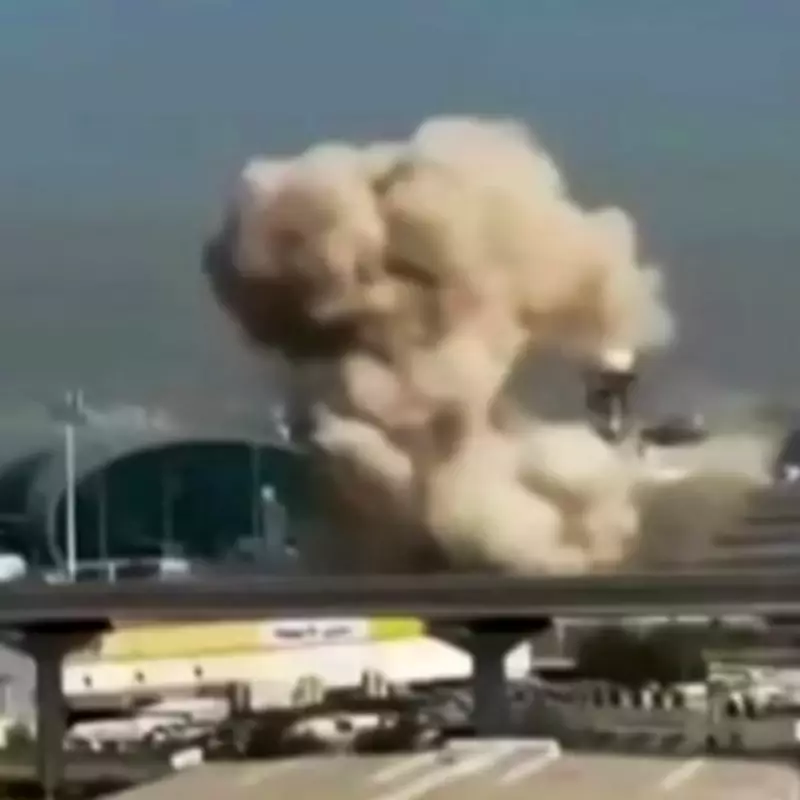
Dubai, a prominent emirate within the UAE, has been subjected to a series of retaliatory strikes from Iran. These attacks commenced after the United States and Israel launched operations on February 28th that resulted in the death of Iran's supreme leader. Key infrastructure in Dubai, including the city's international airport, a major hotel, and several luxury skyscrapers in the financial district, have all sustained damage from falling debris and direct hits.

Despite the ongoing conflict in the Middle East and the visible impact on its urban landscape, the UAE government has taken a firm stance against the documentation of these events by the public. The embassy's statement also highlighted that UAE law restricts the photographing of certain sensitive sites, including government buildings and diplomatic missions, extending the scope of prohibited activities beyond just attack-related imagery.
The situation presents a complex dilemma for British expatriates and tourists in Dubai, who must navigate their personal safety amidst the attacks while also adhering to strict local laws that criminalise the recording of the very incidents that threaten their security. The embassy's clear and repeated communications aim to prevent further legal entanglements for its citizens during this volatile period.